Recycling Today file photo
Volatility has long been a factor in the nonferrous markets, but that attribute seems to have intensified over the last several years, according to Joel Fogel, executive vice president at Cohen, headquartered in Middletown, Ohio.
How the conflict in the Middle East could contribute to volatility in the aluminum sector in particular is something Fogel and others are pondering in mid-March, two weeks since the U.S. and Israel began airstrikes in Iran. While the conflict initially is expected to last weeks rather than months, strikes continue as does the closure of the Strait of Hormuz, the strait between the Persian Gulf and the Gulf of Oman that provides the only sea passage from the Persian Gulf to the open ocean.
The Gulf Cooperation Council produced 6.2 million tons of primary aluminum last year, making it the second-largest aluminum supplier outside of China, Ed Meir writes in his March market commentary for Marex. The Middle East accounts for 10 percent of global aluminum supplies.
Qatalum, the joint venture between Hydro ASA and Qatar Aluminum Manufacturing Co. Q.P.S.C. in Qatar, announced that it would be operating at 60 percent capacity given reduced supply from its gas supplier. However, Meir says the issue with the Strait of Hormuz led Qatalum and Aluminum Bahrain to declare force majeure, which is particularly troubling for Europe as Mozal Aluminum in South Africa goes offline at the end of March.
The 50 percent Section 232 tariffs on aluminum imports into the U.S. the Trump administration enacted in the summer of last year have escalated the Midwest premium, the cost added to the base London Metal Exchange (LME) price for aluminum delivered to the U.S. Midwest.
Fogel says all nonferrous metals, with the exception of nickel, which has been steady, have gone up in value over the last six months, though the day-to-day swings can be considerable, ranging from 7-12 cents per pound up or down.
“We’ve seen nothing but the aluminum LME rise, along with the Midwest premium, which has affected primary aluminum scrap in a positive way," he says. "But we really haven’t seen the same increase in the secondary side of the aluminum business.”
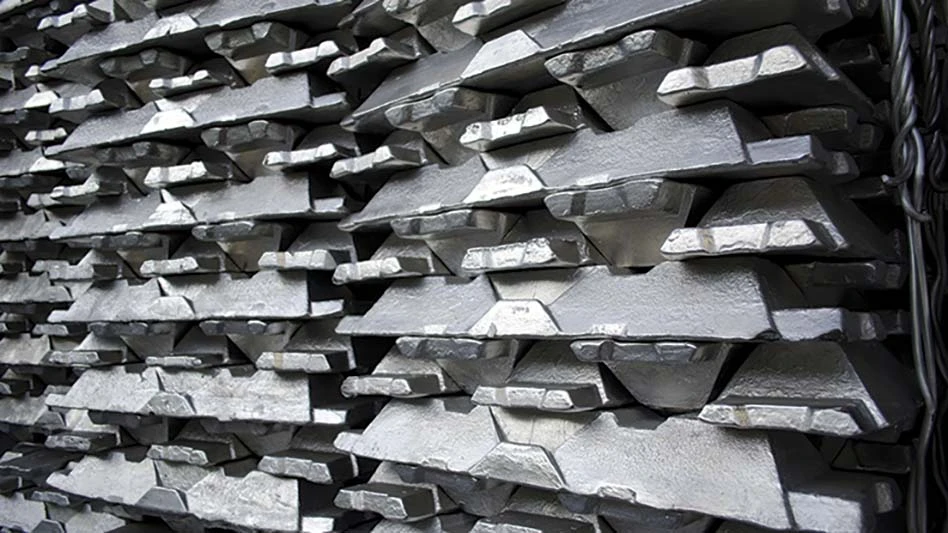
He says that disparity is based on softer demand from the housing and automotive markets, which limits what secondary producers can sell their 380 and other ingots for.
In his “Copper Journal” newsletter dated March 13, analyst John Gross writes that the conflict in the Middle East added 6 cents, or 4 percent, to the LME aluminum price the week of March 9, with the metal reaching a four-year high of $1.60 per pound. He says aluminum could test the $1.75 high it reached in 2022 before the month is over and possibly be propelled even higher given the Middle East’s role in global aluminum supply.
Gross also notes that precious metals lost value the week of March 9, “which we can only assume was due to the stronger dollar,” while copper also declined, falling 4 cents per pound on the Comex. He adds that trading March 13 was more concerning.
“Although spot copper closed down 11 cents to settle at $5.71, trading through 5 p.m. saw another 8 cents lost, with the last trade at $5.63. And in the ‘Believe it or Not’ category, the market still seems to be ignoring inventories rising to yet another new high.”
In the red metals sector, Fogel says domestic and international demand has been improving and spreads are coming in. "I think we're seeing tighter spreads on all grades of copper."
Fogel says freight rates and fuel charges are increasing largely in response to the conflict in the Middle East. “We had very low-cost fuel until that war started a couple weeks ago, so that has affected freight rates, drayage rates and container rates, also.”
More from our latest newsletter
- Indonesia’s nickel pig iron spigot reopens
- LME experiences trading disruption
- United States Forest Service, Resolution Copper complete land exchange