Photo courtesy of Swedish Plastic Recycling
Swedish Plastic Recycling's “Site Zero” plant in Motala, Sweden, has become the first in Europe to receive Sorting Process Certification from Belgium-based RecyClass.
The company calls its new status “a historic move for the entire plastic recycling industry.” The certification was preceded by an audit conducted by the RecyClass recognized certification body Ecogrant, based in Lithuania. Swedish Plastic Recycling says that audit confirmed that its traceability system meets the mandatory requirements for the mechanical recycling of plastics into new food-contact materials.
The certification verifies the origin of plastic scrap it takes in as being sourced from municipal and separately collected processes in line with European Union regulations that set the requirements for the use of recycled plastics in food-contact materials.
With this RecyClass Certificate, Swedish Plastic Recycling becomes the first materials sorting firm on the European that meets the requirements under EU regulations, according to the company.
Swedish Plastic Recycling predicts demand for materials used in food contact will gradually increase, in part because of the EU's Packaging and Packaging Waste Regulation (PPWR), which sets targets starting in 2030.
“Being the first in Europe to receive this certification shows that we already have excellent order and the traceability that will be required under PPWR,” Swedish Plastic Recycling CEO Mattias Philipsson says. “This is crucial, especially for materials that come into contact with food.”
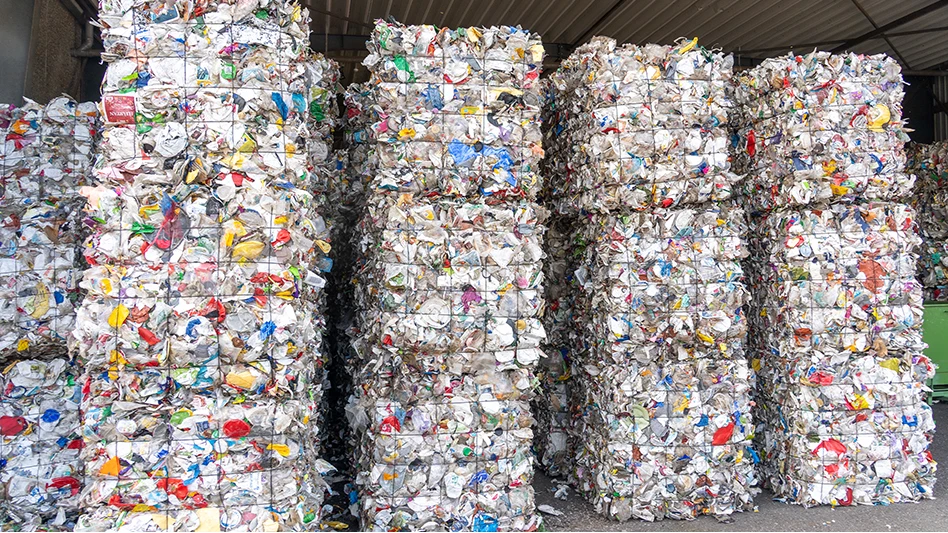
Swedish Plastic Recycling currently sorts polyethylene terephthalate (PET) bottles, PET trays and polystyrene (PS) packaging that can be recycled into approved food contact materials. As part of a research project called CRISP, the potential to sort and recycle other resins including polyethylene (PE) and polypropylene (PP) also is being explored.
Since 2018, Swedish Plastic Recycling says it has pushed for a requirement that all plastic recyclers must be able to show by whom, where and how material is handled, both before and after sorting. The company has implemented its own traceability policy and has voluntarily undergone annual audits by an independent reviewer to ensure compliance.
“We believe that recycling should be carried out under full control, otherwise there is a risk that the plastic will be handled incorrectly or end up in the wrong hands,” Philipsson says. “The fact that there is now a European certification for sorting facilities creates credibility, transparency and industrialization of plastic recycling throughout the EU."
Latest from Recycling Today
- Phoenix Technologies closes Ohio rPET facility
- EPA selects 2 governments in Pennsylvania to receive recycling, waste grants
- NWRA Florida Chapter announces 2025 Legislative Champion Awards
- Goldman Sachs Research: Copper prices to decline in 2026
- Tomra opens London RVM showroom
- Ball Corp. makes European investment
- Harbor Logistics adds business development executive
- Emerald Packaging replaces more than 1M pounds of virgin plastic