Photo courtesy of Wood Recyclers' Association
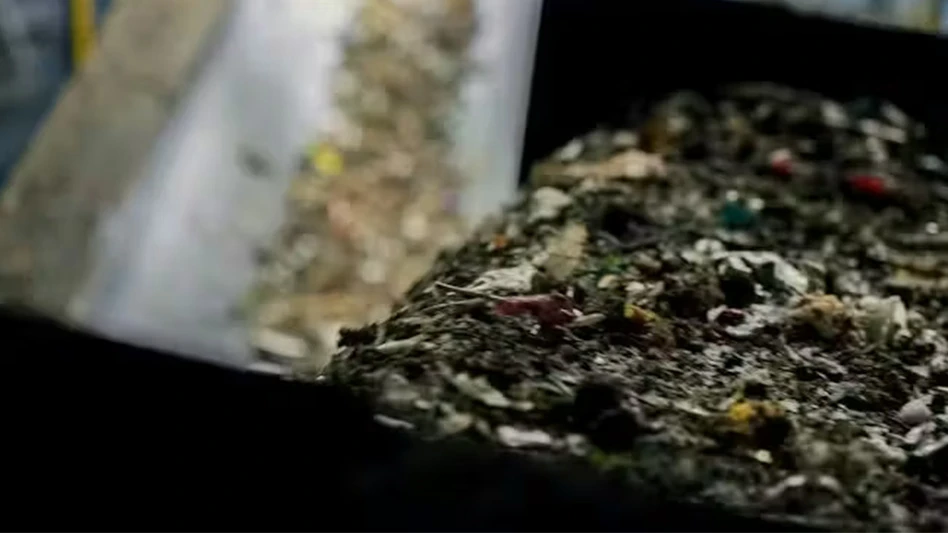
The United Kingdom-based Wood Recyclers’ Association (WRA) has completed an independent review on greenhouse gas removals. The government-commissioned review’s primary recommendation is that governments should extend support for waste wood-powered biomass plants with the potential to deliver greenhouse gas removals.
Led by Alan Whitehead, former shadow minister for energy security and waste and recycling, the review highlights how options for greenhouse gas removals, such as bioenergy with carbon capture and storage (BECCS), can assist the U.K. government in meeting net zero targets.
It also outlines recommendations for the government, including:
- urgent consideration of extending support for the waste wood biomass sector due to their role in managing waste and their potential to transition to greenhouse gas removals;
- the extension of unabated electricity generation support to cover a sufficient period that would enable the switch to power BECCS;
- improved collaboration between government departments at the Department for Environment, Food and Rural Affairs (DEFRA) and the Department for Energy Security and Net Zero; and
- calling for DEFRA to take the lead in determining the future of these plants.
“We welcome this landmark review and all the hard work put in by Dr. Alan Whitehead, David Joffe and their team,” says Richard Coulson, chair of the WRA’s biomass advocacy group. “The message in the review is clear: If the government is serious about greenhouse gas removals and effective waste management, then it must look at providing transitional support for the waste wood biomass sector and fast-track non pipeline transport solutions.”
If retrofitted with greenhouse gas removal technologies, Coulson says these plants have the potential to save nearly 3.97 million tons of CO2 annually, making them “a vital contribution to net zero, in addition to delivering renewable, baseload energy and providing an important environmental service.”
“But this potential can only be unlocked if the government supports the sector to transition to BECCS before it is too late and these valuable assets are lost,” he says. “We look forward to the government’s response and hope these recommendations are reflected in urgent and supportive policy for our sector.”
To read the full review, open the PDF here.
Latest from Recycling Today
- Titanium recycling is focus of Japanese alliance
- Tomra installation serves food tray sector in Spain
- Tariff criticism directed toward steel industry
- Vinyl Institute launches enhanced recycling directory
- McNeilus introduces AI material contamination detection technology
- Closed Loop report identifies opportunities to increase prescription pill bottle recycling
- Organics Recycling Conference 2026: Q&A with keynote speaker Andy McNeill
- CMRA selects Vietnam for 2026 event