Ulf | stock.adobe.com
Vermont has expanded its battery recycling program under a new law that broadens the types of batteries that can be recycled statewide.
The launch highlights the importance of safe battery disposal and recycling. The expanded law is supported by The Battery Network, the state-approved battery stewardship organization.
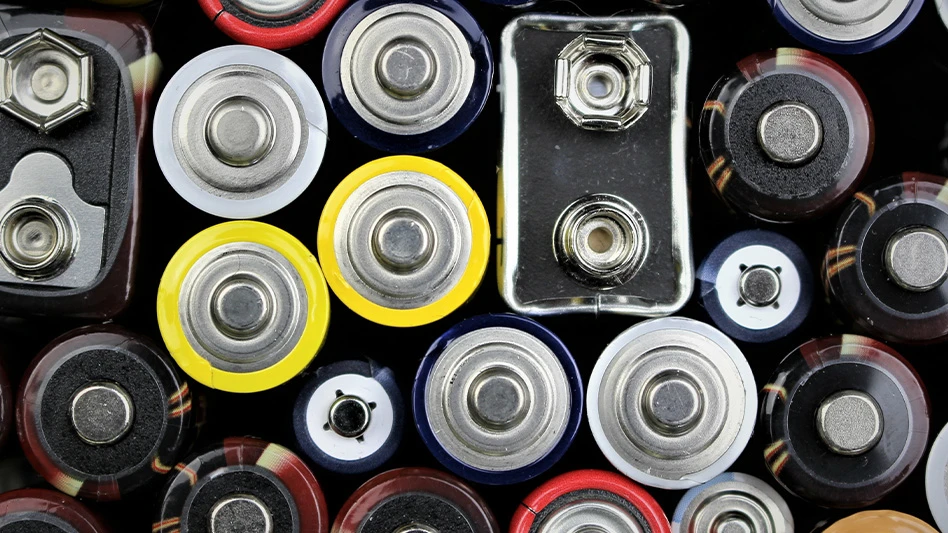
Under the expanded program, Vermonters can now recycle most single-use and rechargeable batteries weighing up to 25 pounds (or 2,000 watt hours). This includes batteries from common household devices and battery-powered products such as remotes, toys, flashlights, cordless power tools, portable chargers, drones and others.
The expansion also includes medium-format batteries, such as larger rechargeable batteries used in electric and cordless lawn mowers, snowblowers, electric bikes and electric scooters. These batteries are typically larger than a cordless tool battery but smaller than an electric vehicle (EV) battery.
The program addresses safety concerns associated with improper battery disposal—particularly fires at recycling and waste facilities caused by lithium-ion batteries—while continuing Vermont's leadership in solid waste management and environmental stewardship.
“For the safety of our solid waste workers, our communities and the environment, it's critical that batteries are properly managed,” says Josh Kelly from the Vermont Agency of Natural Resources. “With the expansion of Vermont's battery recycling program, safely recycling batteries is now easier than ever. Vermonters can recycle most single-use and rechargeable batteries up to 25 pounds, or 2,000 watt hours, at more than 100 convenient locations across the state.”
Under the expanded battery recycling program, single-use batteries, including alkaline and lithium primary batteries, rechargeable batteries, such as lithium-ion, nickel metal hydride, sealed lead-acid batteries and batteries weighing up to 25 pounds are now accepted.
More than 100 collection sites are available statewide at participating retailers, municipal facilities and other approved locations.
As part of the program expansion, Vermont is launching Battery Bonanza, a school-based battery recycling contest designed to educate students on battery safety, environmental responsibility and proper recycling practices. The contest builds on last year's student battery recycling program in Chittenden County.
“At Chittenden Solid Waste District, we see education as one of the most effective tools for reducing waste and improving safety,” says Sarah Reeves, Chittenden Solid Waste District executive director. “Programs like Battery Bonanza give students hands-on experience while helping families and communities learn how to manage batteries responsibly.”
Battery Bonanza will open for registration from March 3 to April 3. Battery collection will take place April 6-17, and participation is open to the first 15 schools in Chittenden County to register.
"Battery Bonanza is about meeting students where they are and empowering them to be part of the solution," says Leo Raudys, Battery Network president & CEO. "When young people understand how and why to recycle batteries safely, that knowledge extends beyond the classroom and helps protect workers, communities and the environment."
Latest from Recycling Today
- In memoriam: Bruce Parker
- SDI, SGH submit revised final offer to acquire BlueScope Steel Ltd.
- Republic Services spends big on acquisitions, reports growth for 2025
- 2026 Circular Steel Summit: The view from Nucor
- Minespider launches digital marketplace for circular batteries
- SWANA, Fire Rover develop fire incident reporting tool
- Recycle BC launches flexible plastics recycling carts in Vancouver
- Shapiro continues leadership appointments