khamkula | stock.adobe.com
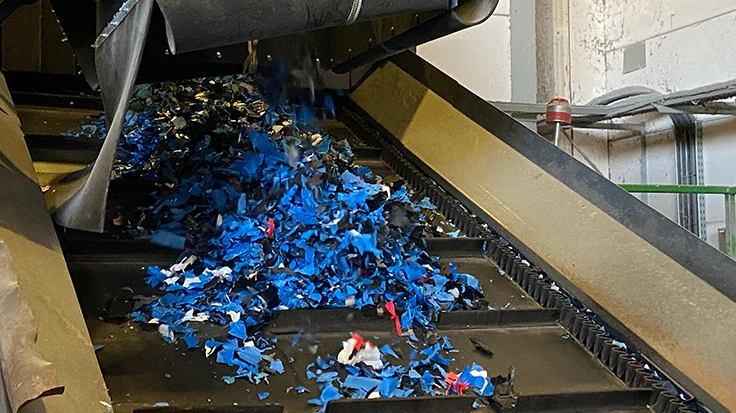
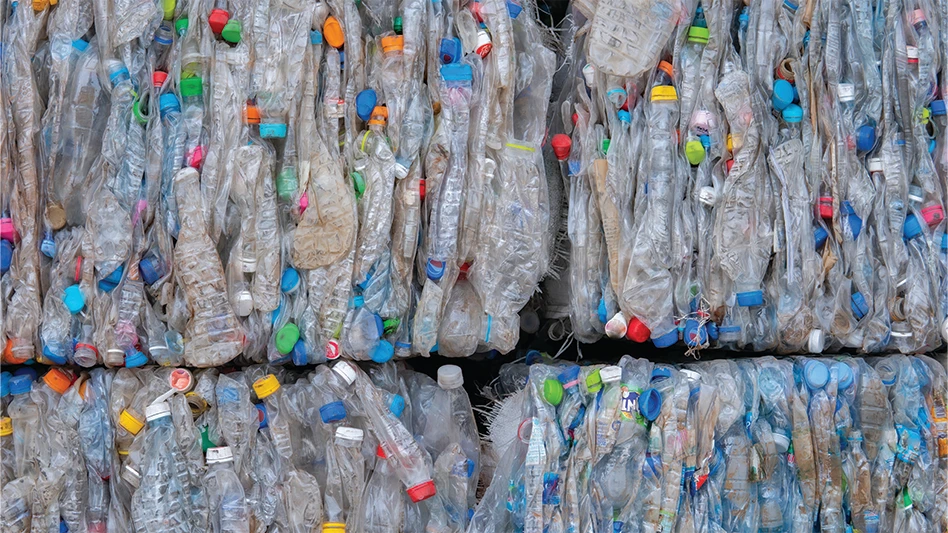
A Sept. 8 expansion of President Donald Trump’s reciprocal tariff regimen now includes imports of virgin and recycled polyethylene terephthalate (PET), according to an executive order announcement.
Resin imported under harmonized system (HS) codes 3907.61 and 3907.69 now will face a higher duty after previously being exempted, though the specific rate has not been disclosed. Recycled PET (rPET) does not have its own HS code and falls under the same classification as its virgin counterpart.
RELATED: Falling prices define summer months
The change could have an effect on domestic recyclers who have struggled amidst a multiyear influx of cheap virgin and recycled resin imports.
Sally Houghton, executive director of the nonprofit PET Recycling Corp. of California, tells Recycling Today that while the scope and duration of tariffs remain uncertain, the shift could “level the playing field and restore competitiveness” for California reclaimers, in particular, and possibly all domestic reclaimers.
“Due to the uncertainty, I am cautiously optimistic that the imposition of tariffs will increase domestic demand for rPET and provide some relief to the industry that is struggling to remain financially solvent,” she says, adding that two reclaimers have closed just this year. “I fear that others may follow due to the depressed state of sales that has endured for the past two to three years.
“The glut of cheap imports made it difficult for domestic reclaimers to compete, and this was compounded by high bale prices from 2024 to mid-2025 due to Mexico’s increase in capacity and bale demand.”
Houghton notes that since May, there has been a “significant change” with Mexico-based buyers backing off and bottle bale prices falling from around 29 cents per pound to about 11 cents per pound in early September. According to London-based commodities consulting firm ICIS, bales of colorless, hot-washed flake had fallen from nearly 60 cents per pound at the start of July to the 45-cents-per-pound range this month.
“Even with this relief in feedstock prices, the domestic industry, including Mexico, could not compete with the cheap imports of both rPET and virgin,” Houghton says. “Mandated content does not require the rPET to be domestically sourced, so end buyers chose the cheaper option, and packaging manufacturers opted to buy cheap virgin to lower their overheads.
“It will be interesting to see whether the tariffs change procurement choices and provide much-needed relief to the domestic reclamation industry.”
This summer, U.S. market observers noted that the price drop of PET bottle bales could even be considered a crash.
“What’s compounded this to make it a crash is the fact we’ve seen significant drawback in recycler demand for bale material,” Emily Friedman, the Houston-based senior recycled plastics editor at ICIS, told Recycling Today in July. “Some of that comes from facility closures. … We’ve seen weakness from fiber recyclers because of weakened global fiber demand dynamics. And those who were historically large players in this market are now pretty muted.
“We’ve seen other recyclers who aren’t necessarily closing, but have made feedstock decisions in regard to tariffs, such as imported flake, that have left them in a position where they’re not in need of as much local material, or they placed a bet that local material prices would fall if they stopped buying, and thus, it kind of initiated the market correction and the new lower prices we’re seeing.”
A time of rising import activity
Of note, the U.S. recently had been a net importer of plastic scrap and brought in a record 250,961 tons of PET in 2024—a 23 percent increase over the then-record total imported in 2023, according to an ICIS report earlier this year. Plastic scrap imports include items such as used bottles, purge, leftover pairings and flake. Following a revision by the U.S. government earlier this summer, the U.S. no longer was considered a net importer on an annual basis.
Citing U.S. International Trade Commission (ITC) data in a new report, Friedman writes that imports of PET and rPET are 8 percent higher this year compared to the same period of 2024, totaling 910.6 million pounds in the second quarter alone—an increase of 11 percent year-on-year.
Friedman also writes that despite the large growth in comparison to last year, imports have slowed through the summer season, with June volumes totaling 286.5 million pounds, down 6 percent over the previous month.
Through the first half of this year, ITC data shows that Taiwan was the largest PET exporter to the U.S., making up 17.4 percent of the total, followed by Mexico (15.48 percent), South Korea (14.67 percent) and Thailand (10.40 percent).
Of the top countries exporting PET and rPET to the U.S., existing reciprocal tariff rates include 35 percent for Canada and 25 percent for Mexico for noncompliant USMCA goods; 20 percent for Taiwan and Vietnam; 19 percent for Thailand, Malaysia and Pakistan; 15 percent for Turkey and South Korea; and 10 percent for Oman.
Friedman writes that because of the change, imported flake prices could jump 8-10 cents per pound and imported pellets could rise as much as 10-14 cents per pound. Because tariff updates took effect immediately, cargoes currently in transit will be affected.
In a statement issued Sept. 8, the Washington based Association of Plastic Recyclers (APR) says, “The Commerce Department today ended the exemption for PET and rPET imports from reciprocal tariffs. U.S. PET recyclers are under heavy pressure from a surge of low-cost imported material and an oversupply of virgin plastic—pressures compounded by brands abandoning recycled content commitments in favor of virgin plastic and choosing imported rPET rather than sourcing from domestic recyclers.
“APR will continue to work with state and federal policymakers to create further incentives for brands and manufacturers to use recycled plastics sources from North American programs to ensure that U.S. recycling capacity grows and delivers on its promise to reduce plastic pollution and curb the production of new plastic.”
Latest from Recycling Today
- Nth Cycle signs offtake agreement with Trafigura
- WeSort.AI recovers critical raw materials from recycling plants
- ReMA provides economic impact report, industry update
- Collective Waste Solutions acquires Alcop Resource Recycling transfer station
- Volatility continues in nonferrous metals
- Neste chemical recycling plant is ready to scale up
- Indonesia’s nickel pig iron spigot reopens
- Ecore says study backs crumb rubber use on sports surfaces