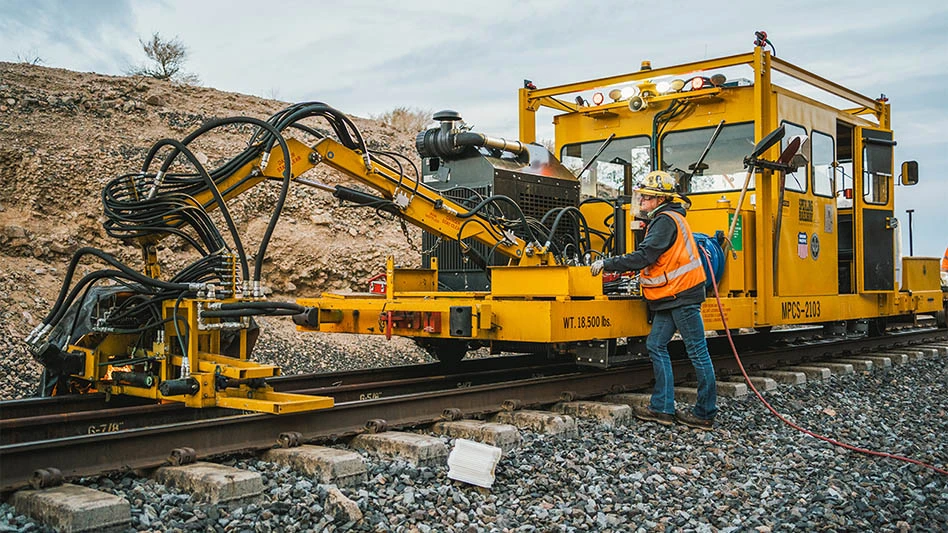
Photo courtesy of Union Pacific Corp.
Union Pacific Corp. (UP), Omaha, Nebraska, has reached an agreement with Norfolk Southern Corp. (NS), Atlanta, for the latter firm to be acquired by UP in a stock and cash transaction.
UP says the proposed merger would create the first transcontinental railroad in the U.S. and seamlessly connect over 50,000 route miles across 43 states from the East Coast to the West Coast, linking approximately 100 ports and nearly every corner of North America.
For several years, shippers in the United States and Canada have been served by six Class I freight railroads, following several decades of previous mergers and buyouts.
The new combination would bring that number down to five: BNSF Railway, CSX Transportation, Canadian National Railway, CPKC (Canadian Pacific-Kansas City), and the merged UP-NS company.
“Imagine seamlessly hauling steel from Pittsburgh, Pennsylvania, to Colton, California, and moving tomato paste from Huron, California, to Fremont, Ohio,” UP CEO Jim Vena says. “Right now, tens of thousands of railroaders are moving almost everything we use. You name it, and at some point, the railroad hauled it.”
UP says the combined company will be able to deliver "faster, more comprehensive freight service" to U.S. shippers by eliminating interchange delays, opening new routes, expanding intermodal services and reducing distance and transit time on key rail corridors.
As merger discussions between UP and NS were rumored this month, speculation also focused on a potential second coast-to-coast entity that would be created if in reaction Fort Worth, Texas-based BNSF and Jacksonville, Florida-based CSX also were to merge.
Whether one or both mergers receive regulatory approval, processors of ferrous scrap, old corrugated containers and other recyclables shipped by rail, plus shippers of municipal solid waste and construction and demolition waste shipped out of state, will be watching closely.
Earlier this decade, the Washington-based Recycled Materials Association (ReMA) lobbied the federal Surface Transportation Board (STB) regarding commodity exemptions found within a proposed rule by that agency and regarding demurrage (container holding) charges placed upon recyclers.
“It’s time for the STB to evaluate the commercial fairness of railroad demurrage tariffs and practices, which in many cases are the result of delays across the broader rail network," ReMA President Robin Wiener commented in 2019 regarding the situation at that time.
Shippers who have felt victimized by the practices of a Class I freight rail sector with just six players may look with skepticism at a landscape that could soon include just five or even four companies.
However, Vena and Mark George, CEO of NS, portray a combined company they say will offer new benefits missing from a true coast-to-coast freight rail shipper.
“We are confident that the power of Norfolk Southern’s franchise, diversified solutions, high-quality customers and partners, as well as skilled employees, will contribute meaningfully to America’s first transcontinental railroad, and to igniting rail’s ability to deliver for the whole American economy today and into the future,” George says.
“This combination is transformational, enhancing the best freight transportation system in the world – it's a win for the American economy, it's a win for our customers, and it’s a win for our people," Vena adds. "I am confident this historic transaction will enhance competition to benefit customers, communities and employees while delivering shareholder value.”
Latest from Recycling Today
- Fleetio launches AI capability to accelerate fleet maintenance approvals
- The Metals Agency receives approval for export credit insurance
- Recycle Ann Arbor extends drop-off station operating hours
- Sybilion seeks to help manufacturers confidently address volatility
- Rio Tinto, Prysmian partner on low-carbon aluminum solutions for data centers
- Unilever criticized for plastics approach
- USTR to study additional steel, aluminum tariffs
- Electrified Materials adds processing capacity