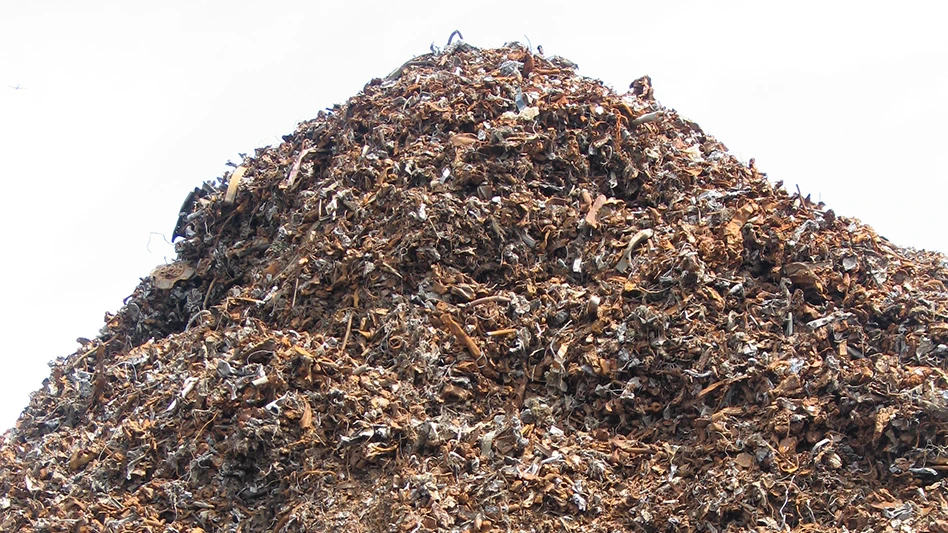
The United Kingdom’s Environment Agency announced that discussions with representatives of the vehicle dismantling, metal recycling and waste management industries had resulted in a clear understanding of the environmental outcomes that need to be achieved from the disposal of residues from shredding processes.
The Agency confirmed that, where shredders can demonstrate their waste residues are non-hazardous - either because they arise from vehicles which have been de-polluted (ie hazardous components have been removed) or from other inputs which do not contain hazardous materials, they can be disposed of in non-hazardous landfill sites.
Where vehicles have not been de-polluted, or other shredder feedstock contains hazardous materials, shredder residues should be assumed to be hazardous waste unless the operator can demonstrate they are not hazardous by an approved test.
In response to industry claims that they have had difficulty in finding a suitable test to demonstrate the nature of their waste, the Agency will help with defining suitable sampling and testing methodologies.
The meeting earlier this week between the UK’s Environment Agency, the British Metal Recycling Association, and government departments agreed a statement setting out criteria for proper disposal of shredder wastes which includes a three month window during which a simplified de-pollution checklist can apply where companies have yet to develop the capability to comply with guidance issued last year.
Liz Parkes, head of Waste Regulation for the Environment Agency, said, "It is clear that some companies are lagging behind in their ability either to de-pollute or to be able to demonstrate satisfactorily whether their residues are hazardous or non-hazardous. We have brought together the metal recycling industry and the waste management industry and taken account of their short-term issues. We have issued a clear statement that allows metal recycling to continue with a clear message that lagging dismantlers must improve their operations to the standards already being met by others in their industry.
"The industry has come very late to a realization of its responsibilities in this area and the Agency cannot be pressurized by this or any other sector into risking the environment or placing the waste management industry in an unlawful position. There is a message here for any other sector which is not thinking ahead and changing its practices to minimize the production of waste."
Representatives from the BMRA expressed relief that the legal confusion that prevented scrapped vehicles from being processed has been resolved.
‘This so nearly turned into a crisis, with 45,000 scrapped vehicles passing every week through the recycling pipeline, said Neil Marshall, BMRA’s director general.
‘While I regret the fact that this problem was not resolved by the Agency very much earlier, I am relieved that we can get back into the business of turning scrapped cars into raw materials for the steel and other industries.’
Latest from Recycling Today
- Equipment from the former Alton Steel to be auctioned
- Novelis resumes operations in Greensboro, Georgia
- Interchange 360 to operate alternative collection program under Washington’s RRA
- Waste Pro files brief supporting pause of FMCSA CDL eligibility rule
- Kuraray America receives APR design recognition for EVOH barrier resin
- Tire Industry Project publishes end-of-life tire management guide
- Des Moines project utilizes recycled wind turbine blades
- Charter Next Generation joins US Flexible Film Initiative