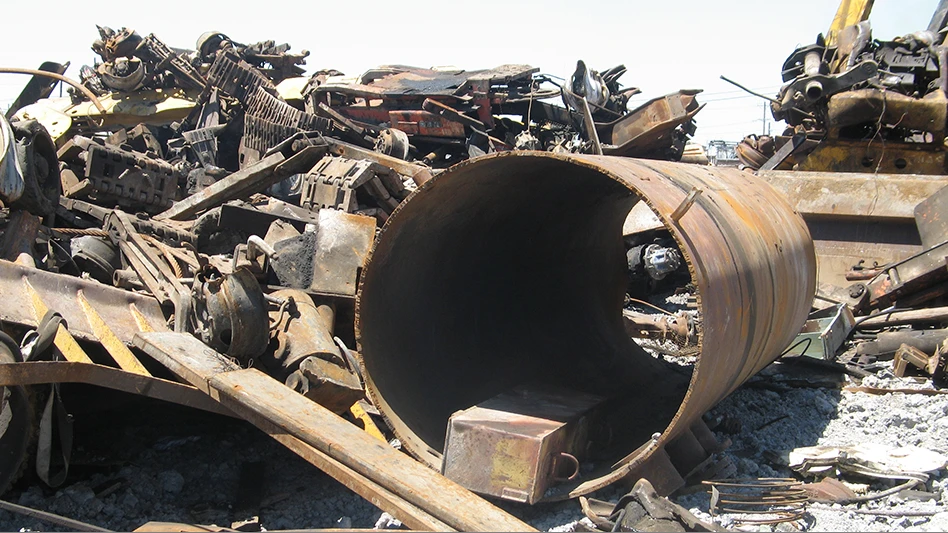
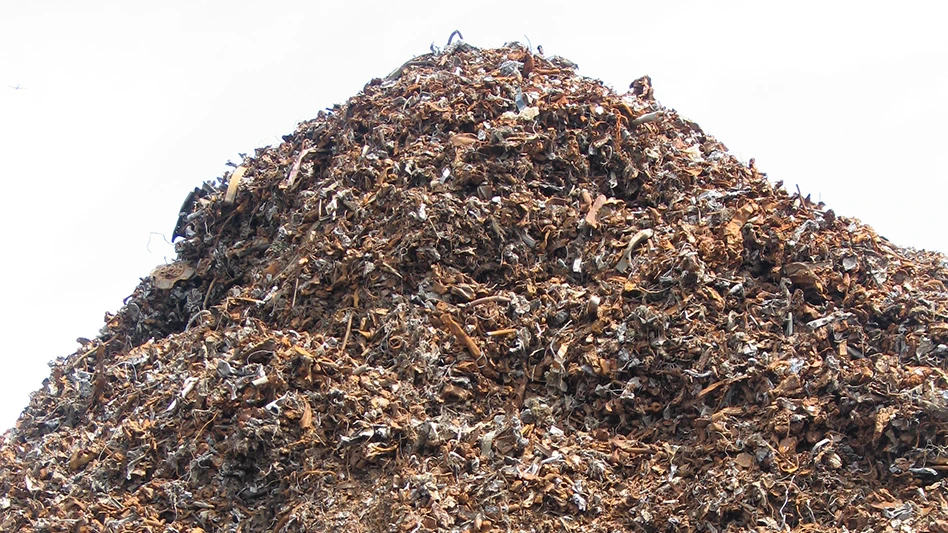
Two metals industry groups formally requested that the government exercise its legal authority by temporarily monitoring and restricting U.S. exports of copper scrap and copper-alloy scrap. The petition points to rising demand in China as responsible for the excessive drain of the scarce metals materials and the resultant price increases and shortages in the U.S. market.
Statistics presented in the petition demonstrate that the rapid increases in exports of the subject metals are the primary cause of dwindling domestic supply and sharp price increases in recent years.
"The U.S. brass mill industry and brass and bronze foundries are particularly hard hit by this scenario, given that they account for a substantial majority of all copper scrap and copper-alloy scrap consumed in the United States," explained Joseph Mayer, president and general counsel of co-petitioner Copper and Brass Fabricators Council, Inc.
The Non-Ferrous Founders' Society, also a petitioner, is headed by James L. Mallory, executive director.
The two petitioners point out that adequate volumes and reasonable prices for these essential raw materials are central to meeting the U.S. economy's needs successfully. "Such scrap, however, is now in very short supply and obtainable only at high and rising prices," the petition concludes. "It is just this sort of predicament that Congress intended to address in the Export Administration Act by means of temporary export controls and monitoring of exports and contracts for exports."
China -- with its explosive growth, insatiable demand for scrap, and high prices that Chinese purchasers are willing to pay to source U.S. scrap -- is targeted as the major global culprit in this supply and demand tight spot.
According to the petition, essentially all of the growth in U.S. exports of copper-based scrap in recent years has been attributable to rising consumption in China. In 1999, the U.S. exported 86,601 metric tons of copper-based scrap to China, which accounted for just 27 percent of total U.S. exports.
In 2000, that volume was 214,152 metric tons or 43 percent of total U.S. exports. During 2001, U.S. exports of copper-based scrap to China rose to 316,739 metric tons or 56 percent of total exports.
Another jump occurred in 2003 when 532,901 metric tons of exports to China represented 71 percent of total U.S. exports. (To view entire petition, visit www.colliershannon.com.)
In keeping with the urgency of the situation, the statute calls for expedited consideration of the petition. Within no later than 105 days after the petition's filing, the U.S. Department of Commerce must determine whether to impose temporary monitoring and export controls. Within 45 days thereafter, final regulations are published to implement the relief granted.
Latest from Recycling Today
- Equipment from the former Alton Steel to be auctioned
- Novelis resumes operations in Greensboro, Georgia
- Interchange 360 to operate alternative collection program under Washington’s RRA
- Waste Pro files brief supporting pause of FMCSA CDL eligibility rule
- Kuraray America receives APR design recognition for EVOH barrier resin
- Tire Industry Project publishes end-of-life tire management guide
- Des Moines project utilizes recycled wind turbine blades
- Charter Next Generation joins US Flexible Film Initiative