Target Technologies International Inc. (TTII), Vancouver, British Columbia, and Poly-Pacific Inc. of Hong Kong say they are pleased with the feedback received on their worldwide Synthetic Turf Recycling Program.
The companies estimate the synthetic turf industry installs about 1,000 new fields annually with hundreds of old fields being replaced. It is paramount, they say, that owners, engineers, architects and the synthetic turf industry take stewardship and responsibility of the used synthetic turf at the end of its life cycle.
John B. Giraud, managing director of TTII, says, “Why fill up our landfills when we have a waste stream option that is environmentally friendly and price competitive? Owners, architects and engineers are at the mercy of the reuse system because the paper trail is incomplete. It really is an unknown if the synthetic turf is being reused or if it is actually sitting in a warehouse or on a property somewhere, sometimes for years waiting for a new home while it inevitably disintegrates. Why shoulder the burden and potential liability?”
TTII says its program documents the chain of custody from the time the containers arrive on site until 100 percent of the synthetic turf is recycled into resalable postconsumer products. Once the process is complete, a certificate of compliance is issued. This paper trail is essential for a proper recycling program, the company says.
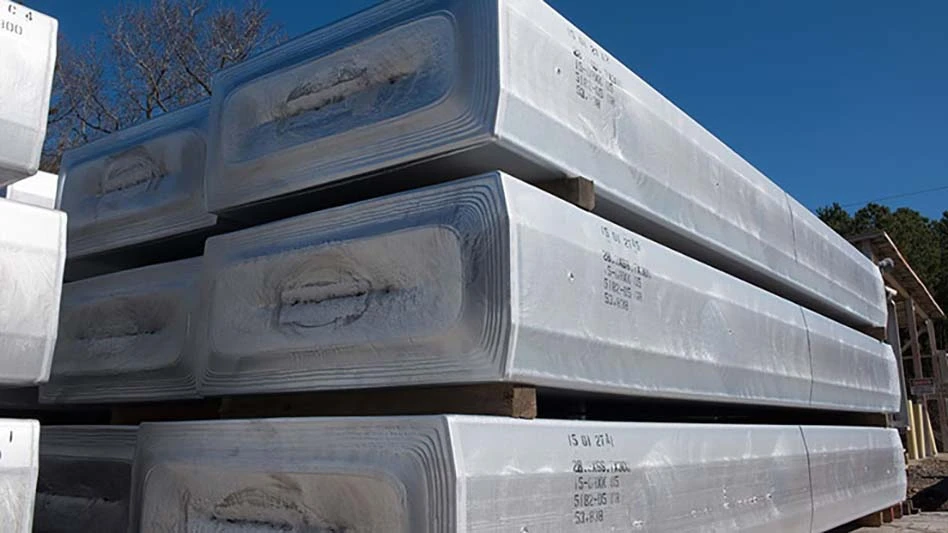
TTII’s program converts 100 percent of the synthetic turf (backing and fibers) and recycles the worn-out turf into building products such as posts, planks, lumber, irrigation pipes, residential flexible grass curbing and other products in accordance with the U.S. Environmental Protection Agency’s regulations. In some cases, the fibers are processed and sold back into the plastics industry.
More information is available at www.ttiionline.com.
The companies estimate the synthetic turf industry installs about 1,000 new fields annually with hundreds of old fields being replaced. It is paramount, they say, that owners, engineers, architects and the synthetic turf industry take stewardship and responsibility of the used synthetic turf at the end of its life cycle.
John B. Giraud, managing director of TTII, says, “Why fill up our landfills when we have a waste stream option that is environmentally friendly and price competitive? Owners, architects and engineers are at the mercy of the reuse system because the paper trail is incomplete. It really is an unknown if the synthetic turf is being reused or if it is actually sitting in a warehouse or on a property somewhere, sometimes for years waiting for a new home while it inevitably disintegrates. Why shoulder the burden and potential liability?”
TTII says its program documents the chain of custody from the time the containers arrive on site until 100 percent of the synthetic turf is recycled into resalable postconsumer products. Once the process is complete, a certificate of compliance is issued. This paper trail is essential for a proper recycling program, the company says.
TTII’s program converts 100 percent of the synthetic turf (backing and fibers) and recycles the worn-out turf into building products such as posts, planks, lumber, irrigation pipes, residential flexible grass curbing and other products in accordance with the U.S. Environmental Protection Agency’s regulations. In some cases, the fibers are processed and sold back into the plastics industry.
More information is available at www.ttiionline.com.
Latest from Recycling Today
- Environmental groups urge Indonesia to return e-scrap shipments
- Foodservice Packaging Institute opens applications for 2026 foam recycling grant program
- Worn Again Technologies unveils Accelerator plant to advance polycotton recycling
- Nashville Waste Services launches new digital route system
- Arconic expands in Iowa
- Cascades invests $6.9M in recycled boxboard plant
- Ocean freight interruptions poised to continue
- Danieli to supply shredder to Australian company