© dell | stock.adobe.com
Last year, the transportation sector faced lots of uncertainty as tariffs, rising costs new regulations led to constant changes within the supply chain.
“It feels a lot like more of the same,” Eric Starks, chairman of transportation intelligence firm FTR, said of the outlook for 2026, describing 2025 as a year with “generationally defining shifts” in trade.
Eric Starks moderated a webinar in January that included analysis from FTR CEO Jonathan Starks, Vice President of Trucking Avery Vise and Senior Rail Analyst Joseph Towers, and the panel largely agreed that 2026—at least the first half—will continue to pose challenges.
Trucking outlook
This past spring, a regulatory change had an immediate impact on trucking capacity, and while its enforcement has not completely overhauled the market, Vise said the effects have been significant.
On April 28, 2025, President Donald Trump signed an executive order that mandated the revision of out-of-service (OOS) criteria, requiring commercial driver’s license (CDL) holders meet established English-proficiency standards or be placed OOS. Vise described this move as one that transformed into an attack on the nondomiciled CDL concept, which allows CDLs for those legally in the U.S. but are not U.S. citizens or permanent residents.
According to the Federal Motor Carrier Safety Administration (FMCSA), 11,513 drivers have received OOS violations and presumably been taken out of the market. Vise clarified that an OOS violation does not always mean a driver is removed from service permanently, but noted that 90 percent of those who have received violations have not been replaced.
The top three states for violations are Texas, Arkansas and Wyoming, representing 23 percent of all violations, while the top 10 states make up half of all OOS violations.
“If you take the peak of this enforcement so far, which is essentially September [2025] through Thanksgiving, and annualize that, it’s roughly 24,000 drivers pulled out of the market, assuming they all leave the market,” Vise said. “That’s really not a market-changing number, but it does add to the overall decline in capacity, as does the nondomicled CDL [factor], so it’s a significant issue. It’s one that definitely has an impact.”
Another factor prompting a shift in trucking capacity is surging insurance premiums.
“This didn’t really start until the beginning of last year, and that’s notable because up until recently, most motor carriers would have already reupped their insurance,” Vise said. “Typically, by the beginning of the year, you’re going to renew your policy, [but] a lot of trucking companies out there were still operating under pricing prior to 2025, but they’re definitely cycling through now to renewals that will [encompass] this.”
Overall, he expects some freight recovery by midyear and some year-over-year gains by the end of the year in terms of total truck loadings.
Carload volumes and commodity mix
Towers said that while 2025 finished up 0.2 percent in terms of carload volume—essentially flat—there were a great many fluctuations among commodities.
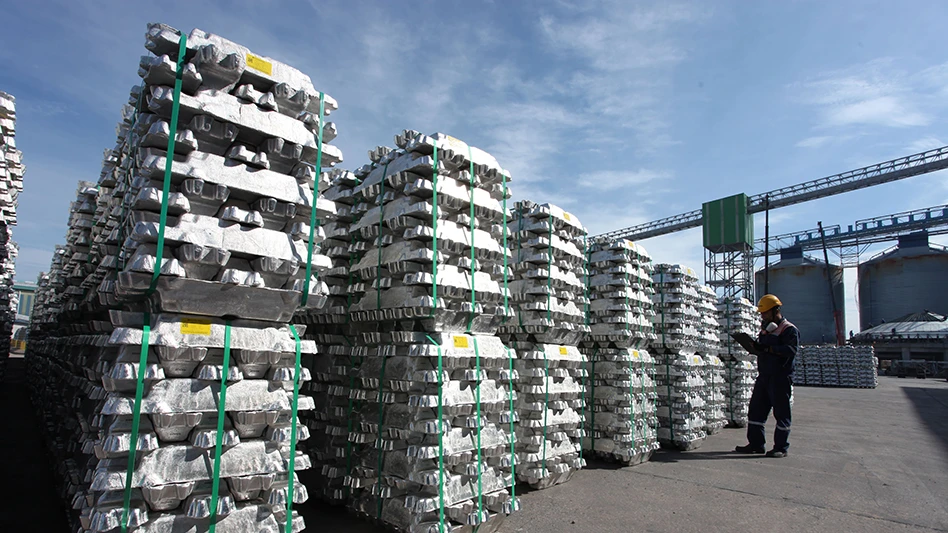
The agricultural sector saw very strong gains, posting 3.1 percent growth last year, but that growth was offset by what Towers described as significant declines in forest products and metal products.
“A lot of what we saw in 2025 is what we’re expecting in 2026,” he said. “The commodity mix is going to be a little bit different, but with the flat industrial economy … we’re still expecting to see an overall pretty flat carload market.”
However, while the commodity mix is expected to change, Towers said forest and metal products will continue to remain low as far as carload volume.
“Those both saw substantial declines in 2025 and we’re not expecting to see much recovery in 2026; it’s just going to stay in that trough,” he said. “Tariffs are still high, which affects especially metals, but also things like Canadian softwoods. … There’s just a general uncertainty that is working against those two markets, specifically.”
Towers characterized the intermodal market as having seen front-loaded growth and a softening in the second half of the year. In 2026, he expects a soft first quarter before volumes pick up later in the year.
“When you look at how the trade industry has been changing as the year progressed, it’s become consistently a weaker picture,” he said.
“The import environment has been getting weaker and weaker and weaker, and on the export side, that, interestingly, has actually been ramping up as the year has progressed. … We actually had a really strong 15 percent year-over-year growth in containerized exports, so moving in the opposite direction of import activity.”
Economic uncertainty impacts investment
According to FTR data, in 2025, Class 8 net truck orders were down every month compared with 2024 except December, with some months down as much as 40 percent.
“That December number was nice to see, but it was just a little bit of catch-up, so we are still way behind the curve,” Eric Starks said. “And if we’re seeing other businesses doing the same type of thing we’re seeing in the trucking market, I think there’s still some more pain ahead for equipment investment in general because they have not been ordering to those levels.”
Vise said December’s boost was spurred by clarity on tariffs as well as emissions regulations.
“There seems to be this understanding that [the Environmental Protection Agency] will stick to the current thresholds and do away with the extended warranties that were, frankly, tied in with electric vehicles anyway, which obviously is not an issue anymore, at least for now.
“That clarity gave the green light to some of these fleets to say, ‘Our equipment is getting old. Let’s come in.’ … It’s not necessarily a sign of any kind of inflection. It could be, but it isn’t necessarily.”
Along with investments in equipment, the Trump administration has attempted to push investments in the U.S. manufacturing segment, but if economic and geopolitical uncertainty remain and investments are continually pulled back, that could push the GDP toward recession.
“But if you do begin to get investment and you continue to get the consumer remaining strongly engaged, then you’ve got an opportunity to turbo-charge growth,” Jonathan Starks said. “I think that’s for a period of time, not for an extended period, [and] I don’t know if those positives that could come to fruition in 2026 are sustainable positives, but, at a minimum, they’d help create a better environment for the next year.”
“There is a potential increased pressure on that middle-income-and-below segment of the population that was already experiencing some stress,” Vise added about the expected rise in health care premiums. “On the recessionary tailwind, that is something to watch.”
The housing market comes into play, too.
Jonathan Starks described the 2024 housing market as relatively weak and said 2025 faced an even weaker market, and though there is some expectation of improvement, he said it’s not robust.
“It requires us to see a few things happen to get there,” he said. “Interest rates coming down slowly … we need to see that continue to happen and we assume that will continue to move in the proper direction, so we can see housing reengage in some fashion by the middle of next year.
“As we look at the consumer from a purchasing perspective, durables, those things that are longer lasting, it wasn't all negative in 2025, but it was certainly a reduced level of activity. … There should be some growth, but it is somewhat limited and with that sort of K-shaped economy, it's not probably going to be an evenly dispersed type of growth. Right now, it's still being held up by that higher-income environment. The longer that persists, the worse it is for overall outcomes in the economy going forward.”
The author is managing editor of Recycling Today and can be reached at mmcnees@gie.net.
Latest from Recycling Today
- DOWA: Center of catalytic converter recycling
- Ocean Legacy Foundation expands plastic testing laboratory services
- CMI, HCPA publish aerosol recycling guide for MRFs
- 2026 Plastics Recycling Conference: A look at PCR contracts
- Remade Institute hosts Circular Economy Tech Summit & Conference in March
- Befesa sees record performance in 2025
- North Carolina county receives FRC foam recycling grant
- Cascades tissue business falls short in Q4