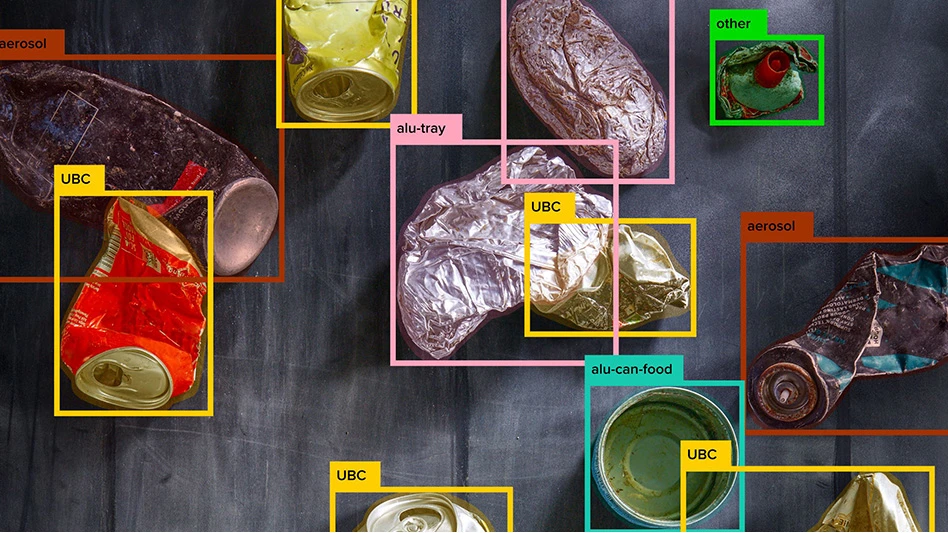
Image courtesy of Tomra Systems ASA
“Technologies that cut waste, policies that push for smarter resource use and systems that make circular models practical at industrial and city levels will all accelerate,” Tomra Systems ASA President and CEO Tove Andersen says regarding this year.
The leader of the company, which designs and manufactures sorting technology for recyclers and reverse vending machines (RVMs), sees ongoing momentum in deposit-return system (DRS) policy enactment as one of several predictions for trends within the recycling sector in 2026.
Andersen points to a European Union policy requiring a 90 percent collection rate for single-use bottles and cans by 2029 as one reason DRS setups are rapidly going mainstream.
“When designed well, they can capture up to 90 percent of beverage containers," she says. "More than 50 systems are already operating worldwide, with countries like Australia, Germany, Norway and Canada leading the way and many more joining, highlighting a strong global shift toward circular economy principles for packaging.”
Packaging is not the only item triggering policy moves, according to Andersen.
“More than half the world’s population now lives in cities, and rapid urbanization is putting increasing pressure on waste systems,” she says. “We expect more cities to adopt smart, convenient solutions to manage this growing challenge in 2026.”
Andersen says RVMs can collect more than beverage bottles and cans, and are doing so in Aarhus, Denmark, where she notes that Tomra's RVMs have collected over 1.5 million reusable cups in less than two years.
"[This shows] how smarter urban systems can make circular living part of everyday life," she continues, adding that in nations with developed economies, the desire by recycling facility operators to keep labor costs low will keep automated sorting technology in demand this year.
Optical and sensor-based automated sorting equipment increasingly is combined with machine learning or artificial intelligence (AI) technology in a trend Andersen sees continuing.
“Labor shortages and rising recycling targets are accelerating AI adoption in recycling plants,” she says. “At Tomra’s Områ sorting facility in Norway, state-of-the-art sorting technology and solutions at a scale now power a system capable of processing all of the country’s plastic waste.
“Circular systems are shifting from niche sustainability goals to core industrial strategy, helping tackle climate change, dependence on virgin materials and geopolitical risks from resource imports. Leading businesses now see circularity not as ‘doing less harm,’ but as a driver of competitiveness.”
Latest from Recycling Today
- K-Cup pods now recyclable in Ontario
- Lindner to feature new shredders at IFAT
- Sims blames Unimetals woes, derivatives contracts for half-year loss
- Tire recycling facility ramps up in the Netherlands
- Metallus loses money in Q4
- Nucor names new CFO
- Vermeer announces plan to build new facility in Des Moines metro area
- PureCycle, Toppan partner on packaging containing PCR