Photo courtesy of Swiss Steel Group and Steeltec AG
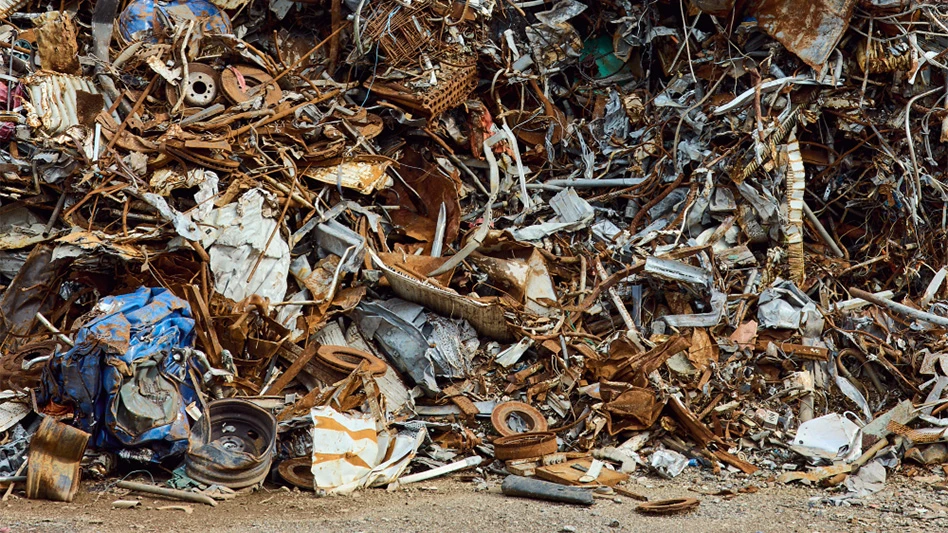
Electric arc furnace (EAF) steelmaker Swiss Steel is working closely with scrap processors and dealers in Europe to produce its “green” steel.
“Scrap is the primary raw material for Swiss Steel Group,” the Lucerne, Switzerland-based company says, adding it is the largest steel company in Europe that exclusively uses EAF technology in its production.
Producing steel from presorted scrap requires less energy and generates less CO2 than producing steel from iron ore and other materials, the company says.
Swiss Steel Group comes into contact with more than 2.2 million tons of scrap annually. “To produce high-quality steel, it is necessary to use new scrap material from metal processing with precisely known alloying additions,” the company says.
Its focus on sourcing scrap from nearby yards is one way of reducing its carbon footprint, and in Germany, France and Switzerland, the Swiss Steel Group’s steelworks source most of their scrap from within a 56-to-62-mile radius.
Swiss Steel says its cooperation with scrap dealers is “crucial,” having evolved from a system that previously focused on negotiating the price per ton.
“Now, scrap dealers are system service providers who are compensated for quality and punctuality,” the company says. “A five-stage process maturity model has been implemented to improve scrap quality.
“Scrap dealers have become more than just middlemen; they are now important, fully integrated system partners in the steel industry.”
A research project in Switzerland involves collaborating with scrap suppliers and multiple universities on a project to create a “digital twin” of incoming scrap, according to the company.
“This project is highly rated in terms of its significance and is being funded by the Swiss government,” Swiss Steel says. “This project utilizes big data to enable steelworks to predict the type of scrap that will be delivered, resulting in more efficient and effective delivery, production and steel quality.”
The Swiss Steel portrayal of the carbon-friendly nature of scrap melted at EAF mills in part could be a response to extensive media coverage portraying the use of hydrogen or other alternative energy sources as “green steel,” while scrap takes a back seat.
A recent report on one hydrogen-related steel project in the United States says, “Globally, there are just 10 other announced green steel plants, all in Europe.”
That figure likely comes as some surprise to Swiss Steel and other recycled-content EAF mill operators including Nucor Corp. and Steel Dynamics Inc. in the U.S., which operate numerous recycled-content mills with among the lowest carbon footprints in the world.
Swiss Steel management also could be anxious to publicize the viability and future prospects of its recycled-content EAF model. Recently the company has been divesting itself of assets rather than growing, at the same time it watches considerable amounts of government funding poured into emissions-reduction efforts of many of its competitors in Europe.
Latest from Recycling Today
- Equipment from the former Alton Steel to be auctioned
- Novelis resumes operations in Greensboro, Georgia
- Interchange 360 to operate alternative collection program under Washington’s RRA
- Waste Pro files brief supporting pause of FMCSA CDL eligibility rule
- Kuraray America receives APR design recognition for EVOH barrier resin
- Tire Industry Project publishes end-of-life tire management guide
- Des Moines project utilizes recycled wind turbine blades
- Charter Next Generation joins US Flexible Film Initiative