skiminok | stock.adobe.com
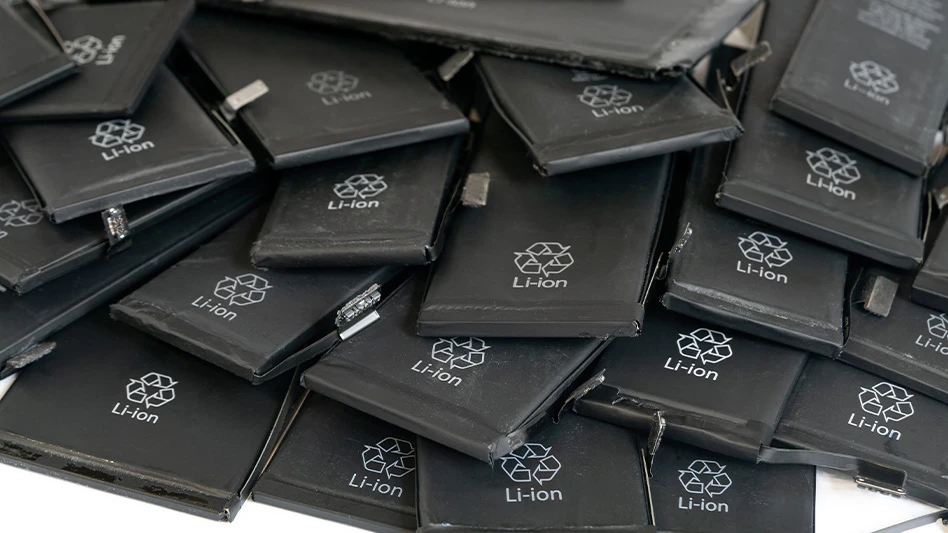
The Solid Waste Association of North America (SWANA), Silver Spring, Maryland; the National Waste & Recycling Association (NWRA), Arlington, Virginia; and the Recycled Materials Association (ReMA), Washington, have released a joint guide on lithium-ion battery management practices at material recovery facilities (MRFs).
The guide is designed to offer practical steps for MRFs to better identify, manage and respond to improperly discarded lithium-ion batteries. The guide is available here.
“The rise in lithium-ion battery fires is one of the most urgent safety issues facing the waste and recycling sector,” says SWANA CEO Amy Lestition Burke. “This guide provides a strong foundation for MRFs as they build or strengthen their management practices. Our goal is to equip operators with actionable information about reducing risk, including battery identification within the facility and what to do in case of a fire to support better-informed and safer working environments.”
The organizations say that as lithium-ion batteries become more common in everyday household products, the waste and recycling industry face a growing number of fires linked to batteries entering the residential waste and recycling stream.
“Recycling operations are seeing more lithium-ion batteries than ever before, often hidden inside everyday items and placed in the wrong recycling streams where they pose significant fire risks,” says Robin Wiener, ReMA president. “By leveraging the collective expertise of our organizations, this guide delivers a consistent, safety-first approach to detecting and managing batteries that have been misplaced in curbside bins by consumers.”
The draft guide outlines operational practices, employee training considerations, storage and handling procedures, customer messaging and emergency response planning to support safer facility operations.
“This guide reflects the shared commitment across our industry to protect workers and strengthen safety at every stage of operations,” says Michael E. Hoffman, NWRA president and CEO. “Lithium-ion batteries pose real challenges for our workers, neighborhoods and families, and this collaborative effort provides practical guidance facilities can use today.”
Hoffman says the guide underscores the importance of public awareness, which is why NWRA will launch a national public service announcement (PSA) campaign in January to show consumers how to properly handle and dispose of batteries.
The PSA campaign “Skip the Bin! Turn your Batteries in!” will launch in January at the Consumer Electronics Show (CES) in Las Vegas. NWRA says the PSA will educate consumers on identifying battery-containing products and using proper drop-off options to keep them out of the waste and recycling stream.
Latest from Recycling Today
- Constellium posts record Q4 adjusted EBITDA
- QCC torches include customizable features
- Umicore finishes 2025 with increased earnings
- Indonesian policy could affect stainless scrap prices
- Casella posts a loss in Q4 2025
- California bill targets recycled-content definition
- McNeilus names Haaker Equipment first Dealer Partner of the Year
- NWRA, SWANA issue responses to BLS fatality data