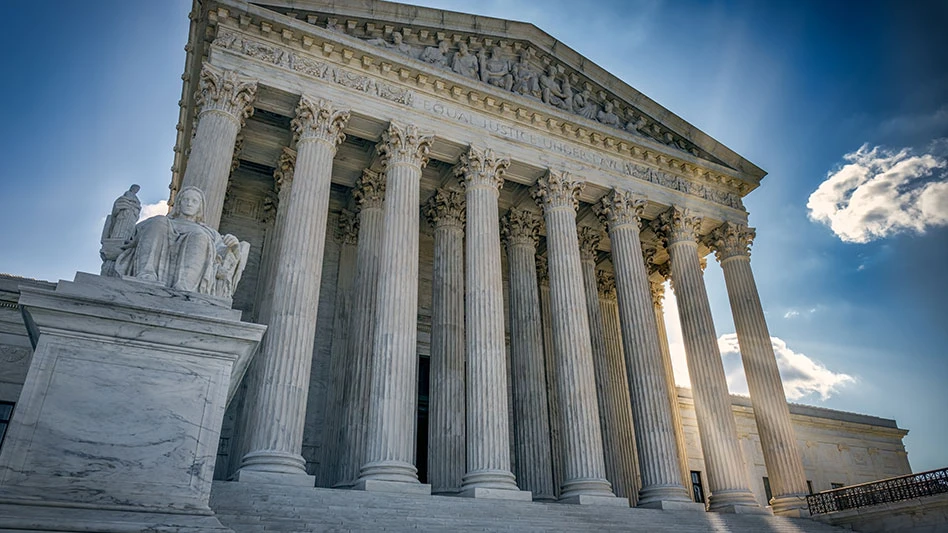
Bill Chizek | stock.adobe.com
The U.S. Supreme Court, in a vote of 6-3, has struck down the tariffs the Trump administration imposed under the International Emergency Economic Powers Act (IEEPA). The president has responded by using Section 122 of the Trade Act of 1974, which allows import surcharges of up to 15 percent to be imposed for up to 150 days.
In a press conference the afternoon of Feb. 20, President Trump announced that he was imposing global 10 percent tariffs under Section 122 and beginning new tariff investigations under Section 301 of the Trade Act, which allows the administration to enact tariffs to enforce U.S. rights under trade agreements and respond to certain foreign trade practices.
Ana Swanson, New York Times trade policy reporter, says Section 122 gives the president the power to address "large and serious" balance-of-payments deficits, noting that the legal authority has never been used before and it’s unclear how courts will interpret the authority.
She says Section 122 allows the president to issue tariffs temporarily to address “large and serious United States balance-of-payments deficits” or other situations that present “fundamental international payments problems,” adding, “Trump’s previous tariffs were meant to address trade deficits. They are somewhat related to balance-of-payments issues, but some experts have argued that Section 122 was not meant to apply to trade deficits specifically.”
To enact tariffs under Section 301, certain statutory requirements must be followed, with an international trade expert noting that the process is intended to be deliberate and include a public comment period. Should the administration follow the rules, tariffs implemented under Section 301 are more likely to be upheld in court.
The Supreme Court Feb. 20 decision, delivered by Chief Justice John Roberts, notes that Trump’s legal stance regarding using IEEPA to enact tariffs “would represent a transformative expansion of the president’s authority over tariff policy.” The majority adds that Trump imposed the tariffs without Congress, which has the power to tax under the Constitution.
To justify such “extraordinary” tariff powers, according to the decision, the president must “point to clear congressional authorization. He cannot.”
The likelihood that importers can get refunds for the tariffs they paid that the president enacted under IEEPA remains unclear. The Supreme Court left that question unanswered, deferring on the matter to the lower courts. In his dissenting opinion, Justice Brett Kavanaugh suggested that the federal government “may be required to refund billions of dollars to importers who paid the IEEPA tariffs, even though some importers may have already passed on costs to consumers or others.”
Law firm Clark Hill says a refund process could be administered through a mix of agency action by U.S. Customs and Border Protection and court-ordered guidance from the lower courts, such as the Court of International Trade.
“IEEPA refunds should become available to all importers of record, which paid IEEPA tariffs directly to the U.S. CBP,” the firm says. “Given the nature of the Supreme Court’s ruling that IEEPA does not permit the president to impose tariffs, there is and was no legal support for the collection of IEEPA tariffs. Downstream purchasers, which did not directly pay tariffs to the U.S. CBP, should review supply contracts and consult counsel for assessment of tariff refund eligibility.”
Latest from Recycling Today
- PureCycle, Toppan partner on packaging containing PCR
- LKQ to focus on simplification, productivity in uncertain demand environment
- Redwood expands San Francisco R&D footprint
- Constellium posts record Q4 adjusted EBITDA
- QCC torches include customizable features
- Umicore finishes 2025 with increased earnings
- Indonesian policy could affect stainless scrap prices
- Casella posts a loss in Q4 2025