An analyst with Standard & Poor's says his primary message to the North American steel industry is a word of warning: “There is no time to rest on your laurels.”
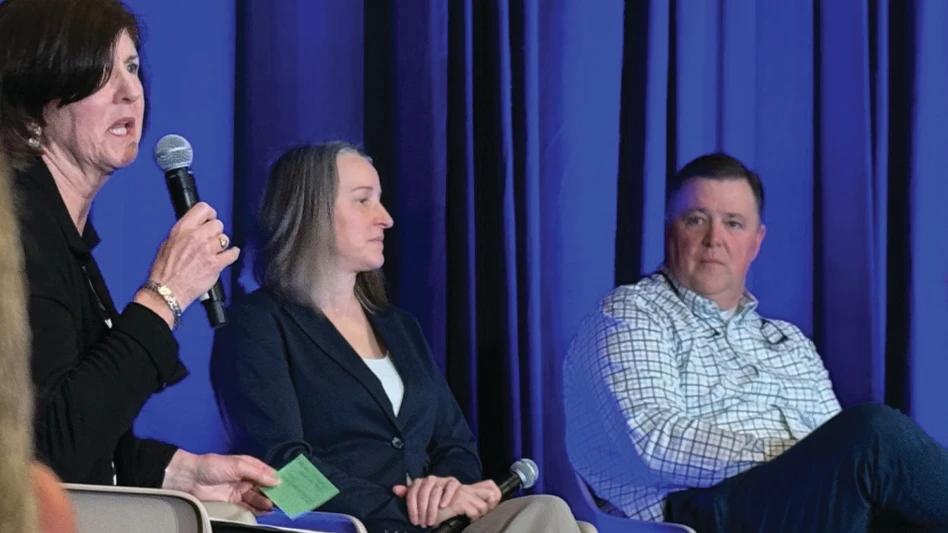
Speaking to attendees of the Platt’s Steel and Ferroalloys Conference, which took place in downtown Pittsburgh in mid-June, analyst Paul Vastola says the boom market of the last two years has put steel companies back in the black, but that fundamental industry questions remain.
Most troubling, according to the New York-based analyst, is the new production capacity in China, Eastern Europe and Brazil. “Some of this product could find its way onto American shores,” Vastola told attendees.
China’s addition of steelmaking capacity has been so enthusiastic that even though the nation is a voracious consumer of the commodity, “China is about to become a net exporter of steel.” This would eliminate the “China factor” that has helped lift pricing for steel globally for the past two years.
Vastola also remarked that India and Brazil are building “export-minded” additional capacity.
Globally, for steelmakers “to achieve long-term success,” said the analyst, it is imperative for companies to consolidate and “rationalize inefficient facilities.”
In a review of North American steelmakers rated by Standard & Poor's, most companies earned a “stable” rating, although Gerdau AmeriSteel sports a “positive” rating because of its multi-national presence and its vertically integrated operations.
Angela Durrant, a consultant with London-based CRU International, sees aggressive production of Chinese ferroalloys producers as now having exceeded the nation’s domestic requirements. “China now dominates the international ferrosilicon trade [and is] the largest exporter to the U.S.,” she noted.
Warning signs are pointing to an oversupply of some ferroalloys in China, which could result in more exports, trade restrictions from North America and Western Europe, and a lower overall pricing climate.
Latest from Recycling Today
- Charter Next Generation joins US Flexible Film Initiative
- Vecoplan to present modular solutions at IFAT 2026
- Terex Ecotec appoints Bradley Equipment as Texas distributor
- Greenwave raises revenue but loses money in Q2 2025
- Recycled steel prices hold steady
- EY says India’s need for scrap imports will continue
- Coming full circle
- Amcor, DCM introduce fertilizer packaging with 35 percent recycled content