With the NEPSI effort to forge a national electronics recycling system having fallen short, several state governments have proceeded on their own to address electronics recycling activity, attendees of the RECCON 2005 conference learned.
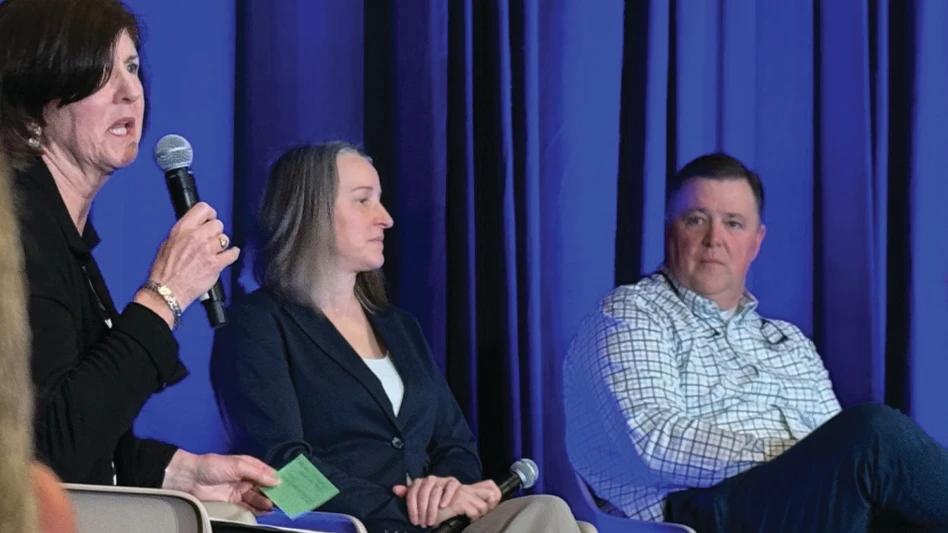
A panel at the event, which took place in late November in Morgantown, W. Va., provided updates of efforts underway or planned in five different states to boost electronics recycling activity.
Perhaps the most ambitious system has been launched in California, where purchasers of televisions and computer monitors now pay a fee to help underwrite electronics recycling activity.
Robert Conheim, senior staff counsel for the California Integrated Waste Management Board, acknowledged that the state’s program can at times seem clumsy and difficult to manage, as the state tries to balance compensating certified recyclers with also trying to minimize fraud in the system.
Conheim acknowledged that the state has been criticized for its slow payment to authorized collectors and recyclers, and quipped, “I think our slow payment schedule has thwarted the get-rich-quick operators.”
As it currently stands, the Golden State is working with 300+ approved collectors and 40+ approved recyclers to help fund the end-of-life disposition of obsolete electronics.
Among the other flaws cited by Conheim, he noted that the paperwork that helps prove that the electronics being handled came from in state is necessary, but that it has also proven “cumbersome.” Additionally, the system is being criticized because it steers equipment toward being shredded rather than being refurbished and reused.
On the Atlantic Coast, Maryland has also been among the first states to put together a mandated system. Hilary Miller of the state’s Department of Environment says the state has notified manufacturers and distributors of electronics that they will owe an annual fee to the state for 2006 that will help it cover its electronics recycling collection and processing costs.
In Minnesota, the state identified cathode ray tube (CRT) monitors and televisions as the portion of the stream to focus on, says Garth Hickle of the state’s Office of Environmental Assistance. Like Maryland, the state is collecting a fee from manufacturers so they can help pay for collection services at some 15 collection points throughout the state.
Hickle also noted that Minnesota and five other Great Lakes Region states are meeting to try to form a third-party operated (TPO) system that can unify efforts in the multi-state region.
In the Pacific Northwest, Wayne Rifer of Oregon-based Rifer Environmental, outlined his efforts to set up a TPO system for the Pacific Coast states. He says such systems can be designed to include private sector traits such as flexibility and efficiency while also carrying the weight of government authority.
In Washington State, Sego Jackson of that state’s Snohomish County has helped to formulate an “incentive and cooperation-based approach” to collect and process obsolete electronics. The program, like Maryland’s and Minnesota’s, would rely on manufacturer financing, with retailers and government agencies also playing roles.
Latest from Recycling Today
- Greenwave raises revenue but loses money in Q2 2025
- Recycled steel prices hold steady
- EY says India’s need for scrap imports will continue
- Coming full circle
- Amcor, DCM introduce fertilizer packaging with 35 percent recycled content
- Comstock Metals gets closer to commissioning commercial-scale solar panel recycling facility
- Washington selects Circular Action Alliance as PRO
- Smurfit Westrock expands in Latin America