The Southeastern Public Service Authority, Virginia, which just months ago was considering an end to curbside recycling, may now expand the program with an automated, $10 million system in much of South Hampton Roads.
Officials with the SPSA described their turnabout Dec. 12. They said they have revised earlier cost estimates and projected other savings that, together, might make an expansion affordable after all.
No final decision was made, and curbside collection will continue as usual until at least June. But clearly, SPSA is thinking about joining its neighbors in Virginia Beach, Hampton and Newport News in going automated.
According to the new estimates, more than 154,000 homeowners who now pay $1.05 per month for curbside recycling would see their bills jump to $2.92 a month. For the fee increase, their existing 18-gallon bins without lids would be replaced by 90-gallon covered containers on wheels that could accept more types of trash than can be recycled today.
``There's no doubt your residents would love this program,'' said Wade Kyle, solid-waste manager for Virginia Beach, which broke away from SPSA and launched its own curbside system in 1997. ``The time to do this is now.''
Discussion this week among board members from seven other localities served by SPSA -- Norfolk, Chesapeake, Portsmouth, Suffolk, Franklin, Isle of Wight County and Southampton County -- also indicated a newfound interest in expanding curbside recycling instead of ending it, as before.
``I want to look at automated, but also if we could phase it in'' to control costs, said Charles Whitehurst, SPSA's board chairman and a Portsmouth city councilman.
Portsmouth, one of the poorest localities within SPSA, also has among the lowest recycling participation rates in the region. About 25 percent of its households regularly set out bins. City leaders were some of the first to raise the idea of doing away with curbside recycling to save money in lean economic times.
It was only when news broke this fall that SPSA's Board of Directors was leaning toward scrapping the existing curbside program, in place since 1989, that sentiments changed.
At a public hearing in October, a group of residents, teachers and environmentalists criticized the board for considering an end to curbside collection. An advocacy group called Save Curbside Recycling sprang up, financed by Tidewater Fibre Corp., a Chesapeake-based company that operates the automated recycling system in Virginia Beach.
While Whitehurst and others blamed the news media for misreporting the board's intentions all along, residents blamed SPSA for misunderstanding the goal of household recycling -- not as a service measured in dollars and cents, but as a means for creating an environmental ethic in southeastern Virginia.
John Hadfield, SPSA's executive director, said the authority hopes to make a final decision about the fate of curbside recycling by February.
If the board adopts an automated system, in which trucks with mechanical arms pick up recycling bins, it likely would be phased in over three or four years, Hadfield and others said.
Under one scenario, SPSA would offer automated service next year to 39,000 homes in the seven localities. The remaining households would continue to recycle with the blue, 18-gallon bins.
Slowly, more homes would be brought into the automated loop, their monthly fees increasing at that time, until all 154,431 households served by SPSA were brought into the fold by 2006 or 2007.
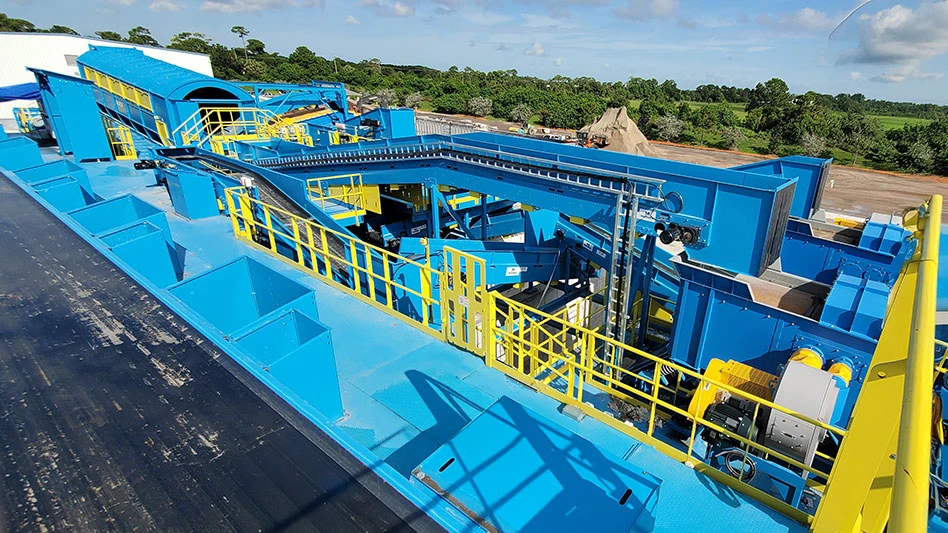
According to the latest estimates, an automated program would cost $10.4 million to launch -- $4 million for new trucks, $6.2 million for 157,000 containers and $125,000 for utility vehicles. The Virginian PilotLatest from Recycling Today
- Greenwave raises revenue but loses money in Q2 2025
- Recycled steel prices hold steady
- EY says India’s need for scrap imports will continue
- Coming full circle
- Amcor, DCM introduce fertilizer packaging with 35 percent recycled content
- Comstock Metals gets closer to commissioning commercial-scale solar panel recycling facility
- Washington selects Circular Action Alliance as PRO
- Smurfit Westrock expands in Latin America