Photo courtesy of Amp
The Southeastern Public Service Authority of Virginia (SPSA), the regional waste authority for South Hampton Roads, has signed a 20-year contract with Commonwealth Sortation LLC, an affiliate of Amp Robotics Corp., based in Denver, to provide solid waste processing services for SPSA's communities and residents.
SPSA manages solid waste services for more than 1.2 million residents across eight southeastern Virginia communities: Chesapeake, Franklin, Isle of Wight County, Norfolk, Portsmouth, Southampton County, Suffolk and Virginia Beach.
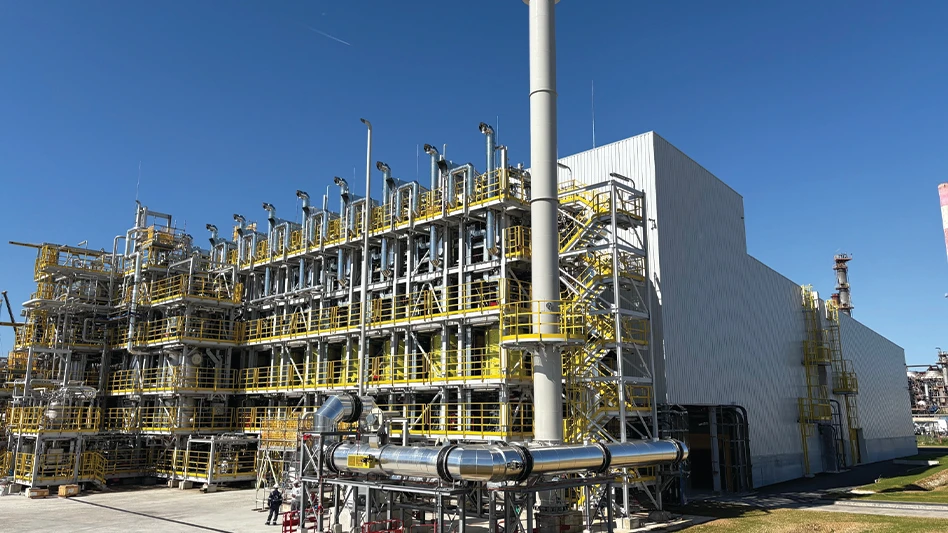
Building on a nearly two-year pilot project in Portsmouth, Virginia, which used an Amp One system capable of processing up to 150 tons of locally sourced municipal solid waste (MSW) per day, Amp will scale its technology regionwide.
This partnership will facilitate the largest recycling project in the country, Amp says. It will deploy MSW sorting lines and an organics management system capable of processing 540,000 tons annually to divert half the waste SPSA brings to Amp.
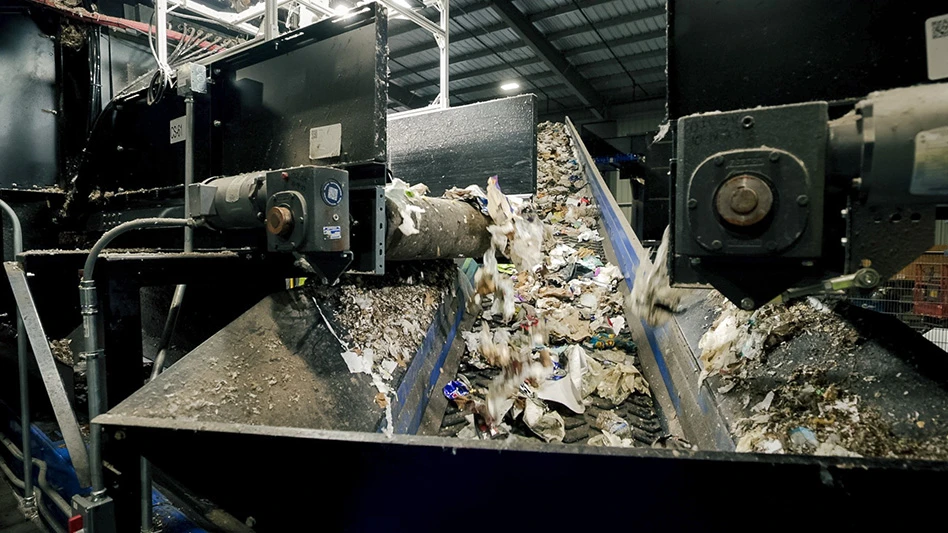
Amp’s artificial intelligence- (AI-) based sorting technology uses cameras, robotics and pneumatic jets to detect and remove recyclables and organics from trash. Amp says its solution will allow SPSA to extend the life of its landfill, decrease long-term collection and disposal costs for communities and adapt to community needs, including organic waste management.
Automatic diversion
“This project will enable us to improve how we manage waste from the communities we serve, turning all 1.2 million residents into active recyclers, while doubling the life of our landfill,” SPSA Executive Director Dennis Bagley says. “This technology is demonstrating that there are effective ways to recover valuable resources from the trash, and we're proud to be on the cutting edge of providing high-quality and transparent waste management services.”
Amp says the partnership will ensure the region recycles at least 20 percent of its waste and eliminates the need for separate recycling facilities and trucks to process most recyclables. SPSA’s own waste characterization study found high rates of recyclables, mainly plastics and metals, in the Hampton Roads waste stream.
Bagley says the study found that about 28 percent of the waste stream was still recyclables after the recycling process had taken place. He says the study also found the remainder of the waste stream was approximately 40 percent organics.
Searching for a solution to save landfill space, Bagley says SPSA wanted an alternative waste disposal system that would deal with the recyclables and organics left in the waste and reduce the waste stream by no less than 50 percent.
Down to one
After about one year of negotiating with Amp and another firm, he says they elected to begin negotiations for the final contract with Amp.
“Amp is unique in that they’re using AI and robotics to sort recyclables from waste,” Bagley says. “The other thing was the organics process. There's a lot of organics processes out there that have failed because they're very complicated. Amp brought up pyrolysis for the organics, which is a very simple process."
Bagley says SPSA felt the risk was lower with Amp as the company guaranteed to remove no less than 20 percent of recyclables and no less than 30 percent of organics from the waste.
‘A new model’
“Recycling rates have been stuck for both communities and the nation at large for the last decade and a half,” Amp CEO Tim Stuart says. “Projects like this one offer a new model for recycling, one that’s better aligned with local waste infrastructure. Our approach to processing MSW will significantly reduce the volume of waste SPSA must landfill, enable the creation of useful end products and do so with meaningfully lower emissions levels than those resulting from competing solutions.”
This solution will allow all residential and commercial waste to be collected in a single bin. Amp plans to use two sorting facilities in Portsmouth to extract recyclables and organics, collaborating with SPSA to dispose of the residuals. A third facility will transform the captured organics via indirect heating into biochar, a charcoal-like substance that sequesters carbon.
“We’re going to process the recycling material like all single stream is ... separate and go sell that material,” Stuart says. “In organics, we’re going to build on a biochar system. It’s going to take us two or three years to get that done, permitted and built, but once we do that, we will process all the organics through that.”
Amp will capture the carbon and sell carbon credits through contracted offtakes. The process takes the residential material and processes and diverts it, and Stuart says that guarantees a 50 percent diversion rate—20 percent recyclables and 30 percent organics—of material the company processes for SPSA.
The use of Amp’s AI vision system allows the company to identify and capture the recyclables and organics at a lower cost, Stuart says. He credits the technology as the main component, saying it allows the company to offer these diversion percentages.
Amp expects to create about 100 jobs in the region and build skills in the local workforce. Its solution relies on production operators who can optimize the technology and automated systems they manage.
“It is a big win for the company,” Stuart says. “We’re taking the learning we’ve been working on for the last two years and going through this process, working with other municipalities in North America and other parts of the world to do the same thing for them.”
The facilities
Amp recently acquired the Portsmouth, Virginia, operations of RDS of Virginia LLC and will operate a MSW processing facility at that location, processing approximately 120,000 tons per year, Bagley says.
SPSA will provide the Win Waste RDF facility site, where AMP will install a MSW processing facility, a MRF and an organics processing facility, producing approximately 420,000 tons annually.
The original capital investment is estimated to be $200 million. Bagley says this will be repaid to AMP over the 20-year agreement as SPSA will pay a $50 per ton processing fee for the MSW it brings to Amp.
“The remainder of the investment is paid off through the sale of recyclables, the sale of carbon credits and the sale of the biochar,” Bagley says.
Latest from Recycling Today
- England's Environment Agency extension provides stability for metal shredding operators
- Schupan names new chief financial officer
- NAW looks ahead to July hearing in Oregon
- Recycle Coach partners with Bartec Municipal Technologies
- EPA proposes abandoned tire cleanup plan with focus on energy recovery
- BIR welcomes new policy officer for trade & environment
- Global Recycling Foundation recognizes Recycling Heroes
- Recycling Today Media Group launches Paper and Plastics Recycling Conference webinar series