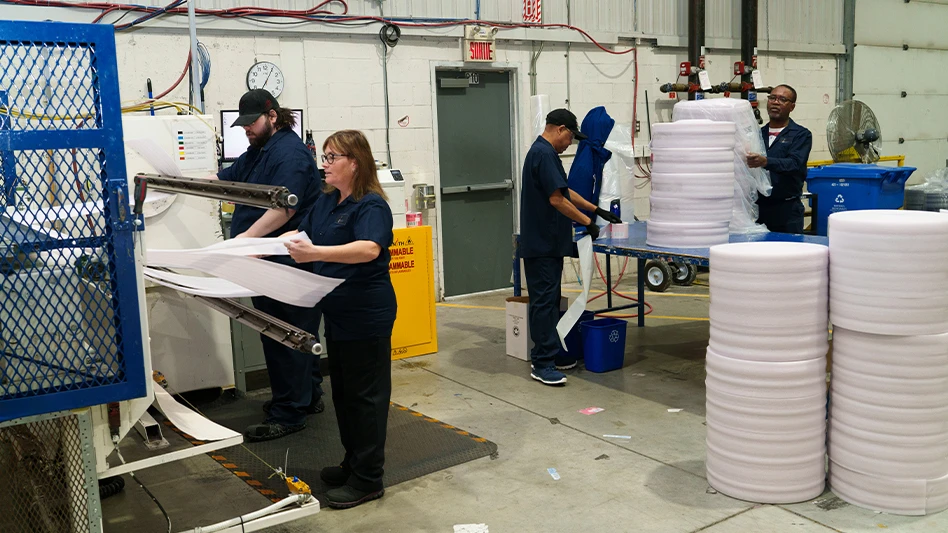
Photo courtesy of Specialized Packaging Group
Over his 30 years in the packaging industry, Specialized Packaging Group (SPG) CEO Paul Budsworth has seen "a fundamental shift" from a focus solely on protection and cost-efficiency to balancing those priorities with sustainability and circularity.

As one of North America's largest independent protective packaging providers, Charlotte, North Carolina-based SPG serves markets including aerospace, electronics, automotive, health care, technology and more, and, recently, has worked to embed circular economy principles into its product design, materials sourcing and manufacturing.
The company operates more than 30 manufacturing and design facilities in North America and has an network of more than 200 manufacturing partners.
"Our operations at SPG are built around a vertically integrated protective packaging platform serving a wide range of industrial and technology-driven markets across North America," Budsworth says.
"We are dedicated to solving our customers’ supply chain challenges through engineered solutions that combine performance, protection, efficiency and sustainability. Our mission lies in transforming our customers’ businesses with innovative, sustainable, protective packaging solutions, and our vision is to be a recognized leader in protective packaging through sustainable and innovative design.”
In the following interview, Budsworth discusses the evolution of the packaging industry, how SPG is keeping up and why sustainability is no longer a separate issue, but a core driver of business growth.
Recycling Today (RT): What is your career background? How did you get into the recycling and sustainable packaging industry?
Paul Budsworth (PB): For 30 years, I’ve led global teams in multiple industries across operations, commercial strategy and innovation. My career began at Unilever, followed by senior leadership roles at Sealed Air Corp. through its Diversey division, where I led businesses across North America, Europe and Southeast Asia. I joined SPG in 2022 to help scale the company into one of North America’s leading providers of sustainable protective packaging, applying my experience in driving operational excellence, integration and cultural transformation to support growth and sustainability.
RT: How has the packaging industry evolved over the years, particularly as it pertains to emphasizing recyclability and sustainability?
PB: Over the past two decades, the packaging industry has undergone a fundamental shift from a primary focus on protection and cost efficiency to balancing those priorities with sustainability and circularity. Materials science, design innovation and government regulation have all evolved rapidly, driving companies to rethink how packaging is sourced, manufactured, used and recovered. We’ve moved from simply making packaging lighter and more cost-effective to designing it for less environmental impact, including recyclability and reusability.
For SPG, this is both a responsibility and an opportunity. Customers are demanding solutions that both meet their performance needs and align with their sustainability goals, so innovation from our side must serve both functions. We’re investing in materials and processes that minimize waste, reduce the carbon footprint and support circular economy models. The biggest change I’ve seen is that sustainability is no longer a separate initiative. It’s become a core driver of product development, supply chain strategy and long-term business growth.
RT: What are the biggest challenges facing the packaging industry and how is SPG working to address them?
PB: The packaging industry is navigating a mix of challenges, from rising material and logistics costs to increasing regulatory and customer demands for circular, lower-carbon solutions. Companies are expected to deliver packaging that protects products, performs efficiently and aligns with evolving sustainability standards.
SPG is addressing these challenges by investing in manufacturing integration, closed-loop recycling and materials innovation that reduce waste and the carbon footprint. Our recent Impact Report highlights examples of this. Our reuse and recycling initiatives keep materials in circulation, and our strategic partnerships deliver high-performance packaging with more recycled content.
Furthermore, SPG will open a new Packaging Innovation Center in California’s Silicon Valley early next year. The new center furthers SPG’s vision to innovate truly comprehensive, earth-friendly packaging solutions. It will deliver expanded ISTA-certified testing services, product engagement opportunities, and collaborative development.
RT: How does recycling and refurbishment play a role in sustainable packaging?
PB: Recycling and refurbishment are critical for creating truly sustainable packaging. By keeping materials in circulation, we reduce the need for virgin resources, lower carbon emissions and minimize landfill waste. SPG integrates closed-loop recycling and refurbishment into our operations by collecting used or scrap materials from customers’ packaging, processing them and turning them back into high-performance packaging.
This approach both supports sustainability and delivers business value. Refurbished and recycled packaging maintains product protection and efficiency while helping customers meet their environmental goals. It’s a practical example of how the principles of a circular economy can be embedded into everyday operations, creating both environmental impact and cost savings.
RT: How does recycled material availability and fluctuations in supply impact your operations and how do you address that?
PB: Variability in supply can affect both cost and production planning, so it requires proactive management. At SPG, we address this by maintaining strong supplier relationships, diversifying material sources and integrating recycled content into our own closed-loop operations wherever possible.
With over 30 in-house manufacturing facilities across North America and a network of more than 200 manufacturing partners, we’re solving customer challenges through collaboration and our commitment to innovation, sustainability and protection.
RT: SPG has a commitment to rethinking and reshaping its operations to contribute to a circular economy. What does that entail?
RT: Our commitment to the circular economy means designing and operating in ways that keep materials in use for as long as possible. This includes rethinking packaging design to maximize recyclability, integrating closed-loop recycling into our operations and developing reusable and returnable systems that reduce single-use waste.
It also means collaborating closely with customers and partners to create solutions that meet both performance and sustainability goals. By embedding circular principles into every stage of development from design to collection and remanufacturing, we can reduce environmental impact while continuing to deliver cost-effective, high-performing packaging solutions.
RT: What types of products or processes has SPG developed that emphasize recycling and sustainability?
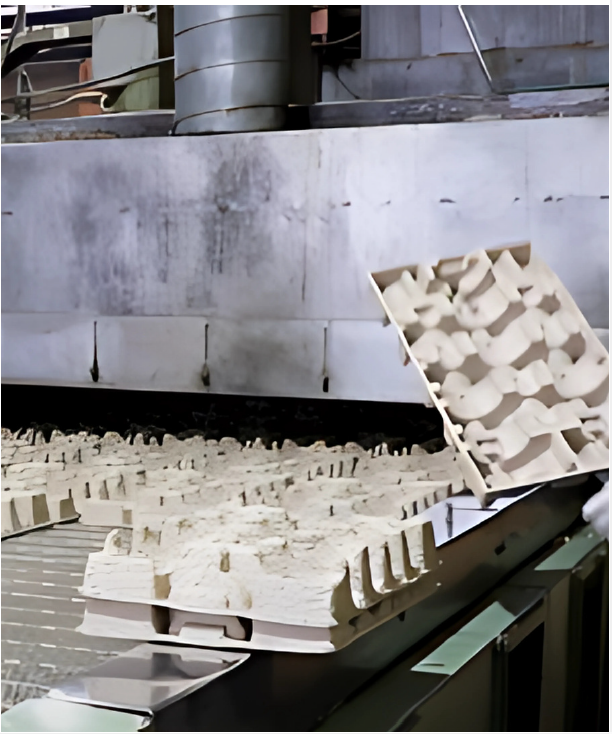
PB: On the product side, we offer packaging solutions like molded pulp made with higher recycled content, monomaterial formats like our polyethylene foam for easier recycling and engineered reusable or returnable systems such as corrugated kits. On the process side, we’ve built closed-loop recycling operations that collect scrap and used materials from customers, reprocess them and reintegrate them into new packaging.
These innovations allow us to deliver high-performance, protective packaging while reducing waste, lowering the carbon footprint and supporting circular economy principles. Each solution is designed to balance sustainability with reliability and cost-efficiency for our customers.
RT: How can others rethink their approach to packaging and create a more circular product?
PB: Rethinking packaging for a circular product starts with accounting for the full lifecycle, from design to end-of-life. Companies should consider the materials they use, how packaging can be recycled or reused and ways to minimize waste from the outset. Incorporating closed-loop systems, whether through take-back programs, reuse initiatives or recycled-content packaging, can significantly reduce environmental impact.
Creating circular products also requires collaboration across the supply chain. By working closely with suppliers, customers and logistics partners, businesses can identify opportunities to recover materials, optimize packaging design and embed sustainability into operational decisions. A circular approach is not only better for the planet, but it also often improves efficiency, reduces costs and strengthens brand reputation.
RT: What does the future of sustainable packaging look like?
PB: The future of sustainable packaging is increasingly defined by circularity, materials innovation and operational integration. Packaging will need to do more than protect products; it will have to be designed for multiple lifecycles, be easy to recycle or refurbish and integrate into a broader circular supply chain. Companies will also need to measure and manage environmental impact across the entire lifecycle of their packaging, from sourcing to end-of-life.
The technology industry is growing and evolving at an unprecedented pace, and solutions for this customer segment will need to keep pace with increasing complexity, scale, and sustainability expectations. For data centers specifically, these principles are particularly critical. Data center hardware is dense, sensitive and costly, so packaging must protect it while being reusable, durable and easy to refurbish. Systems like reusable server crates, designed for multiple deployments and integrated reverse logistics, are an example of how circular principles can be applied in this sector. As data centers scale globally with the proliferation of AI, we expect packaging to become a managed asset—optimized for performance, traceability and environmental impact—helping operators meet both operational and sustainability goals.
Paul Budsworth is CEO of Specialized Packaging Group. For more information, visit the company's website.
Latest from Recycling Today
- Fleetio launches AI capability to accelerate fleet maintenance approvals
- The Metals Agency receives approval for export credit insurance
- Recycle Ann Arbor extends drop-off station operating hours
- Sybilion seeks to help manufacturers confidently address volatility
- Rio Tinto, Prysmian partner on low-carbon aluminum solutions for data centers
- Unilever criticized for plastics approach
- USTR to study additional steel, aluminum tariffs
- Electrified Materials adds processing capacity