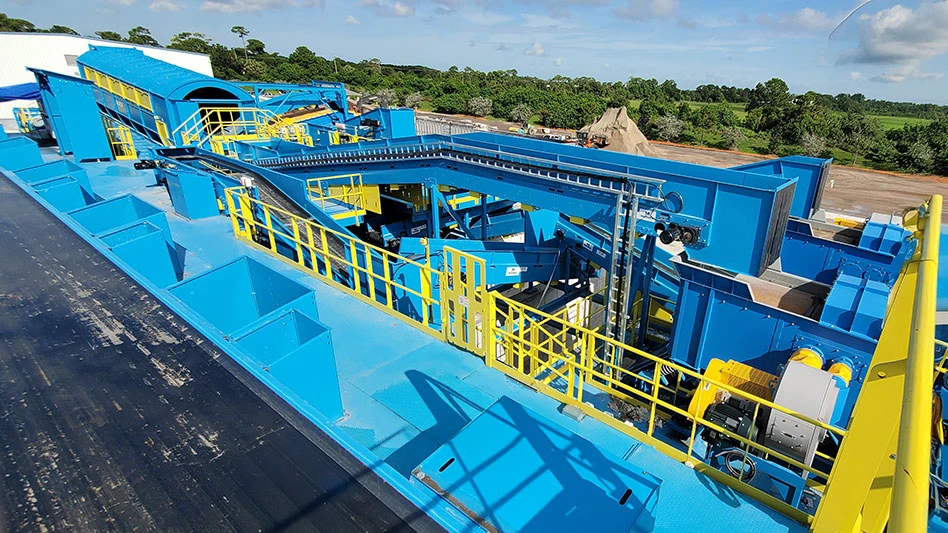
‘The age of the big shredder is upon us,’ according to Jim Schwartz of US-based Texas Shredder Inc. Addressing the BIR Shredder Committee meeting during BIR’s annual spring meeting, he pointed out that many of the shredders installed over the last year or so have been of 6,000 or greater horsepower.
In the UK, Schwartz noted, European Metal Recycling Ltd started up a 10,000 HP shredder in Liverpool, while an 8,000 HP machine had been unveiled by the Sims Group in Newport.
In addition to the above shredders, Texas Shredder also supplied an 8,000 HP machine to Poland and that this was scheduled to begin production this fall.
Developments in the world shredder market were running in parallel with legislative pressure, according to Jens Hempel-Hansen, chairman of the Shredder Division’s. Additionally, Hempel-Hansen is with H.J. Hansen Recycling Industry, Denmark.
Prohibiting the landfilling of shredder residue could slow down development work aimed at finding solutions for this material, he argued.
European Shredder Group Chairman Tony Bird OBE confirmed that eight EU countries had indicated their intention to ban the landfilling of automotive shredder residue at some point over the next five years. ‘But if there is no practical alternative, what will happen to the shredder waste?’ he asked.
Many of ESG’s member companies believed EU recovery targets could be achieved if the shredder waste stream were processed to remove non-combustibles and then incinerated to provide energy, added Bird.
Robin Wiener of the Institute of Scrap Recycling Industries confirmed that, in April, the state of Arkansas had passed the ISRI-sponsored Mercury Switch Removal Act which requires manufacturers to report on steps taken to design vehicles and their components for recycling. This represents the first piece of legislation containing ‘Design for Recycling’ language to pass a US legislature and become law.
The Shredder Committee meeting in Barcelona also featured a presentation on the implementation in Spain of the agreement covering the recovery and recycling of end-of-life vehicles.
Juan Antonio del Moral, President of the Spanish association for environmental ELV treatment SIGRAUTO, argued that EU recovery targets set for the year 2015 could be achieved only through post-shredder technologies such that all non-reusable components were left in the vehicles. ‘Dismantling is not economic,’ he insisted.
Latest from Recycling Today
- Greenwave raises revenue but loses money in Q2 2025
- Recycled steel prices hold steady
- EY says India’s need for scrap imports will continue
- Coming full circle
- Amcor, DCM introduce fertilizer packaging with 35 percent recycled content
- Comstock Metals gets closer to commissioning commercial-scale solar panel recycling facility
- Washington selects Circular Action Alliance as PRO
- Smurfit Westrock expands in Latin America