Shaw Industries Inc. will be opening a power plant in August that will use around 16,000 tons of overruns, rejects and remnants a year. The company hopes the $10 million plant, which will power one of its main factories, can help the company save the $2.5 million a year that would have gone to buy fuel oil.

If the project proves successful, its designers expect it will reverberate throughout the industry and particularly this northwest Georgia town, where the rolling hills are dotted with carpet factories, warehouses and discount outlets.
"Everybody is watching, and we've been looking for years to find a way to convert waste carpet that makes sense," said Howard Elder, research director for competitor J & J Industries.
But Elder quickly added that others will only follow suit if the alternative energy makes economic sense.
"I wouldn't think the minute it comes on and appears successful it will proliferate in tens," he said.
The plant's engineers said the process is environmentally sound, emitting roughly the same amount of pollution as natural gas. In addition to carpet scraps, the plant also will burn the 6,000 tons of sawdust the company produces every year from the manufacture of wood flooring.
The Carpet and Rug Institute says 4.7 billion pounds of carpet is dumped in U.S. landfills each year, filling up almost 1 percent of the country's landfill space.
To the man who helped persuade his company to embrace the idea, it all makes sense – especially in light of rising oil costs.
"Why pay someone to dig it out of the ground and pay someone else to put it in the landfill?" asked Gary Nichols, Shaw's corporate energy manager, noting that most carpet is made from plastics and other oil products.
Changing waste carpet into energy may seem like a shoo-in for the carpet industry. A pound of carpet has roughly the same energy potential as a pound of coal, Nichols said.
But failed attempts and bad news in this close-knit carpet town discouraged industry leaders from taking the next step.
Yet as energy costs rose, the dusty premise that waste carpet could be used to fuel production suddenly became more viable, and Nichols pleaded for years with the company's hierarchy to take another look at converting waste carpet into energy.
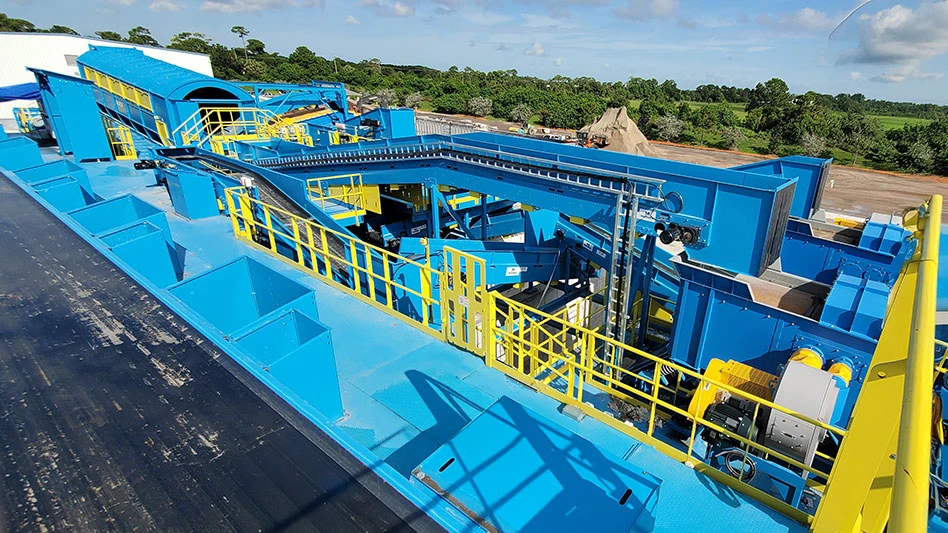
Shaw Industries joined with engineers from Siemens Building Technology to design a plant they think perfects the once-faulty conversion process.
Now a shiny, high-tech plant stands in contrast behind the old factory it helps power – a gray, sprawling building that once made parachutes for WWII paratroopers.
When the power plant goes on line later this summer, truckloads of carpet will be stacked three stories high in a cavernous warehouse, waiting to be sent through an imposing shredder. The remnants will then be shipped to the gassifier, which is much like an oven and converts the scraps into a synthetic gas.
The gas is then pushed through two pollution-controlling processes before its funneled to the factory, where it can be burned much like natural gas to help create 2 million yards of new carpet each year.
Shaw, a privately owned subsidiary of billionaire investor Warren Buffett's Berkshire Hathaway Inc., had annual sales of $4.66 billion in 2003, the most recent revenue data available. Associated Press
Latest from Recycling Today
- Greenwave raises revenue but loses money in Q2 2025
- Recycled steel prices hold steady
- EY says India’s need for scrap imports will continue
- Coming full circle
- Amcor, DCM introduce fertilizer packaging with 35 percent recycled content
- Comstock Metals gets closer to commissioning commercial-scale solar panel recycling facility
- Washington selects Circular Action Alliance as PRO
- Smurfit Westrock expands in Latin America