Alan Lerman's family has operated a scrap yard in Portland's Bayside neighborhood since 1926.
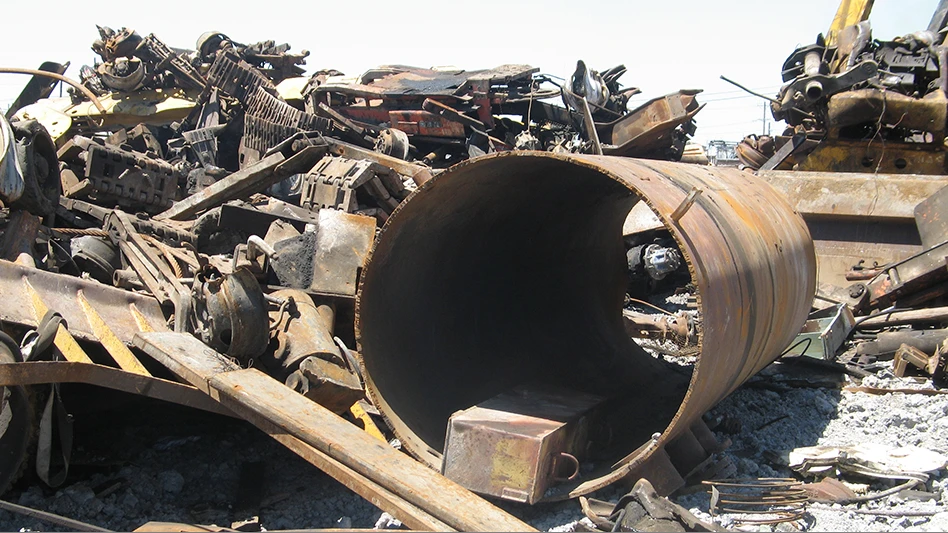
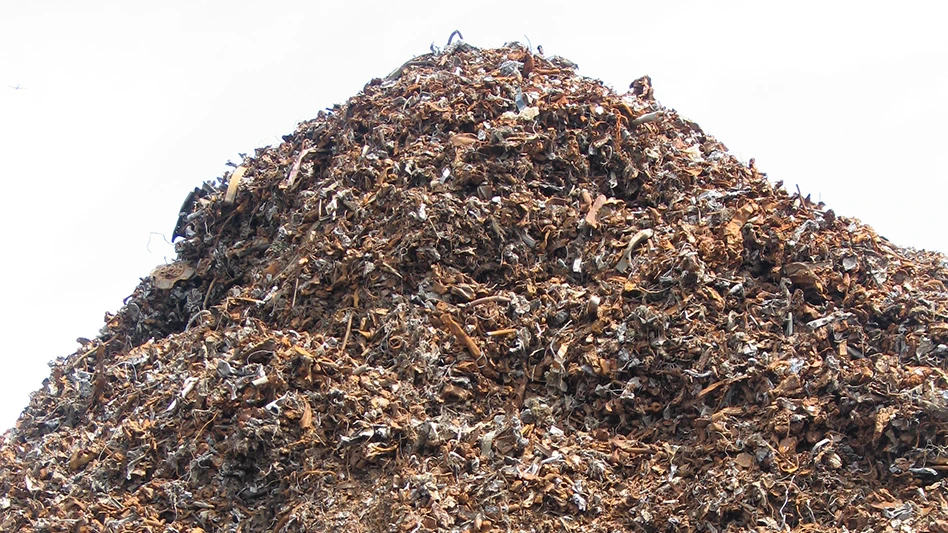
That's when his grandfather bought E. Perry Iron & Metal Co. The company, with its massive rusting piles of iron and steel, has been a local hub of industrial and economic activity - a focal point of the building up and breaking down of things - for more than a century.
Now, as the city makes plans to clear Bayside of its two scrap yards and replace them with more attractive commercial and residential development, Lerman fears that he will be put out of business.
He worries that the new Bayside Development District, which the City Council approved Jan. 21, will give the city the means to take his land by eminent domain without regard for where his business will be moved.
He questions the depth of the city's commitment to help him find a suitable new site in Portland, especially when open industrial land is scarce and neighborhood groups fought his past attempts to move.
Lerman says his business must stay in Portland, and the suggestion by some city officials that the scrap yards could move elsewhere in Greater Portland is unacceptable.
"They're going to destroy my livelihood," Lerman said. "Portland is my market. This is a very competitive business. If I was relocated out of Portland, I'd lose my business."
Representatives of the other Bayside scrap yard, New England Metal Recycling, also want to stay in Portland. But they say they plan to cooperate with the city.
"There's going to be a lot of tough slogging, but we believe it can be a win around for everyone," said Peggy McGehee, attorney for New England Metal Recycling.
McGehee told the council that New England Metal Recycling recognizes that Bayside is being transformed and that the company has no place in the city's vision for the neighborhood. "We're willing to put our energy into this," McGehee told the council. "We appreciate the city putting its energy into this."
Portland has been trying to resurrect Bayside for several years, in particular by fostering commercial and infrastructure improvements. A feasibility report issued in April 2000 called scrap yards "the single most inhibiting factor to the successful redevelopment of Bayside."
Establishing the Bayside Development District will allow the city to apply for federal funding through the Uniform Relocation Assistance and Real Property Acquisition Policies Act of 1970. It also will provide the legal foundation for the city to use its powers of eminent domain to purchase and relocate the scrap yards, said Mark Adelson, Portland's director of housing and neighborhood services.
To fund the project, the city hopes to gain access to a $1.8 million grant and a $3.9 million loan that the U.S. Department of Housing and Urban Development approved two years ago for another Bayside project that fell through, Adelson said.
The city also has hired Peter W. Sleeper Associates of Arlington, Mass., to assess the cost and feasibility of relocating the scrap yards. Adelson said Sleeper specializes in eminent domain proceedings under federal law. Sleeper works with appraisers, moving companies and real estate agents to bring about desired land-takings. Sleeper has met with representatives of both scrap yards and plans to tour the businesses in the coming weeks.
"We don't know their needs until we get on the site and discuss it with them," Adelson said.
E. Perry Iron & Metal Co. operates two scrap yard sites in Bayside that cover more than two acres on Lancaster and Somerset streets. In 2002, the assessed value of the land and buildings for tax purposes was $427,240. New England Metal Recycling, known locally as H. Finkelman Inc., operates on less than an acre on Somerset Street. That property was assessed at $192,050 in 2002.
City officials are making no promises about where the scrap yards will be moved.
"It is not our goal to put them out of business. It is our goal to relocate them from Bayside," said Mayor Nathan Smith. "We owe it to the businesses to make a strong, good-faith effort to work with them to find a suitable alternative location. 'Suitable' is the operative word. We're anxious to keep our momentum on this."
That momentum worries Lerman. He doesn't want to sacrifice his business to the revitalization of Bayside. He sees a contradiction in the city's effort to reclaim the area as a gateway neighborhood and its desire to promote economic development on the Portland peninsula.
"It kind of baffles me," Lerman said. "The city advocates recycling. That's what we do, and they're trying to get rid of us. Every business generates scrap. If they want economic development, they need scrap yards." Portland (Maine) Press Herald
Latest from Recycling Today
- Equipment from the former Alton Steel to be auctioned
- Novelis resumes operations in Greensboro, Georgia
- Interchange 360 to operate alternative collection program under Washington’s RRA
- Waste Pro files brief supporting pause of FMCSA CDL eligibility rule
- Kuraray America receives APR design recognition for EVOH barrier resin
- Tire Industry Project publishes end-of-life tire management guide
- Des Moines project utilizes recycled wind turbine blades
- Charter Next Generation joins US Flexible Film Initiative