Officials with the city of Mobile, Ala., can't agree on how to classify a new scrap metal facility that will shred cars on the Mobile/Chickasaw line, and an environmental group is worried that the city improperly granted a business permit without holding a public hearing. 
Alter Trading Corp. said its facility along the Mobile River in Chickasaw, Ala., will provide 70 new jobs and sell metal to local steel mills and foundries when it opens in mid-2006.
The company said it decided to build its $20 million facility in Mobile because one of its largest customers, IPSCO Inc., operates a steel mill in Axis in north Mobile County.
"This facility would help us to better serve them," said Brian Chamberlin, regional vice president for the company.
Alter expects to begin shredding cars in May, and will also handle junk metal from stoves, refrigerators and laundry machines.
State officials say the facility -- to be called Alter Scrap Processing of Mobile -- will have to obtain permits for air pollution and for stormwater runoff, but Alabama Department of Environmental Management officials said the company had so far only applied for a construction-related permit. Until the permit application process gets under way, it will be difficult to determine the full environmental impact of the facility, according to officials.
It is clear that car shredding operations deal with huge volumes of toxic fluids, including transmission fluid, engine oil, gasoline, antifreeze, and the refrigerants for air conditioning systems. Those materials must be removed before the cars are beaten into small pieces by the shredder mechanism.
Shredder operations have also been shown to contribute to mercury pollution. Certain switches inside millions of automobiles -- particularly switches for hood and trunk lights, some anti-lock brake systems and some older air bag systems -- contain small capsules of mercury. Unless those switches are removed before cars are shredded, mercury is eventually released into the air when the cars are melted down for feedstock at mills such as IPSCO's. The amount of mercury bound up in the steel can be relatively large. Older cars, particularly those made before 2002, may have two or more grams per vehicle.
A facility that handles 2,500 older cars a month could process more than 100 pounds of mercury a year that could eventually be burned and released in a smelting facility elsewhere. It's not clear how much mercury could ultimately be released in Mobile County.
In comparison, Alabama Power Co.'s Barry Stream Plant in Mobile County, the area's largest known source of airborne mercury emissions, releases about 600 pounds a year.
Some states have passed laws requiring that shredder operations remove the switches at the same time the fluids and other hazardous materials are flushed from the car. According to mechanics, many of the switches can be removed in seconds with nothing more than a screwdriver.
Alter Trading has said it will remove the mercury from the cars if it has to, but hasn't gotten to a point where those decisions have been made, Steve Soltis, vice president of operations, said from Mississippi, where the company is doing storm clean up.
"We'll do whatever is environmentally correct to do," Soltis said. "If it's required and it's environmentally correct to do around here, that's what we'll do. As we start getting closer to operations, we'll talk to ADEM and local environmentalists and do whatever we have to do."
ADEM said in a statement Friday that there is no Alabama law regulating the removal of mercury switches from automobiles, though stormwater runoff and the disposal of mercury, oil, gasoline and batteries are regulated.
In the statement, ADEM spokesman Jerome Hand also said that representatives from the agency inspected the Alter Scrap Processing facility Friday, but had not filed a report before ADEM's offices closed for the week.
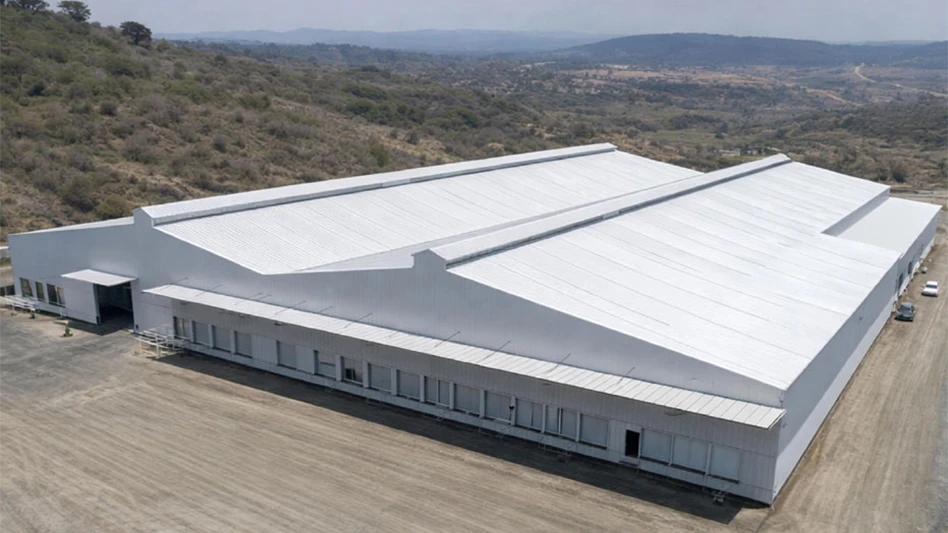
Heavy metal in Mobile Construction on the Chickasaw property, which formerly belonged to Overseas Hardwood, began in mid-January, according to Chris Morehouse, who last month moved from Iowa to Spanish Fort to manage the operation.
It has water, rail and truck access but is also in a flood zone -- much of the surrounding Port of Chickasaw was under water during Hurricane Katrina.
The company has said that hazardous materials from the cars are contained and sometimes recycled, depending on the fluid. Gasoline, for example, either goes to a refinery or is filtered and given to employees, Soltis said.
The plant is a work in progress, Morehouse said Thursday. Work crews were building roadways and storage pads at the site, which has already been cleared of unwanted small buildings. W.G. Yates & Sons Construction Co. is the general contractor, Morehouse said.
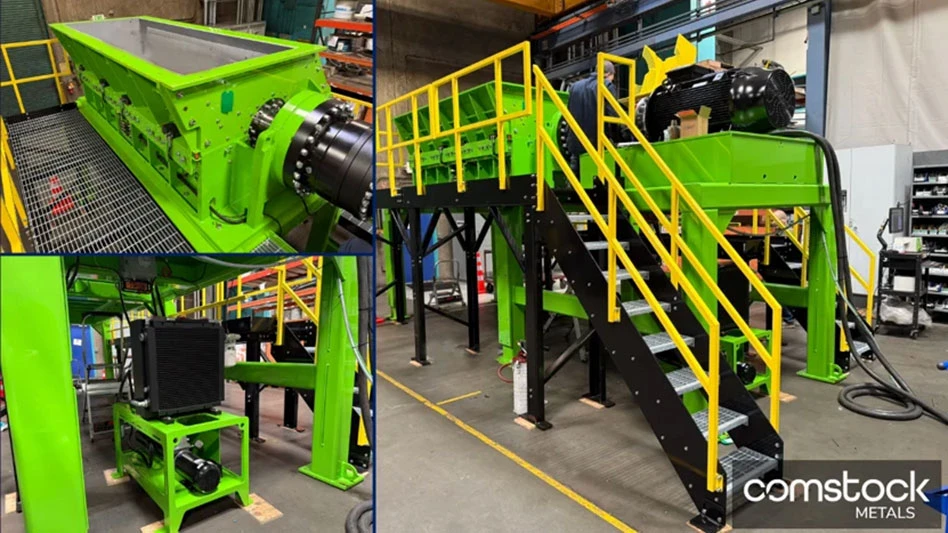
In late December, Metso Corp. of Finland, announced that it would sell two metal shredders to Alter Trading, one bound for Mobile and the other for Iowa.
Metso Texas Shredder Inc., a subsidiary, is to deliver the Mobile shredder in April, according to Metso.
The value of both shredders is about $12 million. The Alabama shredder will be able to process 27,000 tons of metal scrap per month, three times the volume of the Iowa machine, according to Metso.
Once operational, the Chickasaw plant is expected to process 300,000 tons of scrap metal per year, with half of that coming from automobiles and the remainder from appliances and sheet metal, Chamberlin said.
Scrap metal and cars are initially stored in buildings on site, then moved into the shredder by cranes, Morehouse said. An entire car can be fed into the shredder at one end and will emerge at the other end in three piles: aluminum, steel and a third for unwanted plastic and upholstery.
Morehouse said he has seen technology improve in the 12 years he has been in the metal recycling business. He called today's process more efficient.
A pile of scrap metal almost two stories high sits nestled among the trees at Alter's Chickasaw site waiting to be processed. The metal was collected from 6,000 tons of appliances collected from Biloxi and Pascagoula after Hurricane Katrina, according to Chamberlin.
Alter Trading has an agreement with Harrison County to clear debris at no charge, and in return is able to keep the scrap metal, according to Bob Ellis, vice president and general counsel at Alter Trading.
"We worked with the city to clean these up," Chamberlin said.
The unwanted debris, including trees and wood, was put in landfills. The remaining dishwashers, refrigerators, washers, dryers and furnaces were compressed, baled like hay, and brought to Chickasaw, he said.
"We have a lot of handling transportation costs," Chamberlin said of the agreement with Harrison County. "I don't think we'll lose money, (but) it's not a home run."
Permits & public hearings Similar operations proposed by Alter have encountered stiff resistance in other parts of the country. When Alter tried to locate a shredder in St. Paul, Minn., the City Council rewrote city code to specifically prohibit large shredders, because of environmental and other concerns.
Casi Callaway, director of Mobile Bay Watch, contends that the company snookered Mobile officials when applying for various business license documents.
"They avoided a public hearing by making themselves a recycling center, when clearly they're a junkyard under the city's zoning regulations," Callaway said.
The company said that it did not mislead the city and has worked with an environmental consultant to meet all state requirements, according to Ellis.
Under city law, junkyards require a more complicated permit application process than recycling centers and must get special permission before being approved. Sometimes, that special permission involves public hearings.
The zoning permit issued by the Mobile Urban Development Department -- which is required to obtain a business license -- describes Alter's operation as a "scrap metal recycling facility." Such facilities may be approved without further review, according to city zoning documents.
But, the city's revenue department, which issues business licenses, describes Alter's facility as a "junk shop/dealer," a designation that might require a more formal examination by city inspectors before approval can be granted.
"They applied as a recycler to get through zoning, then got their business license as a junkyard," said Patrick Courtney, a lawyer working with Bay Watch.
In response to Bay Watch's complaint, the company's local lawyer, Douglas Anderson, wrote to the city, "Mr. Courtney even goes so far to claim that we intentionally mislead your staff in describing ourselves to be a 'recycling' facility like Keep Mobile Beautiful. This is a complete distortion of the facts."
Anderson also pointed out that Alter provided a written description of its operation to zoning officials when it applied for permits.
While that description does not mention cars, it describes a "full-service, state of the art scrap metal recycling facility" that will "buy, sell, process and transport" metal. The document clearly states the company will also "bale and ship" metal, a distinction that seems to fit within the city code definition of a junkyard.
Facilities that perform those functions require special review from the Planning Commission, possibly including restrictions or conditions of operation, decisions that would be up to Mobile zoning officials.
"We believe that (Bay Watch is) misinformed on the facts," Ellis said. "We're a very environmentally proactive company."
Officials in the zoning office said Thursday that they were unsure if their initial zoning decision was appropriate for the facility.
"The certificate issued by our office was for recycling. We are looking into it based on Mr. Courtney's concerns, and we are looking into how they applied," said Richard Olsen, in Mobile's zoning office. "We are looking into it, comparing the information provided by the applicant with what they will be doing at the facility."
The Mobile plant will become one of the St. Louis-based company's larger operations. The average wage for the new workers will be the "prevailing wage for laborers and operators and mechanics," Morehouse said.
John Comrie, spokesman for IPSCO, confirmed that Alter is one of numerous suppliers to the company's mills, and that the company "has provided good service to IPSCO over the past 10 years." Mobile Register
Latest from Recycling Today
- Charter Next Generation joins US Flexible Film Initiative
- Vecoplan to present modular solutions at IFAT 2026
- Terex Ecotec appoints Bradley Equipment as Texas distributor
- Greenwave raises revenue but loses money in Q2 2025
- Recycled steel prices hold steady
- EY says India’s need for scrap imports will continue
- Coming full circle
- Amcor, DCM introduce fertilizer packaging with 35 percent recycled content