Consolidation is proposed as the solution to the steel industry’s problems. But Phillip Casey, CEO of Gerdau AmeriSteel Corp., Tampa, Fla., says there is nothing easy about the process of consolidation.
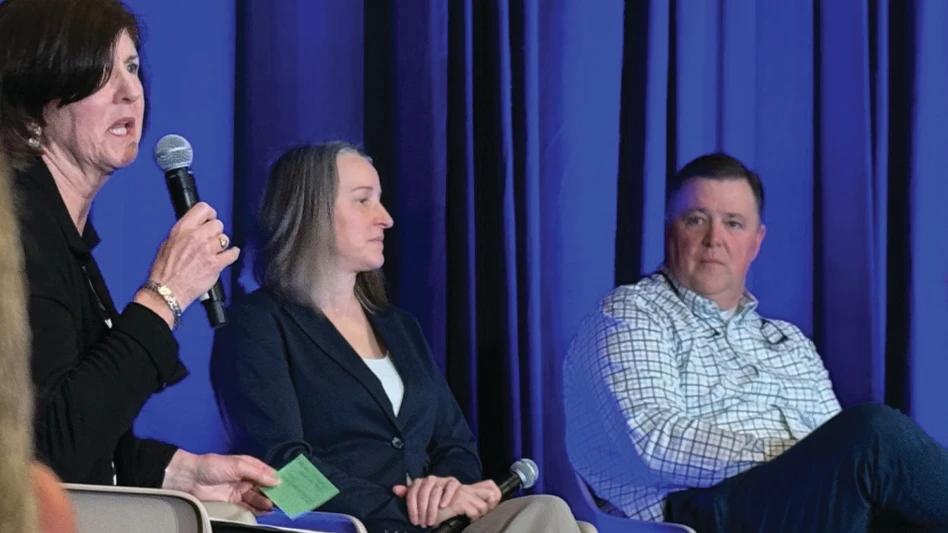
“I can assure you, there is all kinds of hell going on,” he told attendees of the Steel Scrap 101 Seminar, held in St. Louis in mid-February. “We’re in essence trying to consolidate four separate company cultures into one during a time when conditions are tough.”
The side effects of consolidation are tough on everyone involved, Casey indicated, including employees, managers, customers and suppliers. While there has been some merging and acquiring taking place already, more appears poised to occur.
Major changes seem certain on the integrated steelmaking side, where the International Steel Group (ISG), Cleveland; AK Steel, Middletown, Ohio; and U.S. Steel Corp., Pittsburgh, are bidding against each other to acquire most of the integrated capacity in the U.S. “Imagine the kind of trauma they are going to interject into this drama,” Casey remarked.
Casey said that the role of an executive in these times is also challenging. “You have to be visible to people [and] encourage them to take care of the customers and not worry about their job security.”
Customers may have to adjust to working with much leaner office staffs at steel companies, Casey indicated, pointing out the lean management model of ISG in particular. “Imagine how many communication chains are going to be broken,” he remarked. “Customers are being ripped out of their comfort zones.”
Ultimately, Casey said he believes there will be from three to five integrated steelmakers left in the U.S. and three to five major “bar producers” on the mini-mill side. “During the next 24 months, [corporate] names that have been around for 100 years will disappear. Small regional mills are going to have a hard time competing,” he declared, “not because they don’t have talented managers [but] because of a lack of access to capital.”
While consolidation may help secure the futures of remaining steelmakers, Casey predicts further pitfalls. He believes the United Steelworkers of America (USW) “will draw a line in the sand; that will create labor disruptions in what is already an unstable market.”
Casey also said that energy interruptions are still possible, and called for a market to be set up for the hedging of ferrous scrap that would bring “stability of prices” to the scrap market. “I think you’re getting a sense of how critical you are to our operation,” Casey told the scrap dealers and brokers in attendance.
Despite the challenges, Casey stated that it is important for the scrap and steel industries to work together to make the North American steel industry healthy. “I find nothing more embarrassing than that the most powerful nation on Earth cannot have a competitive steel industry,” he stated.
The Steel Scrap 101 Seminar was hosted in St. Louis in February by the Institute of Scrap Recycling Industries Inc. (ISRI) and the Steel Manufacturers Association (SMA).Latest from Recycling Today
- Greenwave raises revenue but loses money in Q2 2025
- Recycled steel prices hold steady
- EY says India’s need for scrap imports will continue
- Coming full circle
- Amcor, DCM introduce fertilizer packaging with 35 percent recycled content
- Comstock Metals gets closer to commissioning commercial-scale solar panel recycling facility
- Washington selects Circular Action Alliance as PRO
- Smurfit Westrock expands in Latin America