Schnitzer Steel Industries Inc. has reported second quarter fiscal 2011 revenues of $722 million, a 28 percent increase from figures the same time last year.
In comments following the release of the numbers, Tamara Lundgren, Schnitzer’s president and CEO, says, “Building on the momentum generated during the first quarter, we delivered our strongest second quarter performance since fiscal 2008. Year-over-year, our revenues grew by 28 percent, our operating income grew by 61 percent and our earnings per share grew by 77 percent.”
Lundgren continues, “Each of our segments delivered higher revenues and improved operating income margins, and we continued to execute on our growth strategy through acquisitions and capital expenditures focused on improving our operating efficiencies and production yields.”
“Our strong balance sheet and access to capital enabled us to complete the acquisition of six metals recycling businesses and four auto parts stores while funding continued investments in new technologies and operational efficiencies,” she adds.
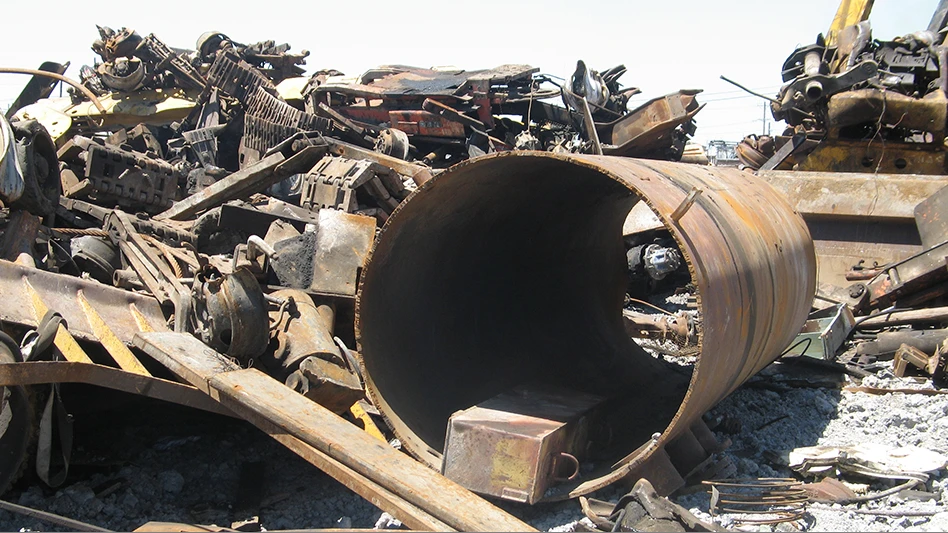
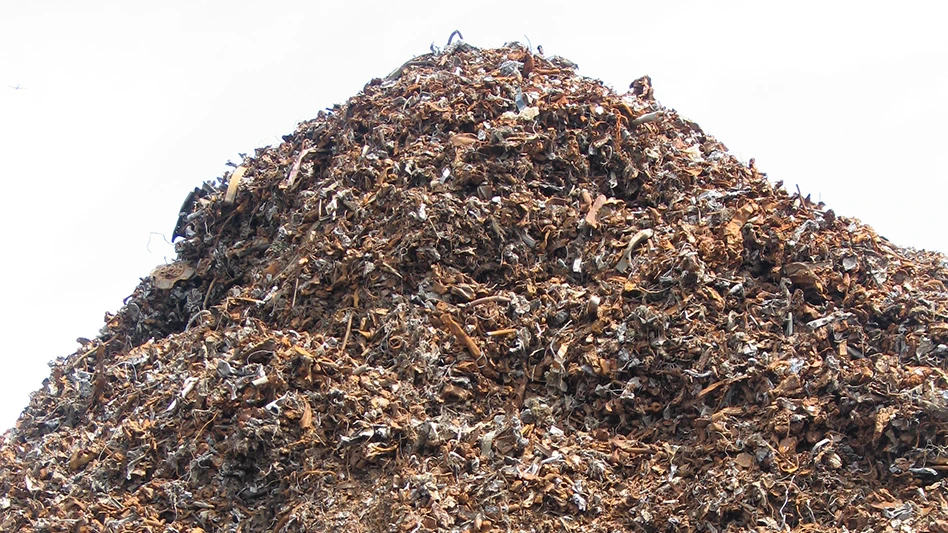
The company’s metals recycling business saw operating income increase by 45 percent for the quarter, compared to 2010’s second quarter numbers. Schnitzer attributes the improvement to strong global demand and higher sales prices for both ferrous and nonferrous metals. In addition, aggregate ferrous volumes over the last four quarters continue to approximate the record volumes achieved in fiscal 2008 and nonferrous volumes are trending at a record run rate.
During the quarter, Schnitzer’s metals recycling business shipped 1.1 million tons of ferrous scrap and 121 million pounds of nonferrous scrap.
“During the second quarter, we achieved operating income per ferrous ton of $38, nearly double the prior quarter, largely driven by improved market conditions, steady intake of scrap and increasing contributions from our nonferrous operations,” says Lundgren. “Demand in the export market continued its upward trend from the first quarter and the domestic ferrous markets rebounded, reflecting improving utilization at domestic mills.”
Lundgren notes that ferrous sales volumes of 1.1 million tons declined 6 percent compared to the prior year, primarily due to the timing of shipments. Nonferrous sales volumes increased 16 percent compared to the prior year, benefiting from increased production from enhanced processing technologies and early contributions from our recent acquisitions.
Export customers accounted for 78 percent of total ferrous sales volumes.
The company also notes that higher demand in both the export and domestic markets contributed to higher average ferrous net sales prices during the quarter compared to the prior year and first quarter. Nonferrous prices also improved during the quarter due to strengthening demand for copper and aluminum in particular. Average ferrous and nonferrous prices during the quarter were 41 percent and 30 percent higher, respectively, than comparable prices in the second quarter of fiscal 2010.
Revenues increased 30 percent year-over-year and 8 percent sequentially, driven by higher average selling prices for both ferrous and nonferrous metals.
Operating income per ferrous ton was $38 in the second quarter of fiscal 2011, an increase from $21 in the first quarter of fiscal 2011. Operating income per ferrous ton during the second quarter benefited from higher selling prices and lagging average inventory costs for raw materials in the first half of the quarter, steady intake of scrap and increasing contributions from our nonferrous operations. In addition, transaction expenses associated with our recent acquisitions were more than offset by favorable customer contract settlements.
Looking forward, Schnitzer forecasts that ferrous sales volumes are expected to increase by about 10-20 percent from second quarter levels due to normal seasonal improvements in supply flows. Nonferrous volumes are also expected to increase 10-15 percent from second quarter levels due to increased production and enhanced contributions from processing technologies. Both ferrous and nonferrous sales volumes will be positively impacted by the contributions from the recently completely acquisitions. As always, quarterly sales volumes are highly dependent upon the timing of shipments.
In regards to pricing, ferrous net selling prices, on average, are expected to approximate second quarter averages. Nonferrous prices are also expected to remain in line with second quarter levels.
Schnitzer’s auto parts business also achieved record second quarter operating income, generating 24 percent growth as compared to last year’s record second quarter results. To grow the business, the company has acquired four auto parts businesses. Car purchase volumes also increased significantly from the prior year, reflecting the benefits from both organic and acquisition growth.
“Our Auto Parts Business continued to generate higher revenues and operating income and to deliver strong margins while growing car purchase volumes 16 percent,” says Lundgren. “In addition to improved operating efficiencies, we continued to build scale with expanded operations in Washington, California and Texas. In particular, our Washington acquisition provides a new franchise opportunity in the Pacific Northwest as well as synergies with our Metals Recycling Business.”
The auto parts business saw revenues increase by 32 percent from the same time last year. Meanwhile, the division saw operating margins of 22 percent, roughly the same as it was the same time last year.
As for the steel manufacturing business, Schnitzer reports that its business continues to be negatively impacted by weak demand for finished steel products in its West Coast markets.
“Our Steel Manufacturing Business generated improved year-over-year performance despite ongoing weak demand in the West Coast construction markets,” said Lundgren. “We expect to benefit from the normal seasonal improvement in construction during the summer months and to continue to maximize value from our product diversification and operational efficiencies.”
Latest from Recycling Today
- Equipment from the former Alton Steel to be auctioned
- Novelis resumes operations in Greensboro, Georgia
- Interchange 360 to operate alternative collection program under Washington’s RRA
- Waste Pro files brief supporting pause of FMCSA CDL eligibility rule
- Kuraray America receives APR design recognition for EVOH barrier resin
- Tire Industry Project publishes end-of-life tire management guide
- Des Moines project utilizes recycled wind turbine blades
- Charter Next Generation joins US Flexible Film Initiative