Mattia, who has helped produce a series of safety videos for the recycling organization, noted that conveyors and balers have caused a high percentage of the fatalities and severe injuries in the recycling industry. In the past dozen years, conveyors have been the cause of some 200 fatalities in North America, with seven of those occurring within the recycling industry.
Conveyors may move slowly and seemingly harmlessly, but Mattia noted that the power used to drive a long conveyor system could create torque at certain points that is “like putting a 3,500-pound weight on your arm.”
A majority of fatalities involve individuals walking underneath conveyors and coming in contact with “nip points,” where a wheel is in counter-motion against the prevailing direction of the conveyor.
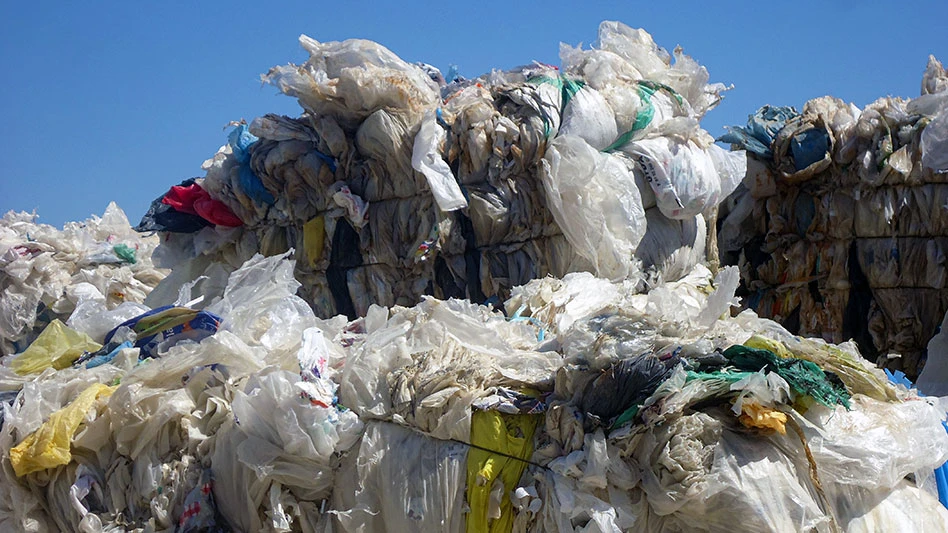
For recyclers in particular, balers are particularly dangerous. Since 1986, there have been 43 fatalities involving balers used in recycling applications. Of those, 29 have involved horizontal balers that were baling scrap paper.
Mattia says baler jams in configurations where conveyors lead up to top-fed balers often lead to disaster. Workers may climb a stopped conveyor to unclog a jam, only to fall into the baler when the jam suddenly gives way. If the baler has not been shut off along with the conveyor, the baler’s automatic sensor may begin a baling cycle when the worker and the jammed paper fall into the baling chamber.
Mattia urged recyclers to “think about the baler in your facility. How do you free it when there is a jam?” He also urged plant operators to wire interlocking systems, so that when a conveyor is shut off, the baler is also shut off, and vice versa. “Consider them one piece of equipment, and have them connected to the same control box and the same emergency stop switch,” he remarked.
An additional hazard—resulting in 14 deaths in the past 12 years—involves completed bales in storage falling onto workers. Uneven stacks or heavier bales stacked on top of lighters ones can cause stacked bales to topple.
Mattia noted that paper recyclers are particularly subject to both baler accidents and tipped bale accidents, in part because there is not the same “respect” for paper as there is for metal. Forklift drivers will drive carefully near stacked metal bales, in part because they don’t want to get cut by jagged metal or damage their vehicles.
In paperstock plants, this is not as much of a consideration, so forklifts are more likely to cut a close corner, possibly jostling and tipping a stack of bales. Similarly, in a metals plant, “no one walks over a conveyor of jagged metal” to clear a bottleneck, noted Mattia, but walking over cardboard does not seem as dangerous.
Thorough safety training followed by the evaluation of safety practices for each worker are important procedures for paper recyclers to have in place, said Mattia. “New employees are the most vulnerable to major accidents,” he stated.
Latest from Recycling Today
- Ocean freight interruptions poised to continue
- Danieli to supply shredder to Australian company
- Equipment from the former Alton Steel to be auctioned
- Novelis resumes operations in Greensboro, Georgia
- Interchange 360 to operate alternative collection program under Washington’s RRA
- Waste Pro files brief supporting pause of FMCSA CDL eligibility rule
- Kuraray America receives APR design recognition for EVOH barrier resin
- Tire Industry Project publishes end-of-life tire management guide