Photo courtesy of Saco AEI
The plastics industry is employing many different sustainability strategies to reduce raw material and energy use, minimize waste, lower carbon emissions, avoid landfilling and protect the oceans while also improving the bottom line for customers and suppliers. Often, organizations combine multiple approaches to amplify positive effects on the polymer life cycle and maximize their reputation for environmental stewardship.
One sustainability strategy is the buy-back or take-back program. Although less widely publicized than the latest bioplastic or artificial intelligence-based recycling system, buy-back programs are highly effective for collecting and reusing large volumes of scrap from manufacturing processes that would otherwise be landfilled. The appeal of these programs stems, in part, from financial incentives. Instead of paying a third party to dispose of their scrap, customers receive a certain amount per pound from suppliers, which use the scrap to replace a percentage of virgin material in their resins and compounds at a lower cost.
Of course, the other major incentive to initiate or participate in a buy-back program is circularity. Sustainability is a corporate pillar for most suppliers, compounders, molders and end customers, and reusing plastic scrap can make an important contribution.
Despite these two compelling reasons, some organizations could be reluctant to engage in a buy-back arrangement. Typical programs require the customer to collect, bale and ship scrap, trim and other plastic scrap to the producer, incurring labor, logistical and transportation costs. However, some plastics manufacturers are finding success with buy-back programs by persuading original equipment manufacturers (OEMs) to encourage their vendors to participate in these initiatives with the goal to enhance supply chain sustainability.
Saco AEI Polymers’ XR Sheet buy-back program provides an example of how such an approach can enhance the appeal of a mature product and deliver added value for customers and OEMs.
The XR Sheet buy-back program
XR Sheet is a distinctive material produced from a blend of polypropylene and wood flour. It features excellent stiffness and dimensional stability for substrate applications, as well as UV resistance. The product is molded easily using single-sheet and twin-sheet vacuum molding, compression molding and blow molding processes and can be enhanced with cover stock materials such as carpet or vinyl that is applied in the press. Applications include automotive interior parts such as seat backs, door panels and cargo area components.
XR Sheet is 100 percent recyclable, making it an ideal material for a buy-back program. Further, the product is made from 75 percent recycled materials, giving it a head start on circularity. Another advantage of XR Sheet is its competitive price point, which helps to offset its heavier weight compared with other sheet products.
To make XR Sheet more appealing to automotive tier suppliers and other customers while advancing its corporate sustainability goals, Sheboygan, Wisconsin-based Saco AEI Polymers developed a buy-back program for the material. Initially, it was promoted by the sales team as part of the quote process. However, the company is now pursuing other approaches.
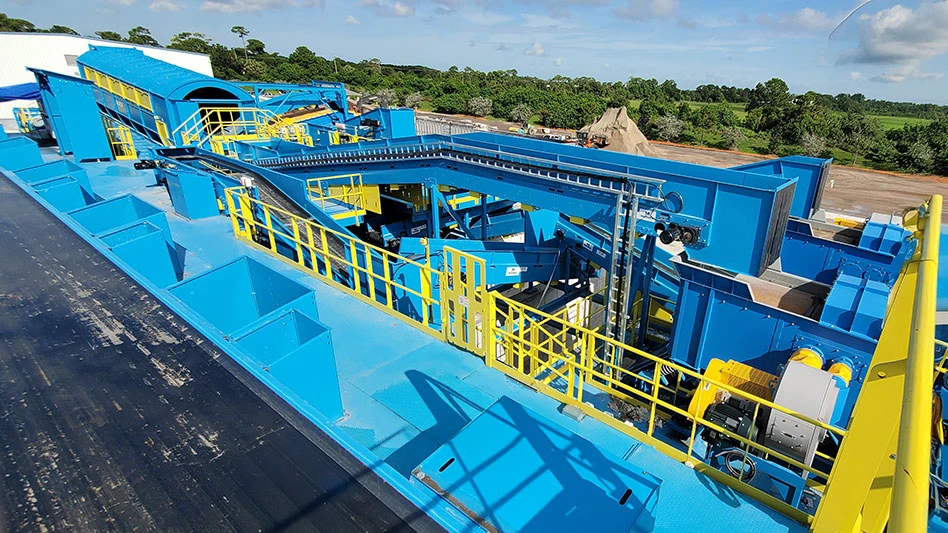
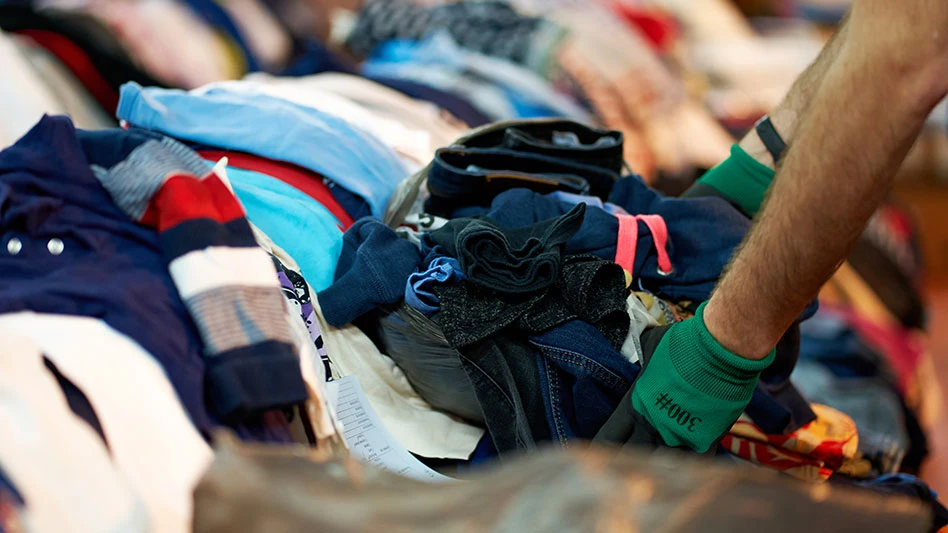
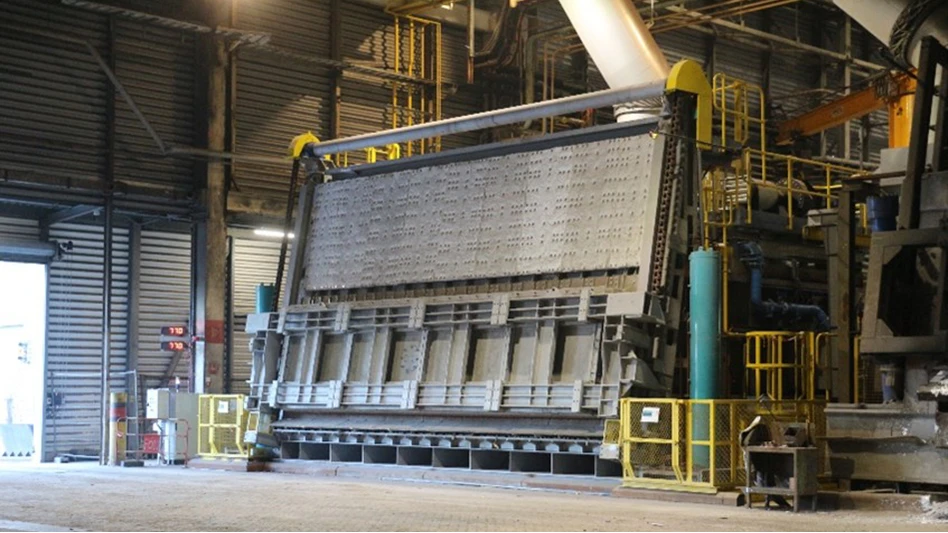
Customers participating in the buy-back program collect and bale XR Sheet trim and scrap as-is, without removing any cover stock. Once enough material has been collected for a full truckload, or all XR Sheet stock has been used, the customer ships the bales to Saco AEI Polymers. After sampling and weighing the bales, the company puts the approved scrap material through a stringent mechanical recycling process:
- Step 1, load the scrap material into the bale shredder.
- Step 2, transfer the shredded material to the grinder to reduce it in size.
- Step 3, transfer the ground material to the finished product multiaspirator to remove carpet fuzz. Vinyl cover stock is separated during the grinding stage and collected.
- Step 4, feed the ground material into the extruder simultaneously with wood flour and other materials to produce XR Sheet.
- Step 5, to ensure the resulting XR Sheet meets the highest standards of quality, SACO AEI Polymers tests the finished goods for density (based on formula consistency) and flexural modulus and Izod impact (based on mechanical performance).
Customers receive payment for their bales of XR Sheet scrap based on their annual agreements with the company regarding price per pound.
Customer benefits
The two main advantages of the buy-back program for customers are financial and environmental. Instead of paying to have scrap and trim disposed of in a landfill or incinerator, which costs approximately 6 cents per pound, customers receive payment of at least 7 cents per pound from Saco AEI Polymers. Because customers do not have to clean or treat the scrap before sending it to the company, except to remove obvious contaminants such as metal brackets and materials from other suppliers, the process is simple and straightforward.
The buy-back program can make an important contribution to a customer’s sustainability strategy by diverting XR Sheet from landfills and reducing consumption of new raw materials through recycling. This program also can help customers become more competitive by meeting increasingly strict OEM or industry requirements for circularity.
Expanding the buy-back program
Saco AEI Polymers bought back more than 1 million pounds of XR Sheet scrap and trim from customers in North America. To expand this volume, the company is changing the way it promotes the program. Instead of relying on the sales team to sign up customers, business development staff are reaching out to OEMs with the goal of persuading them to specify XR Sheet given its sustainability benefits.
To amplify the circularity impacts of the program, Saco AEI Polymers is working on a process to produce energy from the carpet fiber and fuzz removed from the XR Sheet substrate during recycling. Based on current buy-back program volumes, the company will send 152,000 pounds of carpet material for energy production annually and has the capacity to scale up this initiative.
Although the quantity of postindustrial plastic that is recycled exceeds postconsumer recycled (PCR) material volumes, the numbers are still low. Challenges remain, such as the need for advancements in recycling technology and the development of new markets for postindustrial recycled-based products.
Buy-back programs can play an important role in achieving efficient management and effective reuse of waste plastic from manufacturing processes. By participating in these programs, suppliers and customers can contribute to sustainability while gaining financial and competitive benefits.
Ayushi Gangwal is business unit manager, substrates, at SACO AEI Polymers. Visit www.sacoaei.com for more information.
Latest from Recycling Today
- Amcor, DCM introduce fertilizer packaging with 35 percent recycled content
- Comstock Metals gets closer to commissioning commercial-scale solar panel recycling facility
- Washington selects Circular Action Alliance as PRO
- Smurfit Westrock expands in Latin America
- PSRA study claims ‘robust’ North American PS recycling infrastructure
- Ten-8 Industrial opens new central Florida service center
- 2026 Plastics Recycling Conference: Challenges, solutions for reclaimers
- Official NYC Bin availability expands ahead of deadline