The EU countries have had a quota on Russian steel imports since 2002. That was when an agreement was signed between Russia and the EU under which deliveries of Russia steel to Europe were set at 1.38 million tons. That agreement was in force until 2004 and that year the quota was raised to 1.82 million tons in connection with the expansion of the EU. No agreement was signed for 2005 and the quota from 2004 remained in force. In November, Russia and the EU signed an agreement on steel to replace all agreements written in the last ten years.
The new agreement raises the quota to 2.27 million tons, with the quota for rolled steel set at 930,000 tons, thick steel plates at 195,000 tons and steel alloy at 224,000 tons. Now the largest suppliers of rolled steel in the EU is Novolipetsk Steel, which sels 30 percent of its production there, Mechel, which also sells 30 percent of its production on that market, Severstal, selling about 25 percent of its product, and Magnitogorsk Metals Combine, which sells about 20 percent of its output there. The Economics Ministry notes that the quota ensures Russian metallurgists a European market of over $870 million over year.
But the metallurgists say that they did not receive any significant benefits from the enlargement of the quota. A Mechel spokesman commented that “Russia should have withdrawn from the EU steel agreement long ago because it worked in the interests of European producers from day one.” The Severstal press service said that the company had already concluded its main contracts for 2006 and will not be able to exceed last year's sales level to EU countries of 700,000 tons.
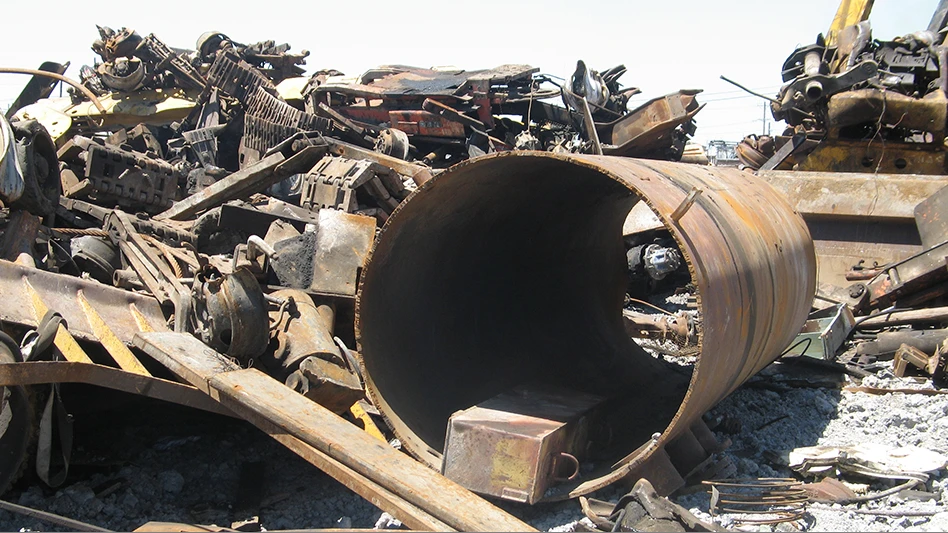
The Russian metals producers have themselves partially to blame that the 2006 agreement was signed late. They lobbied for export duties of 15 percent up to Euros15 per ton on scrap metal in 2001 and now, according to Metropol analyst Denis Nushtaev, the price of scrap metal in Russia is 40 percent lower than in the EU. Since metal scrap is the raw material of steel smelting, EU representative have repeatedly pointed out to the Russian Economic Ministry that the price difference is a direct subsidy of the ferrous metals industry and have demanded that the scrap metal duty be cancelled in exchange for steel quotas. Those duties remain, however.
Steel quotas are not the only European limitation on the Russian metals industry. In particular, the EU introduced a prohibitive (50.7-percent) duty on imports of Russian steel cable for five years. The largest suppliers of this product to the EU were the Mechel subsidiary Beloretsky Metals Combine and Severstal's Cherepovets steel plant. Now, Beloretsky is refusing to supply the EU and Cherepovets is selling only 5 percent of its production there (150 tons per month).
At the beginning of 2004, it became known that another ten states were joining the 15 EU member states and Brussels entered into talks with Russia in connection with that. EU representatives said that the duty on steel cable would be extended to the new member states as well.
But Russian producers do not intend to turn their backs on the European market. In March 2004, Mechel filed an application with the EU for a reconsideration of the duties, and the European Commission accepted the application and promised to expedite the procedure. In September 2004, Mechel filed antidumping questionnaires with the EU that included the specifications of the cable, volume, production costs and so on. In the first half of 2005, EU representatives visited the Beloretsky plant and to check the data provided in the questionnaires.
Now the Russian metallurgists are waiting for the EU decision on steel cable. According to unofficial information, the duty will be maintained on that product, but it may be reduced to 36 percent. At Mechel and Cherepovets, they are declining to say whether that will lead to an increase in steel cable deliveries to Europe, saying that they will wait for the official decision to comment.
Duties on European Stainless Steel
At present, Russia does not limit the import of steel from Europe in any way. An effort is being made to do so, however. In October 2004, the Economics Ministry began research on nickel-containing steel product imported from the EU. This was initiated by the Chelyabinsk metals plant, another Mechel member, with the support of the Hammer and Sickle and Red October plants. Those plants were responsible for 80 percent of the stainless steel production in Russia at the time the enquiry was made. The Chelyabinsk plant indicated in the enquiry that European producers were dumping the product in Russia. According to its statistics, the Europeans were selling stainless steel on the European market for $1657 per ton, and for $708 per ton in Russia. Chelyabinsk estimated the dumping margin at 134 percent. As a result, the plant calculated further, imports of stainless steel to Russia grew 52.23 percent in 2003 and 54.19 percent in the first half of 2004.
Now the Economics Ministry has prepared a draft administration resolution to impose a duty of €0.84 per kg. on stainless steel imported from Europe. Brunswick UBS analyst Alexey Morozov notes that that is in practice a prohibitive duty. “They will collect €840 per ton of imported stainless steel. That is a lot,” he commented. As the draft resolution says, the duty will last for three years and will come into effect one month after the resolution's publication.
The Economics Ministry has distributed the proposed resolution to all interested state agencies (the Finance Ministry, Federal Customs Service and Federal Antimonopoly Service). The new duties can be expected to come into force before the end of this month. Analyst Nushtaev thinks that Mechel will be the big winner from them, since it has been reducing its stainless steel output by 20 percent per year since 2003 and stopped it altogether at the beginning of 2005. The big losers will be the Luxembourgian Arcelor and Finnish Outokumpu, the largest suppliers of stainless steel in Russia. Kommersant
Latest from Recycling Today
- Danieli to supply shredder to Australian company
- Equipment from the former Alton Steel to be auctioned
- Novelis resumes operations in Greensboro, Georgia
- Interchange 360 to operate alternative collection program under Washington’s RRA
- Waste Pro files brief supporting pause of FMCSA CDL eligibility rule
- Kuraray America receives APR design recognition for EVOH barrier resin
- Tire Industry Project publishes end-of-life tire management guide
- Des Moines project utilizes recycled wind turbine blades