tonefotografia | stock.adobe.com
Approaching Global Recycling Day, March 18, the Washington-based Recycled Materials Association (ReMA) has released new data on the state of the recycling industry.
ReMA President Robin Wiener says the association’s 2025 economic impact report shows that the recycling industry is continuing to grow and thrive.
The report found that the recycling sector generated $183.6 billion in total economic impact in 2025 and supports more than 600,000 jobs in the U.S., with more than $52 billion in total wages.
ReMA has an online tool featuring an interactive map that allows users to find the economic impact of the industry on a state level or a congressional district level. Wiener says this tool is valuable, especially as recyclers meet with local community leaders.
“There are many positive benefits that the industry brings to our planet,” she says. “When you compare the energy required to manufacture with recycled materials versus with its virgin counterpart, you save up to 90 percent of the energy requirements.”
Wiener adds that the use of recycled materials avoids the need to cut down trees, take up landfill space and extract fossil fuels to produce new plastics.
Opportunities and challenges
Artificial intelligence (AI) and machine learning have a large impact on the sector, Wiener says, as it can increase material recovery rates and advance the quality of the material recovered.
“We can use AI and machine learning and advanced technologies like optical scanning ... technology that uses lasers to identify the fingerprint of specific types of plastic, specific metal alloys, etc. to allow us to separate them out, to get that higher quality—the high-value material that manufacturers need,” she says.
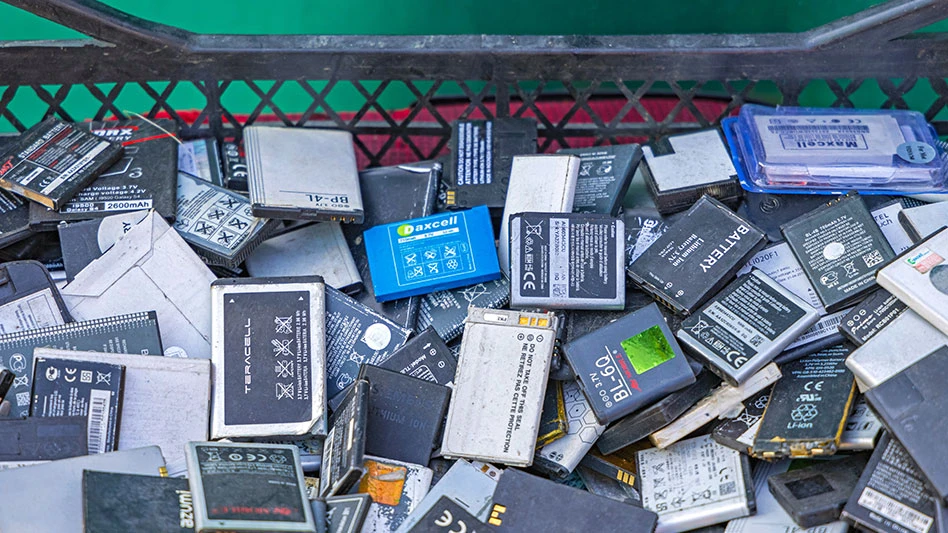
A topic that Wiener says presents both an opportunity and a challenge within the industry is lithium-ion battery recycling.
The opportunity stems from the materials within the batteries, which she says are needed increasingly in the domestic and global economy.
“You’ve got lithium; you’ve got cobalt, nickel, all these valuable, critical materials that we’re able to pull out,” she adds. “But there’s also the challenge side, which is the safety issues.”
It’s critical that the batteries end up in the right stream and are recycled safely, Wiener says, adding that ReMA is working on addressing this from multiple angles.
She says the association is working on consumer education and awareness campaigns about getting the batteries into the right stream. ReMA also partners with the Environmental Protection Agency (EPA), the state of South Carolina, multiple municipalities and other organizations on awareness campaigns.
“Those [campaigns] have been very successful, and as matter of fact, EPA has highlighted the work we’re doing with the state of South Carolina as an example—a prototype that could be used nationwide,” she says.
To make sure the material is handled properly, Wiener says ReMA has several groups working on spreading awareness, from fire protection and material handling to shredder best practices.
“It’s a great opportunity in Global Recycling Day to recognize the role that recycled materials play in the manufacturing industry,” she says.
ReMA will host its annual convention in Las Vegas, April 13-16. Wiener says the association is excited to be there and to provide networking and educational opportunities.
Latest from Recycling Today
- Collective Waste Solutions acquires Alcop Resource Recycling transfer station
- Volatility continues in nonferrous metals
- Neste chemical recycling plant is ready to scale up
- Indonesia’s nickel pig iron spigot reopens
- Ecore says study backs crumb rubber use on sports surfaces
- Fleetio launches AI capability to accelerate fleet maintenance approvals
- The Metals Agency receives approval for export credit insurance
- Recycle Ann Arbor extends drop-off station operating hours