Recycling Today Conferences: The Wide World of Plastic

The global economy has plastic scrap moving long distances.

The use of plastic scrap as industrial feedstock has grown throughout the world, creating a global market that has seen supply lines stretch from one side of the world to the other.


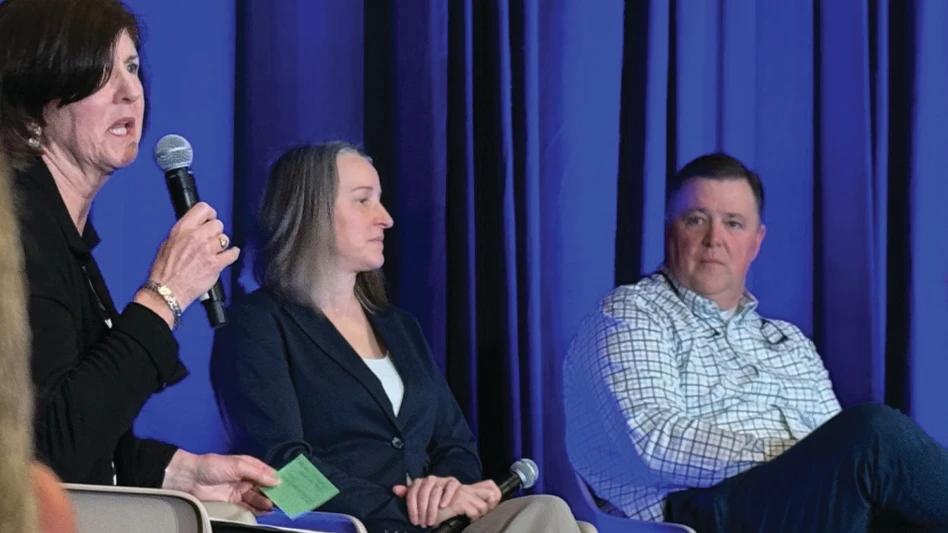
In a session at Recycling Today’s Plastics Recycling Conference entitled “On the Waterfront,” a succession of speakers described the active plastics recycling markets in China, India and Latin America.


Scott Farling of MBA Polymers Inc., Richmond, Calif., noted that China imported more than 5.8 million tons of plastic scrap in 2006, marking an 18 percent increase over the 5 million tons imported in 2005.


This year’s figure could be even more staggering, according to a projection from a Chinese trade group. The China Plastics Processing Industry Association (CPPIA) estimates that nearly 10 million tons of plastic scrap will be imported this year, marking a 71 percent year-to-year increase.


In 2006, the United States sent some 350,000 metric tons to China, although that figure may not include a considerable amount of plastic scrap that was first shipped into Hong Kong.


Most of China’s plastic scrap enters through Southern ports of entry, including Guangzhou and Shenzhen, which is on the border of the Hong Kong trade zone. Hong Kong is listed as the largest exporter to china, with some 1.6 million metric tons of plastic scrap shipped last year, but much of this was likely generated elsewhere.


PET and PVC were the most commonly shipped types of plastic scrap in 2006. Farling noted that much of this scrap is sorted and extruded in a very low-tech (and sometimes unsafe) manner, although MBA is a joint venture partner in a highly automated plant in Guangzhou.


India is currently importing a more modest 90,000 metric tons per year of plastic scrap, according to Surendra Kumar Borad of Gemini Corp., Antwerp, Belgium. The scrap, 77 percent of which comes from Europe, is handled by 30 licensed importers based in government-approved Special Economic Zones.


By far the most common resin imported in India is LDPE and LLDPE, accounting for some 85 percent of the total, according to Borad. Most of this is plastic film and wrap. “This is what Indian companies ask for,” he remarked.


With the United States currently supplying only 15 percent of India’s plastic scrap imports, there may well be an opportunity for American recyclers in India. “There is always a shortage of material for domestic companies [in India],” said Borad.


What could be helpful to American shippers is a relaxation of strict Indian import laws. If a relaxation in the law occurs, the volume of scrap flowing from North America to India “could grow significantly,” Borad remarked.


Along the United States-Mexico border, AvangardInnovative, Houston, Texas, is a significant handler of plastic scrap. The company’s Jon Stephens said the newly named company (its predecessors were Avangard Industries and Innovative de Mexico) is now “the second largest plastics recycler, processor and broker in North America.”


The company operates more than a dozen MRFs and recycling plants in the United States and Mexico, and just opened a PET bottle-to-bottle manufacturing plant in Mexico. The company also sources material at maquiladoras and other manufacturing plants says Stephens.


Although plastic scrap is shipped north and south between the United States and Mexico, Stephens said AvangardInnovative also ships a lot of its plastic and paper scrap to China and India. Freight rates can dictate the destination. Whereas it can cost eight cents per pound to ship scrap from Mexico City to Atlanta, it can cost just two cents per pound to send the same material to China.


In another presentation, Jane Hay of U.S. Bank, Minneapolis, Minn., detailed the options for financing export shipments, including several different types of letters of credit with varying degrees of risk and insurance.


Her “tip of the day” to recyclers: “Use a bank that corrects documents in-house whenever possible and teaches you to avoid future discrepancies,” said Hay.


Recycling Today’s Plastics Recycling Conference was held in coordination with the Paper Recycling Conference and Electronics Recycling Conference at the Peabody Orlando in Florida June 10-12.

No more results found.