Tina | stock.adobe.com
Recycling dates to biblical times as evidenced in Isaiah 2:4: “They shall beat their swords into plowshares and their spears into pruning hooks.” That is because essential materials have long been reclaimed to be made into new products.
Today, the act of urban mining to recover and recycle critical metals and minerals, paper and plastic requires more than beating and pounding; it requires technology and machinery. The most valuable of those reclaimed materials—things like rare earth metals, aluminum alloys, copper and more—require advanced technology to identify, separate and refine them for reentry into the manufacturing supply chain.
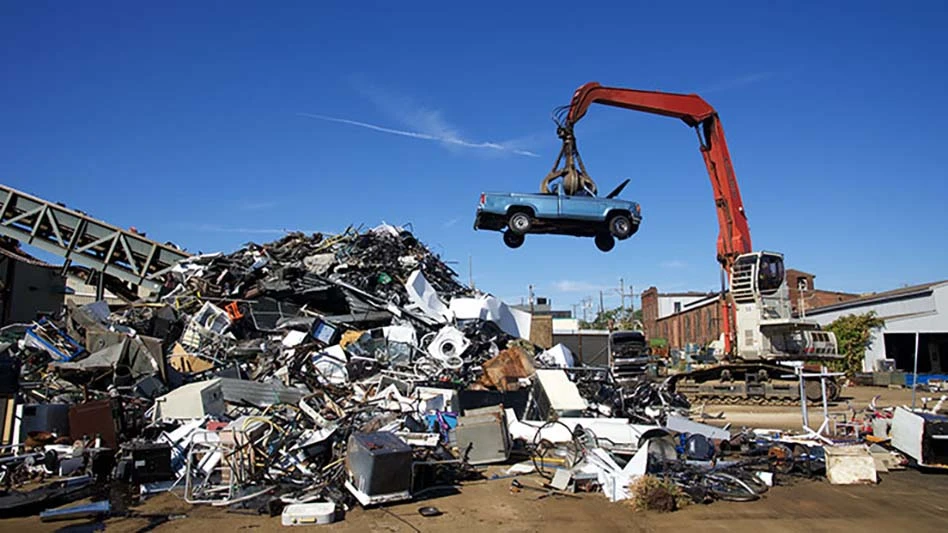
As well, for recycling to be efficient and cost-effective, operators across the industry use equipment like hydraulic material handlers, scrap shears and balers, along with a wide variety of other highly specialized machinery.
While some of this advanced technology and machinery is available from U.S.A.-based manufacturers, much of it is not. In fact, a great deal of it is imported from Europe. In some cases, such as hydraulic material handlers, no U.S.-based manufacturing exists.
While a strong case can be made that we should produce more of this specialized machinery here in the U.S.A., and I believe we should, the fact is it’s not available today. Yet, today is precisely when we need to increase urban mining of these essential raw materials. It’s vital to securing our supply chains and providing for our national needs and defense.
For these reasons, I’m left asking why we are jeopardizing this industry by implementing tariffs as high as 200 percent. Regardless of where the cost of that tariff is borne, it adds to the cost of recovering these materials, which easily can escalate that cost into uneconomical territory.
Enhanced consideration needs to be given to protecting the essential recycling industry. It is a vital source of essential raw materials critical to the manufacturing of everything from defense and munitions supplies to roadways, hospitals, advanced technology and school buses.
At the same time, providing a stable environment that underpins the ability of companies to invest in domestic manufacturing to support the industry is important. Nonetheless, appreciating that the market size for this specialized machinery is relatively finite, we should accept that our allies around the world could be as well-placed as we are to hold some of this manufacturing capacity.
Let’s work as an industry to ensure our government understands and appreciates the need for and value of urban mining to protect our essential domestic supply chain and works to protect the recycling industry from crippling tariffs.
Latest from Recycling Today
- U.S. Aluminum Co. explores aluminum fabrication plant in Oklahoma
- Sonoco completes portfolio transformation
- Eriez Shred1 data demonstrates scalable copper control
- RCI selects CurbWaste as exclusive operational management platform
- Updated: Supreme Court strikes down IEEPA tariffs
- Recycling Today Media Group launches Scrap Expo Lunch & Learn Webinar Series
- LyondellBasell scales back recycling target
- Former Liberty UK mills eyed by 3 suitors