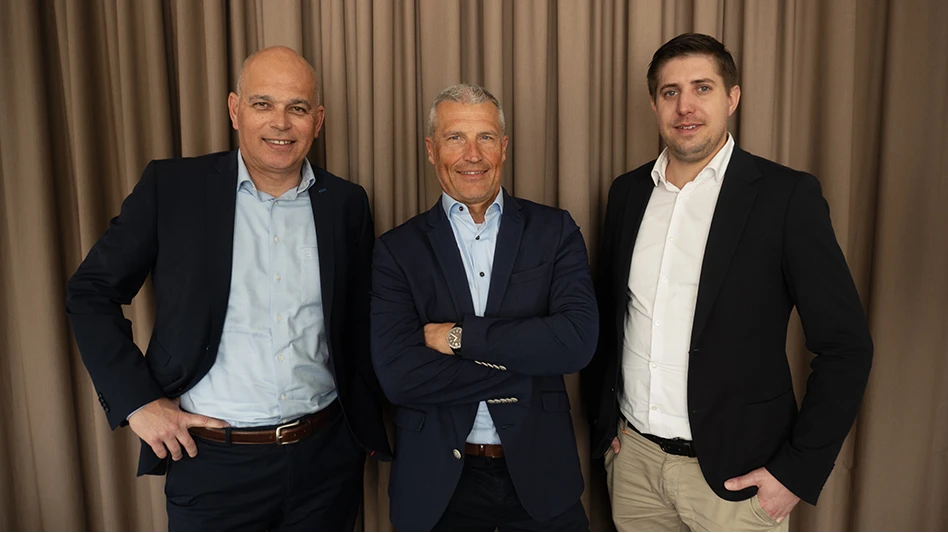
Image courtesy of Reconomy.
Reconomy, a London-based circular economy specialist, has acquired a majority stake in LiBCycle through its Reverse Logistics Group (RLG).
Munich-based LiBCycle provides an all-in-one logistics solution for defective lithium-ion batteries, including packaging, loading, transportation, storage and hazardous waste handling. Its customer base includes leading manufacturers and battery recyclers, and it operates more than 30 active cross-docking facilities across European markets.
“We have made it our mission to make the circular economy of defective lithium-ion batteries more efficient through our all-in-one logistics service,” says Philipp Brunotte, LiBCycle co-founder and managing director. “This transaction was a logical next step for our business. By combining our expertise with RLG’s 30 years of global experience and regulatory know-how advanced logistics, we can strengthen our customer offering and accelerate growth.”
The acquisition of a majority stake in LiBCycle strengthens RLG’s logistics infrastructure and data-driven tracking systems, enhancing its take-back and collection capabilities. These take-back schemes ensure that materials such as lithium-ion batteries are properly collected, processed and transported to manufacturers, retailers or third parties for recycling, reuse or disposal.
“This is an important milestone that comes at a critical moment for the European battery circular economy, with growing volumes of end-of-life batteries coming onto the market and regulation evolving rapidly,” Guy Wakeley, chief executive of Reconomy says. “This transaction positions us well to help more businesses keep valuable materials in circulation, meet compliance requirements, lower costs and emissions, while also strengthening our position in our core international markets.”
Take-back schemes are typically operated through producer responsibility organizations (PROs). RLG is an operator of PROs across regulated product categories in multiple jurisdictions, including Rebat, Germany’s largest take-back system for the collection, return and recycling of all types of batteries with more than 65,500 collection points and more than 10,000 producers.
RLG says the transaction comes as the first generation of electric vehicles reaches end-of-life, bringing increasing volumes of used batteries and new material streams to the market. At the same time, new EU battery regulations are expanding extended producer responsibility (EPR) requirements to industrial and automotive batteries, increasing the need for compliant collection and recovery infrastructure.
With the EU forecasting a 14-fold increase in lithium-ion battery usage by 2030, RLG says an efficient ecosystem is essential to ensure valuable materials are recovered and returned to the supply chain.
Latest from Recycling Today
- DOWA: Center of catalytic converter recycling
- Ocean Legacy Foundation expands plastic testing laboratory services
- CMI, HCPA publish aerosol recycling guide for MRFs
- 2026 Plastics Recycling Conference: A look at PCR contracts
- Remade Institute hosts Circular Economy Tech Summit & Conference in March
- Befesa sees record performance in 2025
- North Carolina county receives FRC foam recycling grant
- Cascades tissue business falls short in Q4