Photo courtesy of saveBoard
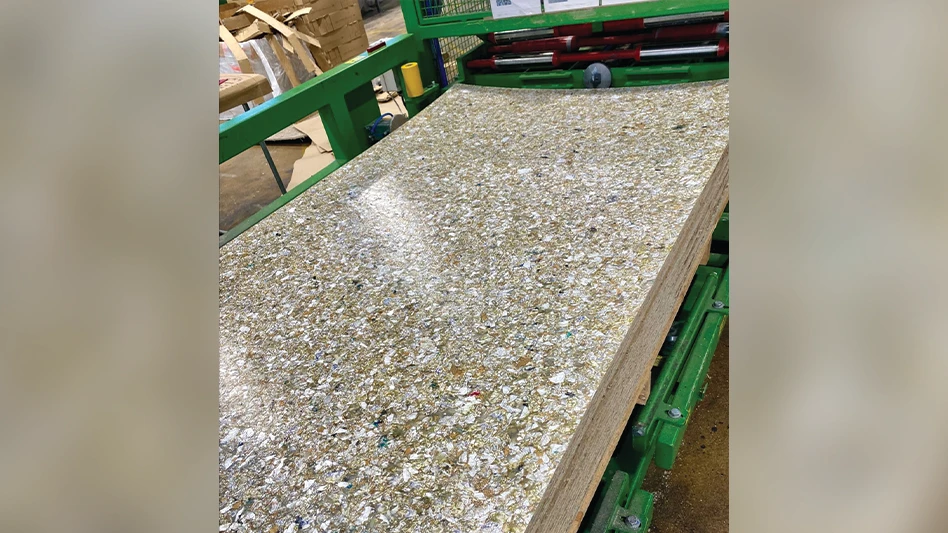
ReCB Iowa LLC, a wholly owned subsidiary of ReCB LLC, is officially up and running, the company says, adding a domestic end market for postconsumer food and beverage cartons. Located in Des Moines, ReCB Iowa produces Everboard, which it describes as a high-performance building material that helps the construction industry reduce reliance on virgin materials while meeting demand for sustainable alternatives.
ReCB acquired the facility earlier this year and says it invested in technology and equipment upgrades to boost efficiency and capacity. A joint venture of Elof Hansson USA Inc., the Upcycling Group and Lisa Tech, the company says it expects the site to be fully operational by September. At full capacity, the facility is expected to recycle approximately 10,000 tons of cartons annually.
RELATED: New recycling facility will turn food, beverage cartons into building materials
“We’re supplying the construction sector with premium, sustainable materials while conserving natural resources, cutting carbon emissions and driving demand for recycled cartons across the U.S.,” ReCB Managing Director Jan Rayman says. “This is how targeted investments in recycling infrastructure deliver scalable, circular economy solutions.”
ReCB says its proprietary process turns postconsumer gable top and aseptic cartons into premium roof cover board and, potentially, other moisture- and mold-resistant building materials. The company says its process does not use water, formaldehyde adhesives or hazardous chemicals, instead relying on heat and pressure to produce boards it claims are more durable and sustainable than traditional gypsum products.
In partnership with the Carton Council, Elof Hansson USA Inc. and Upcycling Group, ReCB also is building another production facility in Lodi, California, set to open later this year.
“Continued access to carton recycling is essential,” Carton Council Executive Director Jordan Fengel says. “We need people to keep recycling their food and beverage cartons so we can keep them out of landfills and reintegrate them into the market. The facility reopening and its expansion underscores the growing momentum behind expanding domestic carton recycling infrastructure and our commitment to helping develop sustainable, scalable end markets.”
Latest from Recycling Today
- Tomra installation serves food tray sector in Spain
- Tariff criticism directed toward steel industry
- Vinyl Institute launches enhanced recycling directory
- McNeilus introduces AI material contamination detection technology
- Closed Loop report identifies opportunities to increase prescription pill bottle recycling
- Organics Recycling Conference 2026: Q&A with keynote speaker Andy McNeill
- CMRA selects Vietnam for 2026 event
- Steel Dynamics foresees profitable Q1