An environmental assessment (EA) from the Surface Transportation Board (STB) recommends that a controversial rail haul site in Wilmington, Mass., be given approval for start-up of the facility.
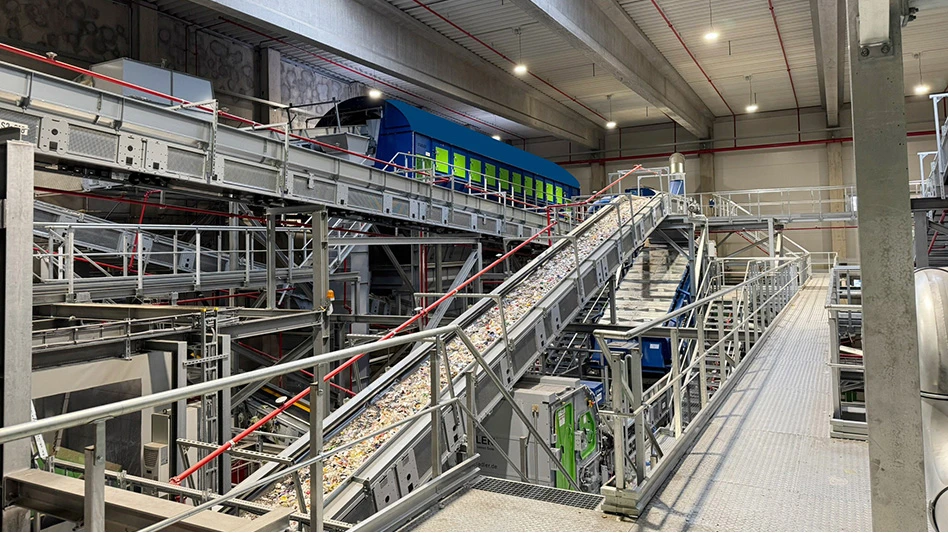
At issue is a planned material transfer site proposed by New England Transrail LLC on a railroad spur on the border between Woburn and Wilmington, Mass., just north of Boston. According to the environmental assessment from STB, the plant will handle “various commodities, including: aggregates, brick, coal, cement, construction debris, contaminated soils, liquid chemicals…lumber, newsprint, non-hazardous waste, paper products, plastics, propane, recycled paper and plastic, sand, gravel, scrap steel, steel, stone, wood products, and any other products that could be transported in intermodal containers.”
The facility owners say they are incorporated as a railroad and are locating their operation on a railroad line, and thus are under the jurisdiction of the federal STB and no other federal, state, and local regulations, including zoning and environmental laws. While the STB has yet to rule on whether that is true, observers say the agency has unusually wide powers over all things railroad-related and could grant that status.
The EA issued by STB’s Section of Environmental Analysis looks at environmental issues, requiring the site to have minimal changes to be environmentally compliant in its book and determining there is no need for a full environmental impact statement, probably saving the plant management hundreds of thousands of dollars and years of time. It also goes outside the scope of environmental views and may provide insight on the Board’s thinking as it decides whether to approve similar projects in the future.
For example, the EA says it considers the operation to be railroad-related, and thus under STB purview. It then points out that with this determination the facility is exempt from any other federal and state regulations. “Accordingly, the case law interpreting this provision consistently has found state and local permitting or pre-clearance requirements (including zoning ordinances and environmental and land use permitting requirements) to be wholly preempted where the railroad facility is an integral part of the railroad’s operations.” In other words, the STB has litigated over this issue before and won.
What makes this interesting is Massachusetts’ proposed disposal ban that may be enacted in 2005, which requires any facility handling those types of materials to recycle as much as possible, especially concrete, asphalt, wood, metals, and cardboard.
But because the new facility is pre-empted from any such regulation, it may not have to process these materials. In some commodity markets, this means the facility could enjoy a $15 to $20 lower tipping fee advantage over its competitors, according to David Murphy, Global Environmental Strategies, Newton, Mass.
The assumption is that material received at the site will be hauled to an inexpensive out-of-state landfill, probably in Ohio.
William Turley, executive director of the Construction Materials Recycling Association, says what is particularly galling to recyclers is the statement in the EA that “implementation of the Proposed Action would result in a modest beneficial impact on the transportation of recyclable commodities.”
Says Turley, “There is no way hauling out of state to landfills materials that could be recycled at a real C&D recycling plant in Massachusetts could be interpreted as beneficial.” Turley adds that studying the site plan reveals the facility as a waste transfer station disguised in railroad clothing.
John Blaisdell of Green Seal Environmental, Sandwich, Mass., cautions that the EA is just a set of recommendations to the full STB, and that no decision has been rendered yet. “But the STB has taken a stance that they can bypass the permitting process and exempt the facility from the disposal ban,” he says.
That has sparked interest from other waste haulers and railroads in setting up similar facilities, Blaisdell adds. “They are all looking to level the playing field.”
Blaisdell contends that the current site assessment process in the state of Massachusetts is as much to blame for the development of this business model as anything else. “Why has it come to this?” he asks rhetorically. “Because it is so difficult to get anything sited in the state.”
He explains that instead of the state Department of Environmental Protection (DEP) permitting any recycling or transfer stations, the boards of health of local municipalities have the final say in what goes. “That means anyone wanting to put in a new recycling facility, or even add on to an existing one, must go through the public beating process, I mean, public meeting process, in order to get approved.”
Detractors say that process allows every obstructionist to have undue influence over the allowance of the final permit, to the point where those willing to invest in recycling facilities are not because of the uncertainty of the permitting process.
So a maneuver such as the one by New England Transrail is just a response to getting around an impossible process, Blaisdell says.
The STB currently is awaiting a response from Massachusetts DEP on the EA before issuing a ruling on the proposal from New England Transrail.
Latest from Recycling Today
- U.S. Aluminum Co. explores aluminum fabrication plant in Oklahoma
- Sonoco completes portfolio transformation
- Eriez Shred1 data demonstrates scalable copper control
- RCI selects CurbWaste as exclusive operational management platform
- Updated: Supreme Court strikes down IEEPA tariffs
- Recycling Today Media Group launches Scrap Expo Lunch & Learn Webinar Series
- LyondellBasell scales back recycling target
- Former Liberty UK mills eyed by 3 suitors