Photo by Abigail Volkmann Photography
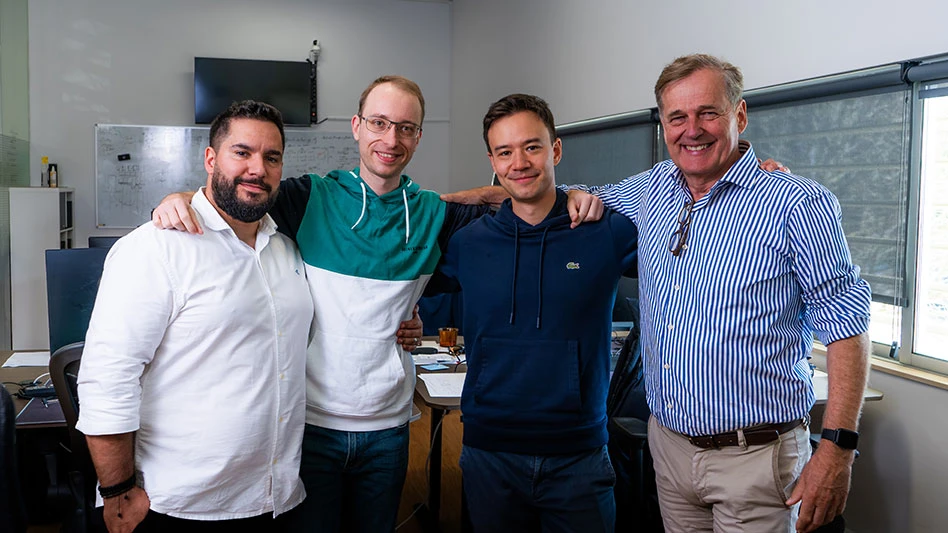
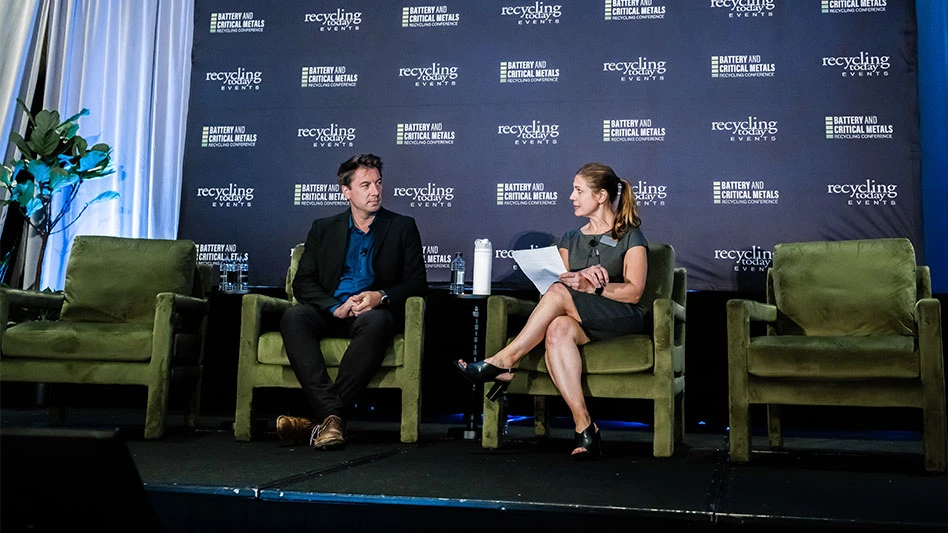
During the Battery and Critical Metals Recycling Conference this June hosted by Recycling Today Events, DeAnne Toto, editorial director of the Recycling Today Media Group, sat down with Ryan Melsert, CEO of American Battery Technology Co. (ABTC), Reno, Nevada, to learn about how ABTC is advancing a sustainable battery supply chain.
RELATED: The tone setters
Previously known as American Battery Metals Corp, ABTC was founded by acquiring the rights to mineral properties at the end of 2019. Under new leadership, the company shifted its model to focus more on battery recycling as well as primary metals extraction.
Melzer previously worked as an R&D manager for Tesla's Gigafactory battery materials processing group, where he designed processes for building battery cells. That work has provided skills and insights that ABTC is applying to demanufacture battery cells.
The following Q&A is an excerpt from that talk that has been edited for clarity and conciseness.
DeAnne Toto (DT): Can you start by telling me a little bit more about the role demanufacturing plays at ABTC and the factors that set the company apart from other battery recyclers?
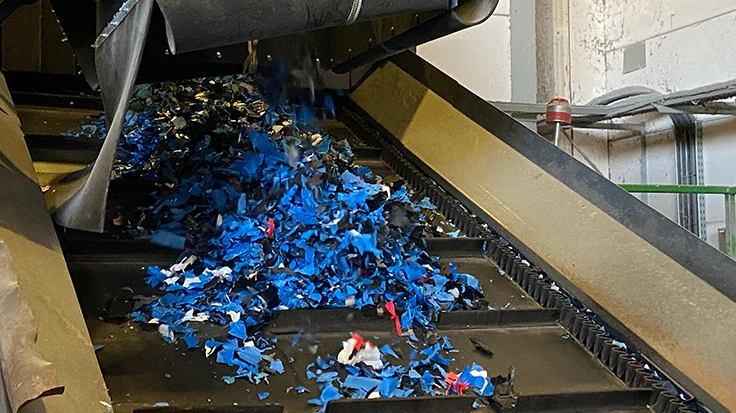
Ryan Melsert (RM): [We essentially designed] the reverse of a Gigafactory. Instead of just taking a battery and dropping it in a shredder or taking a battery and dropping it in a furnace, and really just mixing everything together—that's probably the worst possible thing to do for separation strength is to start by just mixing everything together. You get the low-value components with the high-value components, the powders with dissolved solids or liquids—it just makes it a mess in the very first step, which then makes everything downstream much more complicated. So essentially, we said, let's take some of these unit operations and design a system that can take in a battery that is fully electrically charged, that is fully assembled, that is in a pack or a modular cell form, and without human interaction, how can we feed that in [and] essentially demanufacture some of those early steps to separate out the byproducts for sale, and only once we got to the actual refined powder, separated from all the other byproducts, then to go through a chemical hydrometallurgical train.
DT: Can you tell me about the benefits of the approach that you're taking? It sounds like potentially higher yields, higher-quality materials. Is that correct?
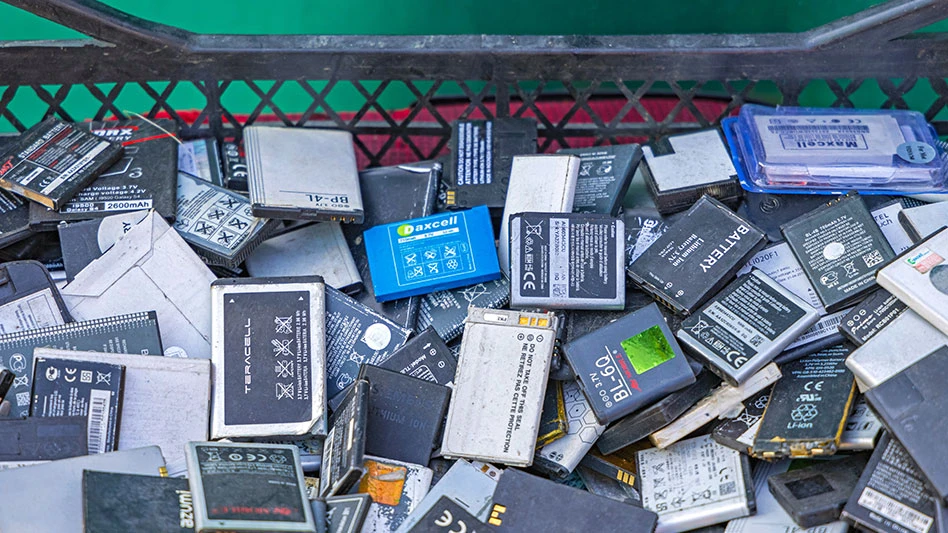
RM: Other recyclers we saw would do these kind of remote, distributed, just plain shredding operations, make a black mass and then try to ship that somewhere else to either sell it as a product or to ship it to some centralized facility. But black mass isn't really defined. There's a whole bunch of different compositions that can be there. There's high-quality material; there's low-quality material. If you really just shred it and put everything together, it then becomes very expensive to process downstream.
If your business is just to make a black mess and sell it, maybe you don't care quite as much what the quality is, but to remove some contaminants mechanically can be an order of magnitude lower cost than trying to remove those same components chemically. A lot of the support material, a lot of the foils, a lot of the casings, are very expensive to remove chemically. So, it's a total opex reducer to remove them mechanically up front.
The black mass itself actually has a fair amount of safety concerns. Black mass is toxic if you inhale it. There are actually a lot of injuries at factories because the graphite is very slippery when it's on surfaces, such as railings and staircases, and airborne black mass, the graphite side, specifically, is combustible. There have been a lot of injuries, of explosions, of the black mass itself.
The other thing we decided is we were not going to make remote, simple shredding facilities and then some other centralized chemical extraction plant. Our factories have both in the same facility. We go from full battery packs that are assembled and electrically charged all the way through to battery grade transition metal sulfates and lithium hydroxide out the back end. And when you do that, you never actually make a black mass. That's just intermediate material going through your enclosed components that gets to the final product.
The benefits really are the reduced labor interaction, the reduced total opex by removing impurities mechanically versus chemically, and then much higher safety by not having to make this powder and concentrate and ship it and then reopen bags and that dust getting everywhere.
DT: What is the model ABTC is taking to create a North American supply chain for battery materials?
RM: Yeah, that is important. There are so few cathode manufacturers in the Western world, there really only is one current cathode plant running in the U.S. It's a facility that is owned by [BASF] that operates out of Michigan. It's a smaller plant, but it's been running for quite a while, and it's really the only thing we have right now in the country. We've worked closely with [BASF] for many years. They went through essentially a vetting or a leveling of every battery recycler in North America. They analyzed what they were doing, looked at their business models, their technology options and, at the end of that process, they ended up choosing us and signed a strategic partnership agreement with us.
We receive their waste from throughout North America, and more importantly, we're selling our battery-grade product back to them, for them to then sell through their supply chain.
Our first battery recycling plant that we've built in Reno is almost exactly the same size on a metal basis [as BSAF’s Michigan plant]. So, as we move forward, the output from our first recycling plant can fully provide the material they need for their cathode plant in Michigan to then sell to manufacturers and automotive OEMs [original equipment manufacturers] throughout the U.S. It is moving to be the first closed-loop supply chain within North America.
DT: As you scale, how are you managing the logistical complexity of coordinating inbound shipments with suppliers and documentation requirements?
RM: We're now getting larger amounts of more consistent feed material. Instead of sourcing [as we did ] for the past couple years [from] a lot of intermediates and brokers that got mixed in, which made it complicated, the vast majority of our material now comes directly from OEMs, from their own facilities, from their service centers. Having repeatable pickup points, destination points, really helps make that much simpler and more consistent. Same with the documentation side: With that same material coming in, we have a set of procedures for how it's received, how it's inspected, how it's weighed, how it's processed, how it's sold. It’s much easier than the miscellaneous drums showing up.
DT: What kind of capital commitment do you think it will take to handle the amount of material that you're planning on handling? And do you think there's a possibility of government support for the critical material?
RM: Government support? Definitely, it's all over the place. It's changing quite often.
For building out future capacity, we always get long-term agreements for both feed and off-take before we construct new plants. So, for the second one, that's why we've chosen to move forward because of the types of supply and feed agreements that we have. Those are not one-offs; those are multiyear agreements, which really derisk the process going forward.
As far as government funds, there are all different buckets of it. We've had quite a bit of success the past couple years. We've won nine different grants from the Department of Energy, some for R&D, some for small-scale systems, some for large factories. There are different types of loans as well.
You really don't ever want to be in the position where you're dependent on government funds or government subsidies. You want to have your own business plan that stands on its own. If you do get government funds, that's great. You can usually move more quickly. You can accelerate your ramp-up, but you've got to be in a position where you can exist without it. And that's really where we are, why we've pulled forward the timeline on that second facility because we received two sets of government funds for that building, but we would move forward with it anyway, just likely in a different timeline.
Latest from Recycling Today
- Collective Waste Solutions acquires Alcop Resource Recycling transfer station
- Volatility continues in nonferrous metals
- Neste chemical recycling plant is ready to scale up
- Indonesia’s nickel pig iron spigot reopens
- Ecore says study backs crumb rubber use on sports surfaces
- Fleetio launches AI capability to accelerate fleet maintenance approvals
- The Metals Agency receives approval for export credit insurance
- Recycle Ann Arbor extends drop-off station operating hours