Port of Long Beach
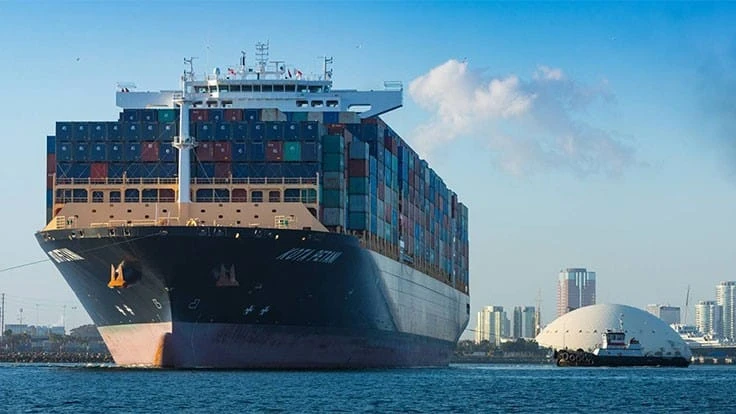
Cargo volume declined at the Port of Long Beach in California in February because of fewer ship calls amid the outbreak of the coronavirus and lingering effects of the trade dispute with China.
Terminal operators and dockworkers moved 538,428 20-foot equivalent units (TEUs) last month, 9.8 percent less than in February 2019. Imports dropped 17.9 percent to 248,592 TEUs, while exports increased 19.3 percent to 125,559 TEUs. Empty containers sent overseas decreased 12.8p percent to 164,277 TEUs, according to the port.
Although a Phase 1 preliminary trade agreement was signed in January by the United States and China, about $370 billion in Chinese goods remain under the increased tariffs.
The coronavirus has caused further disruption to the supply chain with an increase in canceled sailings and a reduction in cargo moving through the nation’s second-busiest port.
“With the extended factory closures and slowdown of goods movement in China and other Asian countries in February due to Lunar New Year and COVID-19, we are seeing shipping lines needing to cancel some sailings,” says Mario Cordero, executive director of the Port of Long Beach. “Once the virus is contained, we may see a surge of cargo, and our terminals, labor and supply chain will be ready to handle it.”
“Along with the economic effects of reduced trade due to the health situation, we also have the first confirmed cases of COVID-19 in Long Beach. We hope for the swift recovery of these individuals,” says Long Beach Harbor Commission President Bonnie Lowenthal. “The port will continue to monitor the outbreak internationally and work with our stakeholders to keep our crucial link in the supply chain open and operating.”
Detailed cargo numbers are available at http://polb.com/statistics.
The Port of Long Beach has 175 shipping lines connecting it to 217 seaports and handles $200 billion in trade annually.
Latest from Recycling Today
- Waste Pro files brief supporting pause of FMCSA CDL eligibility rule
- Kuraray America receives APR design recognition for EVOH barrier resin
- Tire Industry Project publishes end-of-life tire management guide
- Des Moines project utilizes recycled wind turbine blades
- Charter Next Generation joins US Flexible Film Initiative
- Vecoplan to present modular solutions at IFAT 2026
- Terex Ecotec appoints Bradley Equipment as Texas distributor
- Greenwave raises revenue but loses money in Q2 2025