Recycling Today archives
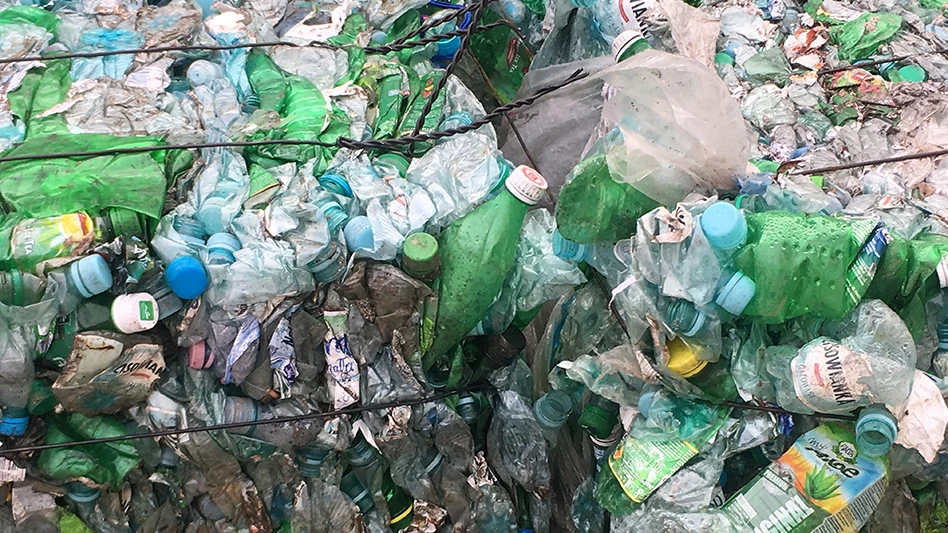
An analysis by Matt Tudball of London-based International Commodity Intelligence Services (ICIS) predicts less price volatility and a wider availability of discarded polyethylene terephthalate (PET) bottles in Europe in the latter portion of this year.
Tudball describes the recycled PET (rPET) market in 2025 as having seen its least volatile year since before the COVID-19 pandemic, with seasonal trends replacing the extreme spikes and troughs experienced in recent years.
Trade groups representing collectors and reprocessors of PET, however, have not described those conditions as being favorable.
Last month, Brussels-based Plastics Recyclers Europe (PRE), which represents more than 200 companies, described a wave of plastic recycling facility closures it said had hit Europe.
Early this month, the European Plastics Converters organization (EuPC), also based in Brussels, said the European plastics value chain was at a breaking point.
“By the end of 2025, the region is expected to have lost recycling plants amounting to almost 1 million metric tons of recycling capacity," EuPC added.
Tudball sees a less drastically threatened landscape, but does say European PET recyclers face challenges from lower-priced flake, pellet imports and virgin PET.
He expects a current “relative calmness” to continue for the rest of this year, assuming no big surprises are on the horizon.
Feedstock PET scrap bale availability increased during the summer, according to ICIS, as more beverage bottles were consumed and entered the stream, bringing feedstock bale prices down.
Tudball says access to better quality feedstock is poised to increase in the coming months and years as more countries implement deposit-return systems (DRS setups), increasing bottle collection rates while reducing contamination levels.
He cites the implementation of a DRS in Austria early this year and the upcoming implantation of one in Poland before the end of 2025 as actions that might help remove some of the volatility in bale prices, including the extreme spikes experienced in the summer of 2022.
The challenges that have caused capacity reduction remain, however, according to Tudball. These include competition from lower-priced flake and pellet imports from outside the European Union, lower-priced virgin PET and a subsequent reduction in recycled content usage among some fast-moving consumer goods companies brands who are backing away from earlier announced targets.
“With PET prices unlikely to rebound for the rest of this year, there are genuine concerns among recyclers that more brands will cut back on flake and pellet volumes due to costs, especially as there has still been no action from any EU member state to enforce the mandatory 25 percent recycled content target in PET beverage bottles [that] has been in force since Jan. 1, as set out in the [EU] Single Use Plastics Directive (SUPD),” Tudball says.
ICIS, in its new analysis, acknowledges that Europe faces the risk of consolidation and the closure of recycling plants across the recycling space as recyclers compete with imports and virgin PET in a very cost-sensitive environment.
In addition to new DRS regimens as providing potential help, Tudball says EU member countries may start to look at the SUPD targets and impose penalties on those brands within their borders who have failed to meet those requirements.
He says tax policies also could be a driver for more rPET demand if countries follow the likes of Spain and the United Kingdom in implementing taxes to encourage the use of recycled plastics.
Italy is one nation that may join Spain and the U.K., although its government has delayed its own plastics tax multiple times, according to Tudball. His report was created with the help of reporting from colleagues Helen McGeough and Carolina Perujo Holland.
Latest from Recycling Today
- EPR implementation working group adopts nationwide focus
- CPM Crown to open European operations hub
- Mardi Gras sustainability initiative collects 14K pounds of recyclables
- Reju selects site for French textile recycling facility
- Hydro’s earnings decrease year over year
- Republic Services appoints Ian Craig to board of directors
- Phoenix Public Works Department proposes solid waste rate increases
- REalloys adds general to executive ranks