stock.adobe.com
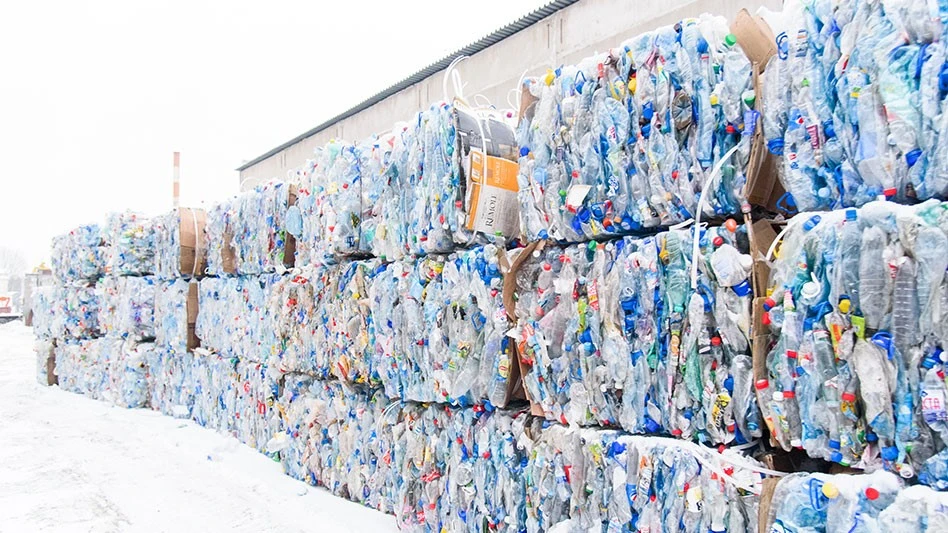
Oversupply of polyethylene terephthalate (PET) bottles has combined with soft demand from the fiber and beverage sectors to reduce pricing on PET bottle bales, sources say. They add that they expect supply and demand to come into better balance in November, which should stabilize, if not increase, pricing.
Sunny Roe, senior analyst, plastic recycling, at ICIS, Houston, says the oversupply is “temporary” and that in the long-term, based on brand commitments to use recycled plastics in packaging, the situation will look quite different.
According to ICIS’ estimates, rPET supplies will need to increase by 60 percent by 2025 to meet anticipated demand. To meet brands’ 2030 goals, rPET supply will need to double from the projected 2025 level. To meet these levels of production, PET bottle collection will need to increase from today’s rate of roughly 27 percent in the U.S.
Roe says fiber producers had pulled out of the market in the late summer as they responded to changes in demand related to inflationary pressures, though they had started to reenter the market as of mid-September.
A PET reclaimer based in the Midwest and Bob Daviduk, co-founder of PET recycler and packaging producer rPlanet Earth, Vernon, California, say PET bottle supplies were abundant in September. Given the soft demand and oversupply, PET bale prices fell quickly beginning in July after running up just as quickly earlier this year.
In California, demand from Mexico contributed to the run-up in PET bottle bale prices, Daviduk says. However, as of September, little demand was coming from Mexico, he says.
As PET bale pricing was climbing, Daviduk says bale quality decreased. “When we really saw that trail off was when they were getting 35 cents per pound for curbside bales,” he says of quality. Even deposit bale quality was affected at the higher prices, Daviduk adds.
Despite that, he says that average bale quality has not changed much since rPlanet Earth started operating in 2019. He adds that the company is spending more time grading bales in material recovery facilities (MRFs), with the objective of paying more to MRFs that produce higher quality bales.
The Midwest-based reclaimer says her company’s bale yield is in the low 60 percent range. She says she expects that will improve as The Recycling Partnership, Washington, makes investments through its new PET Recycling Coalition.
The PET Recycling Coalition will award grants to recycling facilities for sorting equipment and related capital needs. These upgrades are intended to improve PET bottle capture, deliver more rPET for use in bottles and thermoforms, increase the acceptance of nonbottle rigid items, such as thermoforms, in community recycling programs and strengthen recycling opportunities for pigmented and opaque PET.
While some consumers of rPET are in and out of the market based on the relative availability and price of virgin and off-spec resin, the reclaimer in the Midwest says such consumers are more of an exception these days.
Brands that are committed to increasing their use of postconsumer resin (PCR) are doing so because they “know and they believe it's the right thing … and the external pressure is just helping them with timeline,” she adds.
Latest from Recycling Today
- Charter Next Generation joins US Flexible Film Initiative
- Vecoplan to present modular solutions at IFAT 2026
- Terex Ecotec appoints Bradley Equipment as Texas distributor
- Greenwave raises revenue but loses money in Q2 2025
- Recycled steel prices hold steady
- EY says India’s need for scrap imports will continue
- Coming full circle
- Amcor, DCM introduce fertilizer packaging with 35 percent recycled content