Storing scrap metal at the Port of New Hampshire is one step above storing garbage there, Portsmouth, NH, City Councilor Ned Raynolds said this past week.
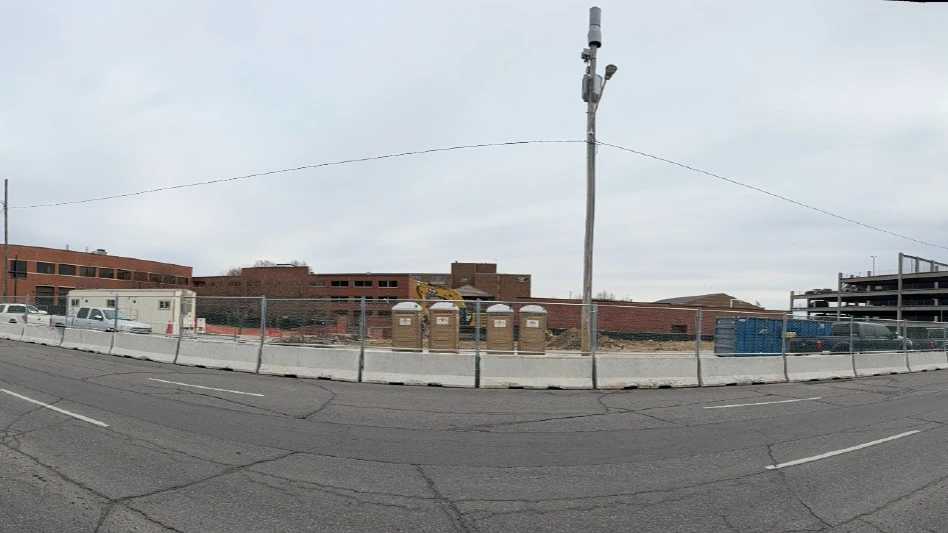
As stated in a letter unanimously approved by the City Council, the constant noise, piles of scrap metal, and blowing rust-dust causes the Market Street port - what some call the entryway to the city - to have all the appeal of a junkyard.
Such critical words came with the council’s "strong urging" of the Pease Development Authority, which manages the port, not to renew its contract with Grimmel Industries. The Topsham, Maine-based company has stored and shipped tons of scrap metal at the port since 2002. Its contract will be up for renewal at the PDA board of directors meeting on May 20.
Grimmel is not the first scrap-metal business at the port. Scrap metal had been located there for more than 30 years until Bulkloader Inc. left the port in 2000.
The council’s letter argues the PDA can easily find another business that is more lucrative, less physically offensive and better for the environment than Grimmel.
The letter cites figures that the port contributed 43 percent fewer funds to the state in 2004 than it did in 2000, two years before Grimmel Industries located there.
It also noted continuous complaints from Market Street residents of "rust-dust," constant noise and metal debris in the road.
"(Grimmel) operations add up to an enormous eyesore, ear-sore and blight on the character of the Portsmouth waterfront," the letter reads.
The council’s hard-line stance, however, has not seemed to sway the PDA. While they would not say whether the PDA will renew Grimmel’s contract, both Dave Mullen, deputy director of the PDA, and William Bartlett, chairman of the PDA directors, dismissed the council’s criticisms.
Mullen said Grimmel is a "significant" economic contributor, and said its departure "would be a major loss" of revenue for the port.
In 2003, Grimmel had six ships dock at the port, which brought in $374,101 of revenue, according to PDA Director George Bald. That number increased in 2004 with 10 ships and $443,428 in revenue. In the year to date, three ships have brought in $150,115, and a fourth ship is expected to dock at the port later this month, Bald added.
The revenues from Grimmel are first used to cover day-to-day operations at the port, Bald said. Whatever money is left after that, half goes to the state’s general fund and half goes for the port’s long-term capital improvement projects.
"We have to run a business and run a port. Did (the council) have a suggestion to recoup the half a million dollars from Grimmel?" Bartlett asked rhetorically.
The council did have a suggestion, most notably to attract a passenger vessel service such as a tour boat or cruise ship that might also bring people to downtown shops and restaurants.
But Bald disagreed, saying tourist vessels alone would not generate enough income.
"To switch to all passenger (vessels) would require a substantial investment," Bald said. "You would have the double-whammy of losing the revenue and having to come up with substantial investment to change the configuration of dock and facilities."
Bartlett called the port "a niche port" with facilities and location that are not attractive to many tourist vessels.
"We have aggressively marketed (tourism) for the last 25 years, but most times over those years you’ve seen scrap metal and salt," Bartlett said.
Bald also dismissed an idea by local scrap metal critic Tom Carroll, who owns a condominium on Noble’s Island. He has suggested the port should house the Scotia Prince cruise liner, which closed its Portland, Maine, facility due to environmental hazards.
"It’s a roll-on, roll-off dock and our docks are not set up to accommodate that," Bald said. The cruise liner would also need a terminal building for passengers, which the port does not have.
Raynolds said he was dismayed to hear the PDA seemed to be standing by scrap metal.
"That’s sad if they say that’s the best they can do for the port," he said. "Even if it wasn’t passenger vessels, any kind of trade, any kind of cargo, any kind of shipping ..."
As for the environmental issues, Bald said the PDA has never found rust-dust and metal scraps to be a "health liability," as the council’s letter argues.
After a northeast wind blew thick black dust from the piles across Market Street last year, the state Department of Environmental Services did a number of tests at the site and found no adverse health effects, according to previously published reports.
Since the PDA received numerous complaints about metal debris flying off trucks heading into the port, it has also stationed an employee on Market Street to collect scraps with a magnet, Bald said.
Ultimately, if the PDA decides to renew its contract with Grimmel, councilors said they will continue to pressure the PDA to run a port that is better for the city.
"Since our city has to endure the burden of this operation, we would like the PDA to demonstrate . . . why they feel they can’t do better than this contract," Councilor Thomas Ferrini said. Portsmouth Herald News
Latest from Recycling Today
- Nashville Waste Services launches new digital route system
- Arconic expands in Iowa
- Cascades invests $6.9M in recycled boxboard plant
- Ocean freight interruptions poised to continue
- Danieli to supply shredder to Australian company
- Equipment from the former Alton Steel to be auctioned
- Novelis resumes operations in Greensboro, Georgia
- Interchange 360 to operate alternative collection program under Washington’s RRA