Swapan - stock.adobe.com
The European Parliament has adopted new legislation aimed at preventing and reducing food and textile waste across the European Union.
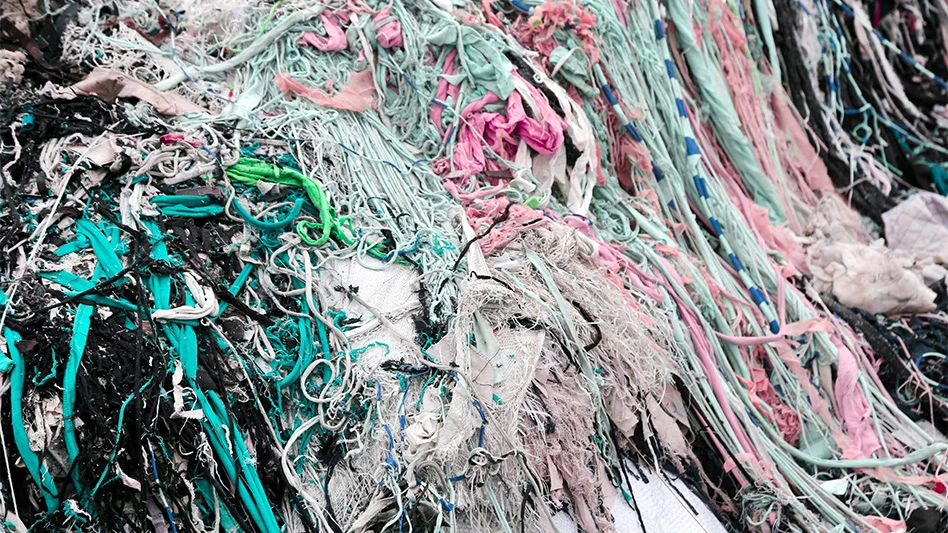
The textile rules encompass products such as clothing, accessories, hats, footwear, blankets and bed linens, kitchen linens and curtains. Additionally, EU countries can establish extended producer responsibility (EPR) schemes for mattress producers and are encouraged to address fast fashion practices when deciding on financial contributions to EPR schemes.
The adoption of the legislation comes two years after the European Commission first proposed a revision of the EU rules on waste in July 2023.
The EU legislation will introduce binding food waste reduction targets, which are expected to be met nationwide by Dec. 31, 2030. These targets include a 10 percent reduction from food processing and manufacturing and a 30 percent reduction per capita from food services, restaurants, retail and households, which will be calculated in comparison to the amount generated as an annual average between 2021 and 2023. Respective countries will be asked to facilitate the donation of unsold food that is deemed safe for human consumption, too.
Relative to textiles, producers will be asked to cover the costs of collection, sorting and recycling through EPR schemes, which are to be established by EU member states within 30 months of legislative entry. Microenterprises will have an extra year to comply with EPR requirements.
The waste law will be signed by both co-legislators prior to publication in the EU Official Journal, after which EU countries will have 20 months to translate the rules into national legislation.
Latest from Recycling Today
- SA Recycling votes to remove United Steelworkers
- England's Environment Agency extension provides stability for metal shredding operators
- Schupan names new chief financial officer
- NAW looks ahead to July hearing in Oregon
- Recycle Coach partners with Bartec Municipal Technologies
- EPA proposes abandoned tire cleanup plan with focus on energy recovery
- BIR welcomes new policy officer for trade & environment
- Global Recycling Foundation recognizes Recycling Heroes