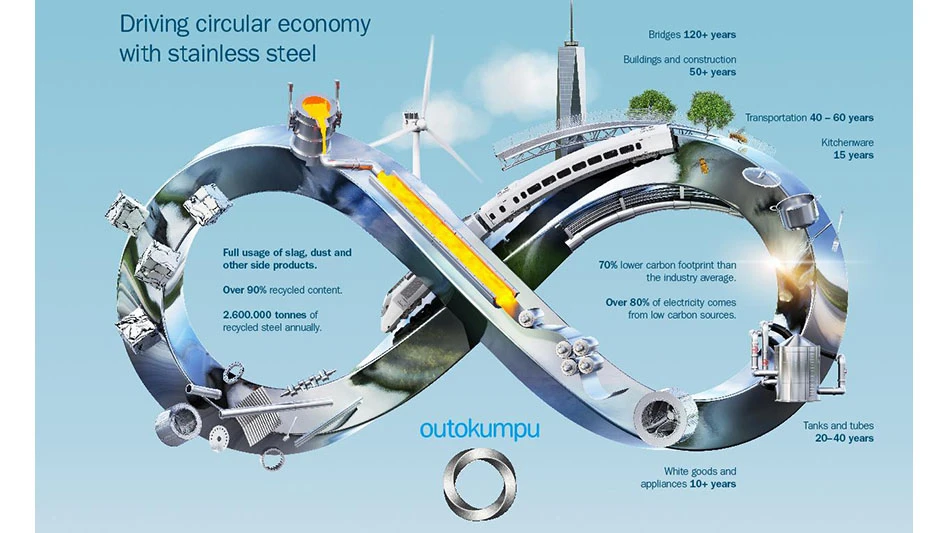
Graphic courtesy of Outokumpu
Finland-based stainless steel producer Outokumpu says the results of a survey it helped conduct this May demonstrate that recent tariff rounds and geopolitical tensions are altering stainless steel procurement strategies globally.
The company, which produces metal in several parts of the world, including the United States, has produced a white paper called “The Evolution of Materials” based in part on the survey results.
Outokumpu gathered thoughts from 70 senior decision-makers at companies with a combined annual revenue of $430 billion, including what it calls some of the world’s biggest industrial steel consumers in the energy, consumer goods, automotive construction and infrastructure sectors.
“The findings show that one in three organizations have paused or delayed stainless steel orders due to tariff upheaval, raising concerns about the progression of major infrastructure projects globally,” the company says.
Over half the survey’s respondents at that time were reevaluating their entire sourcing strategy, and 30 percent have already switched suppliers in response to shifting trade conditions, according to Outokumpu.
In North America, metal buyers tended to be more reactive, with some locking in long-term prices to hedge against volatility. In contrast, Outokumpu's survey showed European respondents were more likely to build up inventory, aiming to buffer against future disruptions.
“Tariffs and geopolitical shifts are doing more than unsettling markets—they’re forcing many industries to rethink materials sourcing,” Outokumpu President and CEO Kati ter Horst says. “Ongoing uncertainty and shifting regulation are causing disruption; policymakers globally must act to safeguard vital infrastructure projects and prevent further delays."
One day after issuing the white paper, Outokumpu released a statement urging European Union lawmakers to “respond with more assertive solutions and replace current trade safeguards as soon as possible with more effective measures.”
The company believes the most effective form of trade measure to protect the European steel sector against unfair trade and global excess capacities would be global tariff rate quotas with a maximum cap per country of origin.
“A convergence of political, environmental and economic pressures means a much bigger role for the material in the built environment looking forward," ter Horst says of the future overall prospects for stainless steel.
Outokumpu's survey also reveals that 2 of 3 respondents anticipate higher stainless steel intake over the next five years, with one in three predicting a significant rise. On a 12-month horizon, nearly half the respondents expect volumes to tick up.
The company and its customers point to climate change, rapid urban growth and tighter environmental regulations are growth catalysts for the family of iron, nickel and chromium alloyed metals.
“More extreme temperatures, flooding and other weather events are placing infrastructure under unprecedented strain, making stainless steel’s corrosion resistance and strength more valuable than ever—from use for bridges and coastal defenses to tunnels and skyscrapers,” Outokumpu states.
The company also says the metal’s recyclability and long life cycle reinforce the role of stainless steel in building resilient, low-impact infrastructure.
In the defense and aerospace sectors, the EU’s $930 billion ReArm Europe plan also coud boost demand for certain stainless steel grades.
Outokumpu conducted the survey along with Sweden-based consulting and research firm Kairos Future. The resulting “The Evolution of Materials: Stainless Steel Insights 2025” white paper can be downloaded from the Outokumpu website.
Latest from Recycling Today
- Neste chemical recycling plant is ready to scale up
- Indonesia’s nickel pig iron spigot reopens
- Ecore says study backs crumb rubber use on sports surfaces
- Fleetio launches AI capability to accelerate fleet maintenance approvals
- The Metals Agency receives approval for export credit insurance
- Recycle Ann Arbor extends drop-off station operating hours
- Sybilion seeks to help manufacturers confidently address volatility
- Rio Tinto, Prysmian partner on low-carbon aluminum solutions for data centers