Photo courtesy of Outokumpu
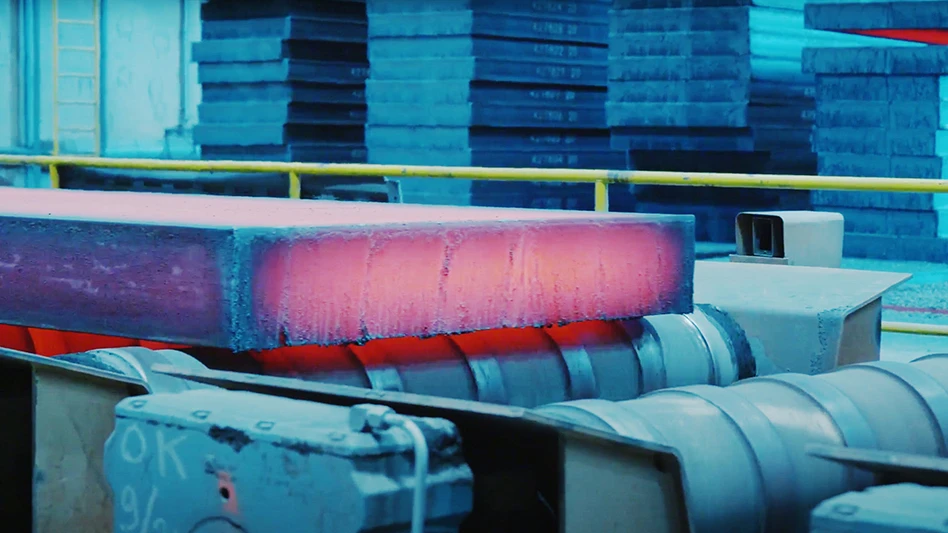
Finland-based stainless steel and specialty alloys producer Outokumpu has reported losing $76.6 million in the fourth quarter of 2025 and approximately $160 million for the entire calendar year.
The company, whose global operations include a stainless mill in Alabama, characterizes 2025 as a year when “profitability decreased in business area Europe while it improved in both business areas Americas and Ferrochrome.”
Remarks Outokumpu president and CEO Kati ter Horst, “The year 2025 was marked by subdued demand for stainless steel, driven by rising uncertainty and global trade disruptions, pressuring our profitability.”
She continues, “Demand in Europe and North America remained weak across major end uses. The European market also faced sustained pressure from low-priced imports from Asia.”
Regarding its Alabama mill and other operations in North, Central and South America, ter Horst comments, “We achieved a significant improvement in adjusted earnings before interest, taxes, depreciation and amortization (EBITDA) in business area Americas, driven by higher volumes and lower costs. Activity picked up as buyers redirected orders to domestic producers in response to the tariff increase. Selling prices in the United States recovered in the second half of the year.”
In the year now underway, the CEO expresses hope that the European Union’s Carbon Border Adjustment Mechanism (CBAM) will improve financial conditions for Outokumpu, which makes low-carbon, recycled-content stainless steel.
“The implementation of CBAM, starting in 2026, will reinforce our sustainability leadership in stainless steel and ferrochrome while delivering financial benefits,” she writes in statement accompanying the company’s results.
“CBAM raises variable costs for carbon-intensive imports, creating a level playing field on carbon cost and helping reduce global emissions,” continues ter Horst. “The default carbon intensity values for the largest importers of stainless steel and ferrochrome to the EU are significantly above the EU benchmarks—benchmarks Outokumpu is well below.”
Latest from Recycling Today
- Ferrous scrap supply squeeze said to have peaked
- CEPI says recycled paper consumption declined in Europe in 2025
- Cirba Solutions celebrates 35 years of battery recycling
- Commentary: The impact happens after collection
- BIR reports note continued struggles for recycled resin markets
- Vermont expands battery recycling program
- In memoriam: Bruce Parker
- SDI, SGH submit revised final offer to acquire BlueScope Steel Ltd.