Oregon Steel Mills is considering permanently closing its Portland steel-making shop, a shutdown that could cut 300 jobs.
The Portland-based company said in its annual report last week that it is weighing the costs of buying steel slabs on the market rather than melting scrap to make its own.
The pronouncement, tucked into its 10-K annual financial filing with the Securities and Exchange Commission, was the first time the company has publicly acknowledged that it is considering permanently shutting down part of its mill. The company employs about 650 at its North Portland melt shop and combination mill, state work-force development officials say.
Vicki Tagliafico, a company spokeswoman, said the company has no time frame for making a decision.
"We are leaving ourselves the option to decide whether to melt or to buy," Tagliafico said. "The steel industry is just not stable in terms of pricing and demand."
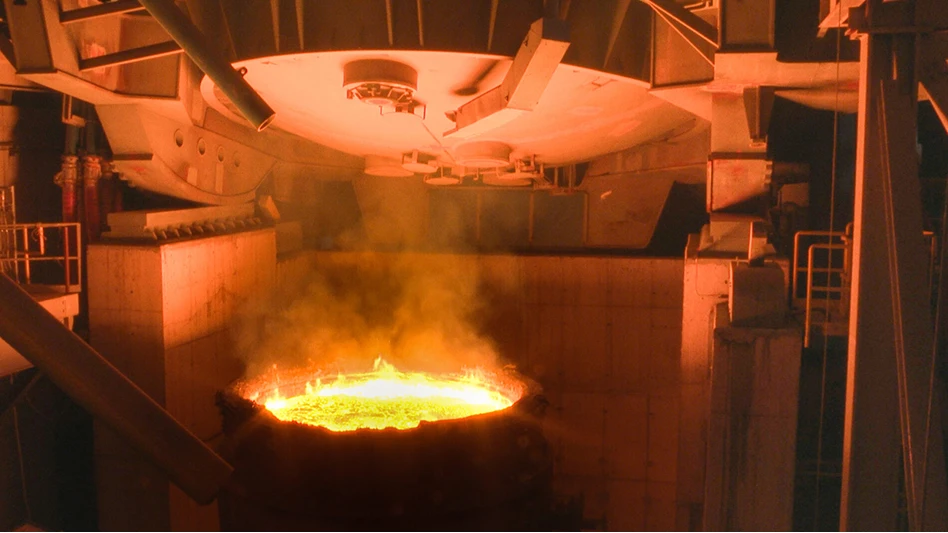
Oregon Steel melts scrap steel and junked automobiles into semifinished steel slab using an electric-arc furnace. Closing the melt shop apparently would not affect the company's combination mill, where it turns the semifinished slabs into specialty-sized slabs and coils used in manufacturing and construction as well as large-diameter pipe used in oil and natural gas transmission. Last year, it shipped 947,000 tons of product out of Portland.
On Jan. 19, Oregon Steel furloughed 300 workers and closed its scrap-steel melting shop, pointing to a large inventory of imported slab and a downturn in prices and demand for finished steel slab and pipe.
The company recalled 119 workers in late February but gave notice to workers and Oregon work-force development officials that it would lay them off again May 6. The company has said the layoff would be temporary but would not estimate its duration.
State work-force development officials, however, are assuming the furlough is indefinite. They plan to meet with mill workers today to tell them how to apply for unemployment benefits, retraining programs and other assistance.
"We're treating it as a permanent layoff," said Jerry Lierow, education and work-force coordinator for the Oregon Department of Community Colleges and Workforce Development. "I cannot specify that that would be complete closure of the melt shop."
Oregon Steel's woes are akin to the rest of the industry, which is reeling from depressed demand for steel products and a sharp rise in the price of raw materials, said Thomas Danjczek, president of the Steel Manufacturers Association.
Danjczek said recycled scrap steel prices, driven up by a strong U.S. dollar and heavy demand for recycled steel in China and Korea, have risen from $80 a ton to $130 a ton, with no corresponding increases in prices for steel slab and pipe products. Oregon Steel's decision does not bode well for the rest of the industry, he said.
"They're a highly efficient mill," Danjczek said. "So it puts the rest of us under threat. I certainly hope they don't go out of the melting business."
Workers at the mill say their performance is suffering because of the uncertainty about their jobs and anger that the company was using imported slab from Mexico rather than making its own. Mexican steelmakers are exempted from steel import tariffs imposed by President Bush in 2002 to help U.S. steelmakers compete.
"Morale is definitely low," said Rob Wheaton, a union official who represents 13 workers from Oregon Steel's mechanical testing department. The workers voted in December to allow the union, the Northwest Metal Producers Association, to bargain for a contract.
In its annual report, Oregon Steel estimated the book value of assets and other commitments associated with the melt shop was $42 million. If it permanently ceases steel melting, Oregon Steel said it would charge those costs to its operating income. Oregonian
Latest from Recycling Today
- Organics Recycling Conference 2026: Q&A with keynote speaker Andy McNeill
- CMRA selects Vietnam for 2026 event
- Steel Dynamics foresees profitable Q1
- AF&PA joins NAW lawsuit in Oregon
- California’s ‘Truth in Labeling’ law faces federal suit
- Fayetteville, Arkansas, adopts new cart-based recycling program
- Google purchases carbon removal credits generated by Amp’s organic waste processing
- FTR forecasts toughening conditions for shippers