marina_larina | stock.adobe.com
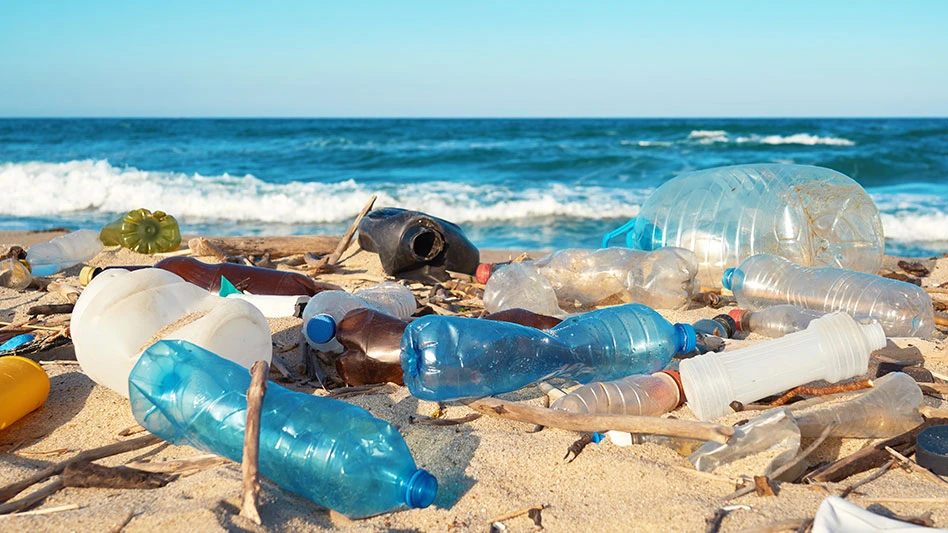
The Paris-based Organization for Economic Cooperation and Development (OECD) says discarded plastic leakage into the world’s oceans, water supply and soil could decrease by more than 95 percent in Southeast and East Asia by 2050 if stronger policies are enacted.
“Southeast and East Asia play a central role in the global effort to tackle plastic pollution, given its substantial share of the global economy, strategic position in plastics value chains and rapidly rising plastics demand,” according to the organization, comprised of representatives from more than 35 nations with economies considered further along in their development.
The 220-page report focuses on discarded plastic generated in China, Japan and South Korea and the 10 Association of Southeast Asian Nations countries (Brunei, Cambodia, Indonesia, Laos, Malaysia, Myanmar, the Philippines, Singapore, Thailand and Vietnam).
OECD says plastics use in that region has surged almost nine-fold since 1990, reaching 152 million metric tons (mmt) in 2022.
The report also says that same year, the 13 nations covered in its report leaked 8.4 mmt of plastics into the environment—over one-third of the global total—including 3.5 mmt from ASEAN member states and 4.9 mmt from China.
The group defines plastic leakage as any discarded plastic that enters the terrestrial or aquatic environment, resulting from inadequate collection and disposal.
Improvement defined in a “high stringency scenario” described in the report identifies more than quadrupling current regional recycling rates so they reach 54 percent as one needed measure.
“With stronger regional cooperation, ambitious policies and targeted investments, the region can almost completely eliminate plastic leakage by 2050, delivering lasting benefits for people, the environment and the global economy,” OECD Secretary-General Mathias Cormann says.
The report estimates the macroeconomic cost of its high stringency scenario represents about 0.8 percent of estimated regional gross domestic product, or GDP, by 2050, but says ASEAN lower middle-income countries face a steeper cost of up to 2.8 percent of estimated 2050 GDP.
The OECD report says most of the 13 countries have adopted national action plans on plastic pollution and stepped up regional cooperation, and that the average recycling rate in the region of 12 percent may already exceed a calculated global average of 10 percent.
“Efforts are underway to improve [materials] segregation at source, reduce littering and increase the use of recycled materials in manufacturing,” OECD says.
Effective strategies can be tailored further to local contexts and supported by investments in waste collection and recycling infrastructure, stronger regulatory frameworks, clear policy signals to unlock investments and support for the integration of informal waste workers, according to OECD.
Latest from Recycling Today
- SA Recycling votes to remove United Steelworkers
- England's Environment Agency extension provides stability for metal shredding operators
- Schupan names new chief financial officer
- NAW looks ahead to July hearing in Oregon
- Recycle Coach partners with Bartec Municipal Technologies
- EPA proposes abandoned tire cleanup plan with focus on energy recovery
- BIR welcomes new policy officer for trade & environment
- Global Recycling Foundation recognizes Recycling Heroes