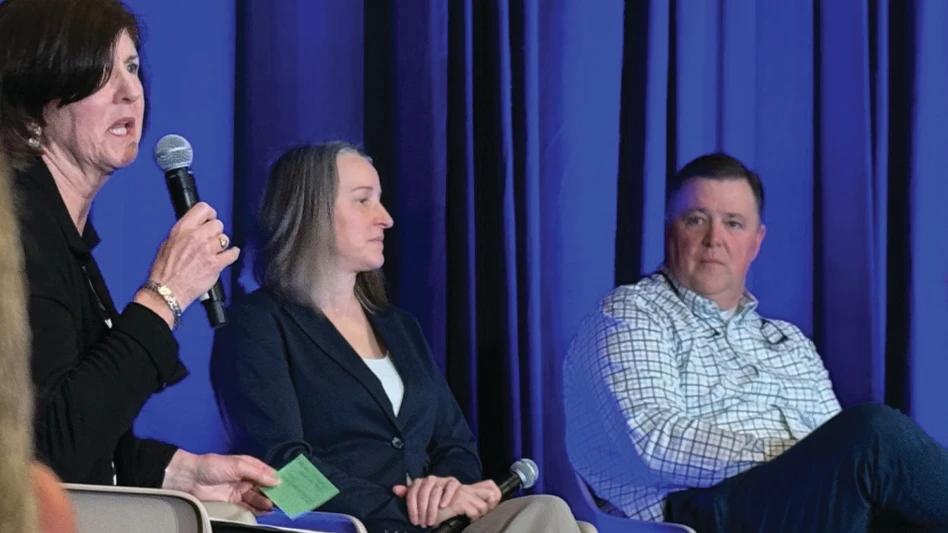
Making the economic benefits of recycling clear to local and state decision makers is the first step toward convincing them to keep programs in place, according to a panel that addressed attendees of a session entitled “Selling Local and State Decision Makers on the Economics of Recycling,” at the NRC Annual Congress held recently in Atlanta.
Avoiding disposal costs is one of the chief benefits cities and municipalities can get from recycling programs, according to Resa Dimino of GrassRoots Recycling, who helped lobby to return the recycling program to New York City. “Waste is costly,” she said.
Dimino said that when the city cancelled its recycling program, it was the way that the city was going about recycling, not the recycling itself, that was cost-prohibitive.
In Denver, where tipping fees are lower, the disposal cost avoidance argument is not so useful, said Charlotte Pitt of Denver Recycles/City & County of Denver. However, by keeping the cost of recycling below the cost of waste on a per ton basis, recycling advocates can still maintain that recycling saves the city money.
Randy Hartmann of the Office of Environmental Management of the Georgia Department of Community Affairs said that developing partnerships with private industry is a way to illuminate the economic value of recyclable materials.
Hartmann discussed the waste characterization study done in Georgia in 2004 in response to lagging recycling rates. The study found that a great deal of what Georgians were throwing away had active, viable markets within the state.
Hartmann said opening the local government’s eyes to the economic opportunities was the single most convincing fact he could present. He said local lawmakers want to support state and local industry. The fact that 15 of Georgia’s paper mills use recycled content and that nine of those rely on recycled content exclusively was proof that recycling programs could bring real cost savings to the state.
Those cost savings are felt by the private industry partners as well, Hartmann said, particularly when considering transportation costs. Companies would certainly prefer to get materials from 100 miles away instead of 500, he said.
When the recycling program and landfill fall under the same management, the economic atmosphere can get confusing, said Pitt. For example, the same entity that runs the recycling program in the city of Denver also serves as the city’s waste hauler, she said. The landfill also generates income for the same entity. Pitt said promoting other benefits, like saving on the life of a profitable landfill, is a good way to keep the focus on recycling’s economic benefits.
Pitt added that long-term contracts served the economics of recycling far better than shorter ones.
Clear communication is also a key element, said Dimino, who added that connecting recycling to issues like jobs and labor makes sense to local lawmakers.
“You need to know what motivates your decision makers,” Hartmann agreed.
Latest from Recycling Today
- Charter Next Generation joins US Flexible Film Initiative
- Vecoplan to present modular solutions at IFAT 2026
- Terex Ecotec appoints Bradley Equipment as Texas distributor
- Greenwave raises revenue but loses money in Q2 2025
- Recycled steel prices hold steady
- EY says India’s need for scrap imports will continue
- Coming full circle
- Amcor, DCM introduce fertilizer packaging with 35 percent recycled content