© djhalcyonic | stock.adobe.com
In the latest “World Mirror on Recovered Paper” published by the Brussels-based Bureau of International Recycling (BIR), one industry veteran sums up the state of the North American market matter-of-factly, and the outlook does not inspire much confidence.
“The general state of the paper business is simply not pretty,” says Myles Cohen, board member of Vipa USA Inc., part of Swiss trading company Vipa Group.
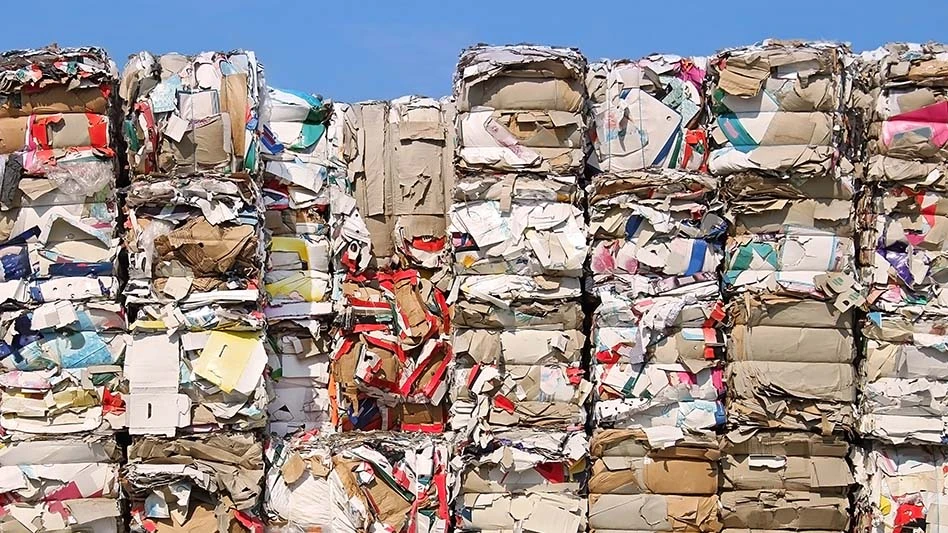
Cohen, writing on behalf of Vipa Group CEO Marc Ehrlich, says that after several months of increasing or stable recovered paper prices, the North American market softened in May and June as lower prices have been recorded in almost all regions, particularly for old corrugated containers (OCC) and mixed paper, but also for high grades like sorted office paper.
“Domestic mills in the [U.S.] are backing off their orders and are even trying to turn away contracted tonnage because of lower demand and, thus, higher recovered fiber inventories,” Cohen says.
He notes that suppliers have told him prices possibly could continue to deteriorate for the next several months, which has fueled nervousness among buyers and sellers.
Tariffs also have played a role, lowering consumer confidence in new expenditure through employment uncertainty and rumors surrounding inflation.
“This tariff-led reduction in consumer spending has become more apparent, creating a domino effect across the entire supply chain,” Cohen says. “Lower consumer expenditure ultimately leads to lower demand for paper packaging.”
This year also has been marked with shutdowns across the paper industry.
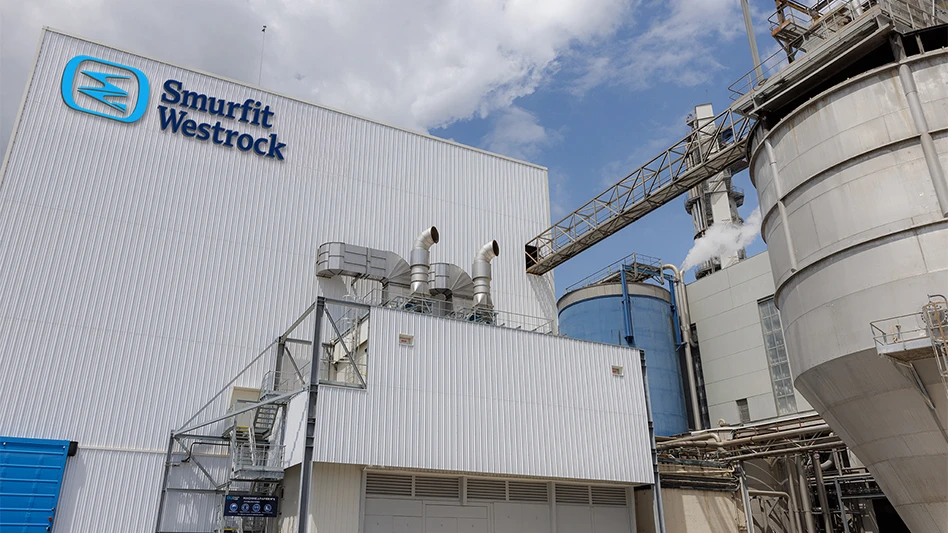
In May, Smurfit Westrock revealed plans to close four facilities, including a coated recycled paperboard mill and a containerboard mill, and later that month, Georgia-Pacific announced the planned closure of its Cedar Springs containerboard mill in Georgia.
Then, in June, International Paper revealed a series of closures to take place over the second half of the year, including closing a packaging facility in Marion, Ohio, and a recycling facility in Wichita, Kansas—the latter of which prompted a recycling facility shutdown in Wellington, Kansas.
Finally, in July, Cascades announced plans to close its corrugated medium manufacturing facility in Niagara Falls, New York, as part of a packaging production optimization strategy.
“There have been permanent shutdowns at some huge paper mills,” Cohen says. “This adds to downtime and reduced capacity utilization elsewhere.
“These losses have been counterbalanced to some extent by new or resurrected mills, built as greenfield paper mills or older or shuttered mills converted to 100 [percent] recycled containerboard paper mills. However, it is unlikely that this new capacity is making up for closures or downtime elsewhere.”
Francisco Donoso of Spain-based Dolaf Servicios Verdes S.L. echoes this sentiment, saying the market in the U.S. has been undergoing a period of “structural downturn” and weaking prices, marked by mill closures and “signs that the bottom has yet to be reached.”
European outlook
According to Donoso, the European OCC market displayed “mixed dynamics” during the early months of this year.
The month of May brought some stabilization as purchased volumes dropped sharply in line with mill preparations for summer shutdowns, while June and July have been largely quiet, according to Donoso, with downward price pressure and high inventory levels.
In Germany, Donoso reports good material availability despite low collection volumes.
“OCC inventories have grown,” he says of the German market. “Several mills have planned production stops in July and August, whereas others expected to continue operations with only a brief summer closure.
“Recycled containerboard prices have shown some resistance, holding steady in June before decreasing slightly in July.”
In Spain, despite rising domestic consumption, Donoso reports that OCC prices have remained under pressure because of a combination of increased imports and ample supply, while in Italy, the market has been stable with no significant increase in OCC availability.
“Operators have remained cautious in the face of international price trends, choosing to rely on high-quality industrial recovered material rather than overstocking,” he says.
“In the U.K. and the Benelux, cheap offers emerged amid weak export demand to Asia. This created a flow of low-cost material towards continental Europe—especially to Germany and northern France—and thus applied further downward pressure on local prices.”
He summarizes the state of the European OCC market as “highly sensitive to logistics, energy costs and international trade dynamics” with regional variations.
“The overall effect has been to create cautious market expectations,” Donoso says.
Asian outlook
Southeast Asian mills are grappling with high costs and are duly shifting between domestic and imported material, raising prices domestically even as production is curbed during weaker demand periods, according to Simone Scaramuzzi of Italian company LCI s.r.l.
He says demand from countries like Vietnam, Indonesia and Thailand has remained “steady but cautious,” with buyers negotiating harder has they anticipate further freight cost corrections.
“Regional converters have also reported operating at reduced capacities, citing high inventories and a slow recovery in packaging exports,” Scaramuzzi continues. “Some mills in Vietnam and Indonesia have temporarily adjusted their purchase volumes, balancing between low-priced imports from Europe and competitive supply from the Middle East. Meanwhile, concerns over inconsistent container availability and longer transit times have prompted [Southeast] Asian buyers to spread their sourcing across multiple origins.
“Looking ahead, the market is awaiting a revival in Asian paper demand and sustained shipping relief in order to steer closer towards stabilization.”
Latest from Recycling Today
- Shapiro announces promotion
- Carton recycling scrutinized in California
- SACO AEI Polymers recognized for sustainability practices
- ArcelorMittal says France EAF remains on track
- Greenwave appoints chief financial officer
- Commentary: A turning point for flexible plastics recycling
- EcoATM announces 7.5M devices collected in 2025
- Update: NAW secures injunction blocking enforcement of Oregon’s EPR law