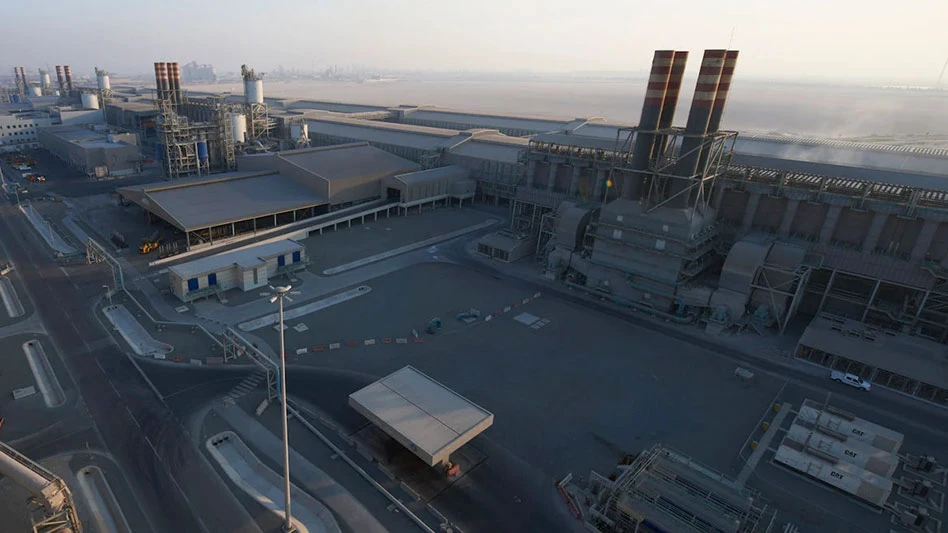
A new treatment method for waste products generated in the aluminum smelting industry has been developed at Portland Aluminium, based in Victoria, Australia.
The waste, spent pot lining has been the subject of an eight-year $26 million research and development program that harnessed technology developed by Portland Aluminium, as well as its three owners -- Alcoa Australia, Ausmelt Ltd, and Australia's CSIRO.
The Alcoa Portland SPL Process treats the hazardous waste and renders it harmless. The process produces aluminium fluoride and a granulated vitreous material referred to as `synthetic sand'.
The aluminum fluoride decreases the overall cost of the Portland Aluminium operations by reducing the quantity of the imported aluminum fluoride required for the aluminum smelting process.
The synthetic sand has been given approval for unrestricted use by the Environment Protection Authority of Victoria, as long as it continues to have fluoride leachability measures of less than 15 parts per million. The Alcoa Portland SPL Process achieves this standard.
The EPA's approval, granted last week, opens up opportunities for the end product to be used in commercial applications such as road making and concrete. Both products will conserve natural resources.
SPL is a waste product of the electrolytic process in the smelting of aluminum.
Prior to treatment SPL is considered to be a hazardous waste in various countries because it contains significant quantities of absorbed fluoride along with traces of cyanide.
The EPA's acceptance for these end uses means the Alcoa Portland SPL Process has treated the hazardous waste material SPL successfully and converted it into non hazardous useful products.
The disposal of SPL primarily has been in landfill because of difficulties in the development of a successful techno-economic SPL treatment process.
Increasing concern about SPL landfilling practices is resulting in regulations in some countries to ban this form of disposal. As a consequence, stockpiling of SPL is occurring in an increasing number of countries pending the development of a successful treatment process.
Work on the Alcoa Portland SPL Process began in 1992 and involved investigations into the suitability of Ausmelt's submerged lance technology furnace process for treating SPL.
Latest from Recycling Today
- Fleetio launches AI capability to accelerate fleet maintenance approvals
- The Metals Agency receives approval for export credit insurance
- Recycle Ann Arbor extends drop-off station operating hours
- Sybilion seeks to help manufacturers confidently address volatility
- Rio Tinto, Prysmian partner on low-carbon aluminum solutions for data centers
- Unilever criticized for plastics approach
- USTR to study additional steel, aluminum tariffs
- Electrified Materials adds processing capacity