leonid_shtandel | stock.adobe.com
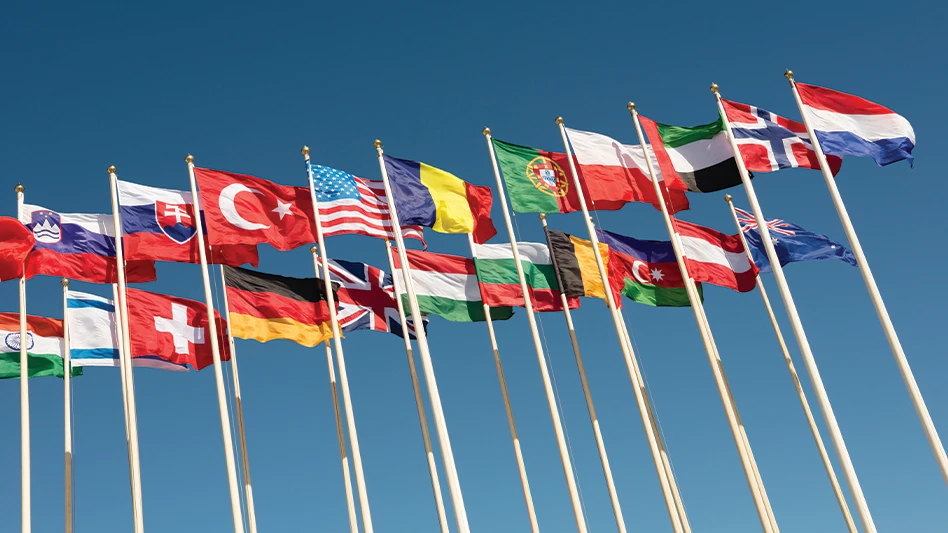
Following a voting process that took place in Geneva Feb. 7, the United Nations Environment Programme (UNEP) announced that its Intergovernmental Negotiating Committee (INC) to develop an international plastics treaty elected Ambassador Julio Cordano of Chile as the next INC chair.
The decision came about during the third part of the committee’s fifth session, also known as INC-5.3. Cordano will step into the role previously held by Luis Vayas Valdivieso, who stepped down in August 2025 after negotiations stalled in Geneva during INC-5.2.
RELATED: Plastics treaty talks end with no agreement
In a UNEP news release announcing the election, Cordano says, “Plastic pollution is a planetary problem that affects every country, community and individual. Therefore, a treaty is urgently needed to support concerted action and bring us together to address this shared responsibility. I am willing and determined to play a leading role in helping the committee cross the finish line.”
Following Cordano’s election, the committee selected Linroy Christian of Antigua and Barbuda as vice-chair. UNEP says the session solely focused on organizational purposes to address the election of officers, with “no substantive negotiations” held during the session.
The INC process began in 2022 with sessions held around the globe. Throughout the process, fault lines have developed between a majority group of countries seeking a legally binding treaty that would cap plastic production, phase out certain chemicals and products deemed harmful and create a financial instrument to implement the program and aid developing countries, and a smaller group of oil-producing countries, including the United States, that would prefer a more voluntary treaty focusing on international guidelines for product design and waste management, including recycling and reuse.
With Cordano’s election, treaty stakeholders and observers are striking an optimistic tone while emphasizing the importance continuing talks. Marco Mensink, council secretary of the International Council of Chemical Associations (ICCA) and director general of the European Chemical Industry Council, says the election sends an important signal to the globe that the United Nations remains focused on delivering a final agreement that all countries can join.
“Ahead of the next INC, we encourage governments to engage in informal meetings to help bridge differences and find common ground,” Mensink says. “ICCA reaffirms its commitment to an effective global plastics pollution agreement. We will continue to support the negotiations with expert resources, such as ICCA’s Plastic Additives Database, and industry’s extensive technical and scientific expertise to help inform a final agreement that delivers real solutions to help end plastic pollution.”
David Azoulay, environmental health program director of the Washington-based Center for International Environmental Law (CIEL), congratulated Cordano on his election in a statement and said his leadership will be essential in guiding member states through the next phases of negotiation.
“Since the conclusion of INC-5.2 and the resignation of the previous chair in August 2025, the plastics treaty negotiations have stalled,” Azoulay writes. “Although INC-5.3 did not involve substantive discussions, Mr. Cordano’s election sends a critical signal that the process can resume.”
Azoulay warns, however, that while electing a chair keeps the process alive, “it won’t fix what’s broken” in and of itself. “Today’s session was once again dominated by the same delay tactics and obstruction that have bogged down the negotiations from the beginning,” he says, adding that the negotiations are in “desperate need” of a reset.
“For years, a small handful of states have told us that consensus is the only way to make decisions,” he says. “Today proved that when it matters, governments can and will use all the tools of multilateralism available to them, including voting. No more delays and no more excuses—members of the committee must show willingness to deliver an ambitious, legally binding treaty that tackles plastic pollution starting at the source.”
Members of the Berkeley, California-based Global Alliance for Incinerator Alternatives (GAIA) have called on Cordano “to chart a different course” from his predecessor and “restore trust by reestablishing transparency, promoting neutrality, enabling effective decision-making and ensuring that civil society has appropriate access and representation in the talks.”
GAIA member Jam Lorenzo, also of Ban Toxics in the Philippines, says the election of a new chair is an important step toward progress, but a treaty that addresses the full life cycle of plastics can only be achieved if member states cease to protect the interest of plastic polluters.
“The impacts of plastic throughout its life cycle are undeniable, and member states need to be united in the central goal of protecting human health and the environment if we want an effective global plastics treaty,” Lorenzo says.
A look at the process
In a recent report, researchers from the University of Portsmouth in the United Kingdom make recommendations to reset the next phase of treaty negotiations, but warn the process risks failure without “serious reform.”
The report, released by the Global Plastics Policy Centre at the university’s Revolution Plastics Institute, concludes that unless the process is reset to rebuild trust, clarify direction and unlock political will, the world risks missing a once-in-a-generation chance to tackle plastic pollution at its source.
“Unfortunately, the process followed so far has not always facilitated opportunities to find agreement or prevent low-ambition countries from blocking progress,” says Dr. Antaya March, director of the Global Plastics Policy Centre. “Taking stock of lessons learned to date, and clearly identifying the conditions needed to support effective agreement-finding in a challenging geopolitical context is critical at this stage of the process.”
The report claims that the way negotiations are designed and led can determine the extent of their success, with progress depending on building shared understanding of the problem and possible solutions; the creation of space for honest political dialogue; and the development of treaty text. The researchers warn that pushing ahead with legal drafting before countries have found enough common ground can significantly decrease the effectiveness of the decision-making process.
To work toward bridging persisting divides, the report sets out a series of recommendations, including finding common ground between countries, setting out a clear roadmap to the end of negotiations, strengthening leadership and procedural discipline and investing actively in rebuilding trust in the negotiations process, its leadership and between countries.
The study also includes experiences of those involved in the process, such as negotiators, observers and facilitators.
“Our research also shows that these are not just technical negotiations,” March says. “They are deeply human processes. Grueling schedules, limited capacity in smaller delegations and the sheer complexity of the task all shape what is possible at the negotiating table.”
Latest from Recycling Today
- EGA, Century Aluminum select firm to lead preparatory engineering work for primary aluminum smelter project
- Fuchs to unveil new G-Series at ReMA 2026
- Michigan’s Kent County DPW recycles nearly 30,000 tons in 2025
- Louisiana Recycling Coalition to host inaugural symposium
- Erema and Lindner establish office in India
- NAW secures injunction blocking enforcement of Oregon’s EPR law
- WM opens 2 new MRFs in Ontario
- International Paper to close Washington box plant