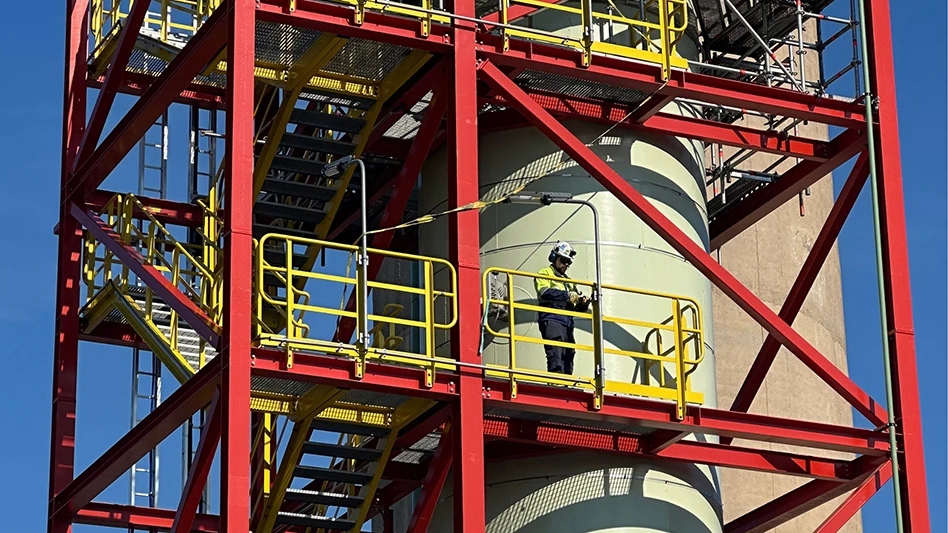
Photo courtesy of Neste Corp.
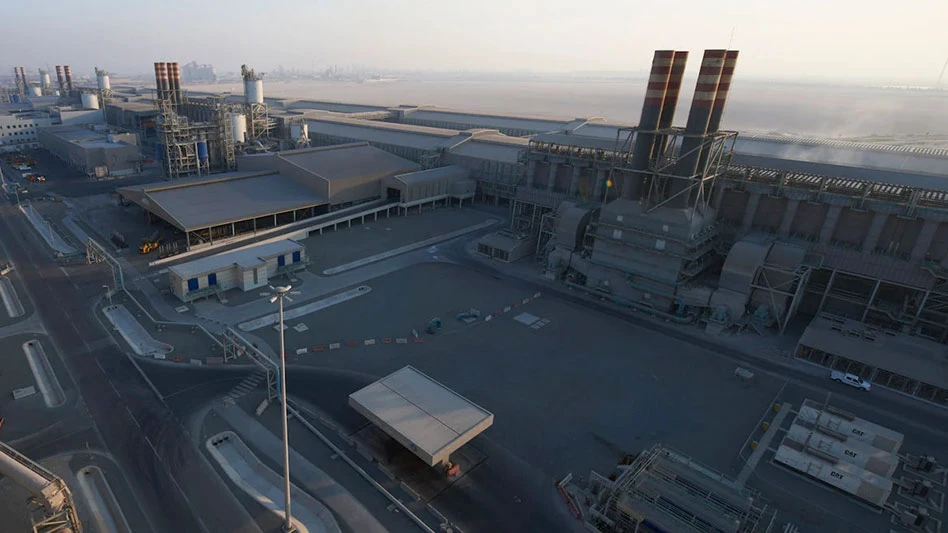
Finland-based Neste Corp. says it has successfully commissioned its new upgrading facility for liquefied waste plastic (LWP) at its Porvoo refinery in Finland.
This 111 million euros ($127 million) investment marks a milestone in the scaling up of chemical recycling, says Neste, “enabling the production of high-quality feedstock for the plastics and chemicals industry.”
With an annual capacity to process up to 150,000 tons of liquefied plastic scrap, the facility is the world’s largest LWP upgrading facility, although Neste says processing will be gradually ramped up.
“The successful commissioning proves that we can process liquefied waste plastic at an industrial scale,” says Jori Sahlsten, executive vice president of oil products at Neste. “This achievement demonstrates Neste’s capability to develop advanced technology, set safety standards and create new supply chains for challenging new raw materials.”
Adds Sahlsten, “We are proud of this achievement, and I want to express my sincere thanks to our partners and employees whose dedication has allowed us to turn this vision into a reality.”
Neste says it has processed liquefied waste plastic (such as pyrolysis oil) since 2020. The construction of the new upgrading facility and its integration with the existing oil refinery began in 2023 and was completed at the end of last year.
Production ramp-up has started and will advance gradually depending on market and legislation development, says the petrochemical company.
Neste says that while mechanical recycling remains essential, it often is “limited by the quality” of the discarded materials. Neste’s new facility is specifically designed to process oils derived from what it calls challenging discarded plastic streams, such as multi-layer packaging, mixed plastic scrap and contaminated plastics.
“We enable the scale-up of chemical recycling by upgrading liquefied plastic waste,” says ,” says Maiju Helin, director of polymers and chemicals at Neste. “Thanks to our new facility, even hard-to-recycle plastic waste can be upgraded to meet the feedstock quality requirements of companies manufacturing high-quality plastics.”
Helin says the current European Commission calculation rules on recycled content in the Single Use Plastics Directive “threaten to limit the ability of refineries to serve [the] EU’s recycled content targets.”
Continues Helin, “For Europe’s competitiveness sake, we need to ensure the calculation rules are amended to include refineries in the context of the EU Packaging and Packaging Waste Regulation.”
In the new upgrading facility, Neste processes LWP together with crude oil. A mass balance approach is applied to attribute the recycled raw materials used in the process to the Neste RE product line.
Neste says it has worked with partners Alterra and Technip Energies to license liquefaction technology for the chemical recycling of what it considers difficult-to-recycle plastics.
Latest from Recycling Today
- Indonesia’s nickel pig iron spigot reopens
- Ecore says study backs crumb rubber use on sports surfaces
- Fleetio launches AI capability to accelerate fleet maintenance approvals
- The Metals Agency receives approval for export credit insurance
- Recycle Ann Arbor extends drop-off station operating hours
- Sybilion seeks to help manufacturers confidently address volatility
- Rio Tinto, Prysmian partner on low-carbon aluminum solutions for data centers
- Unilever criticized for plastics approach