Logo courtesy of Nashville Waste Services.
Nashville Waste Services (NWS) has modernized service delivery for its 144,000-household customer base with a new digital route system.
NWS says the overhaul involved moving 97,000 households to new collection days and retiring paper maps in favor of a fully digital, tablet-based operation. This project, which began Feb. 3, marks the first full optimization of Nashville residential waste routes in more than 10 years, creating 192 NWS-operated routes as part of a citywide network of more than 300 weekly collection routes.
The transition involved a two-part strategy: a total rebuild of the department's routing infrastructure and a 13-week public information campaign. NWS says this effort successfully moved the service days for 97,000 households—about two-thirds of the city's residential customer base—while educating the entire city on the shift to a new collection schedule.
The overhaul, which NWS says resulted in a service success rate of more than 99.6 percent in the first four weeks of transition, also shifted collections teams from a five-day schedule to four 10-hour workdays, Tuesday through Friday. Mondays in Nashville are now dedicated to fleet maintenance and vehicle inspections, holiday makeup collections and specialized training.
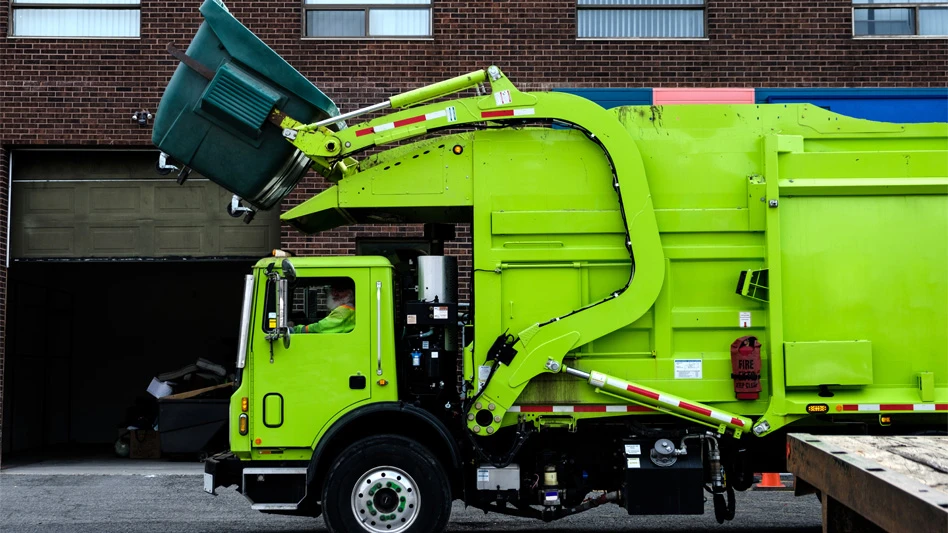
For decades, Nashville's residential waste routes relied on paper maps, meaning critical knowledge of the routes was held primarily by individual drivers and smaller teams. In mid-2025, NWS equipped more than 100 trucks with live tablets and GPS routing.
“We didn't just change the schedule; we built a smarter routing system that grows with the city,” says Tracey Thurman, NWS director. “By moving from paper maps to a digital platform, we can now adjust our routes as neighborhoods change and density increases. We are finally able to plan for the city's growth instead of just reacting to it.”
Alongside the digital overhaul, NWS says it insourced nearly 50,000 households previously serviced by outside contractors. The move is projected to save Nashville $5.5 million annually while giving the department greater operational control and consistency of service.
The system's true test came during its launch week, which coincided with a winter storm that briefly stopped waste collection citywide. While the department worked through interrupted service dates from the previous week, the transition to the new Tuesday–Friday schedule remained stable.
Despite the weather, NWS says resident participation was high, with most households successfully setting out their carts on their new days. Trash set-out rates reached 80 percent on the system’s first day, and the routing software allowed supervisors to move trucks to areas that needed them most.
According to NWS, residents accessed the new schedule tools 492,000 times and made 150,000 unique visits to the department’s website during the 60-day launch window.
“The success of this launch proves that high-tech tools only work when backed by a dedicated team,” Thurman says. “We've moved from an outdated service to a more modernized department, giving our drivers the tools they need and our residents the reliability they deserve.”
Latest from Recycling Today
- 2026 Plastics Recycling Conference: Diving into SB 54
- Commentary: Plastic recycling isn’t working; what are we going to do about that?
- Environmental groups urge Indonesia to return e-scrap shipments
- Foodservice Packaging Institute opens applications for 2026 foam recycling grant program
- Worn Again Technologies unveils Accelerator plant to advance polycotton recycling
- Arconic expands in Iowa
- Cascades invests $6.9M in recycled boxboard plant
- Ocean freight interruptions poised to continue